Get Repair Quote
Name
Company *
Phone *
Email *
Address
City
State / Province / Region
Zipcode
Country
Quantity *
Part Number *
Manufacturer
Preferred Condition
Additional Information
Cancel
Allen-Bradley 1756-TBCH
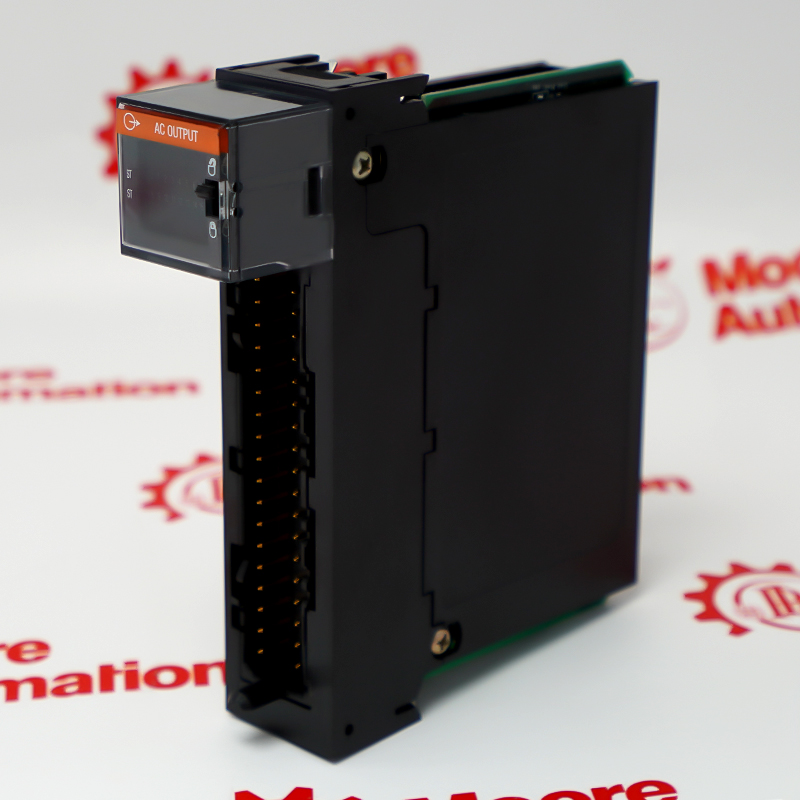
· Product image is representative; revision or series may vary. Contact us to request a specific version.

1756-TBCH

Removable Terminal Block (RTB)
In Stock
Ships by Tuesday, June 23
Fast Shipping Available

Product Information:

The Allen-Bradley 1756-TBCH is a 36-pin cage-type screw-removable terminal block (RTB) designed by Rockwell Automation for the ControlLogix 1756 I/O module. This terminal block is not included with the ControlLogix I/O module. Users must purchase this RTB separately as a physical interface for connecting field device wiring and high-density input/output electronics.

The Allen-Bradley 1756-TBCH is a removable terminal block designed to simplify wiring within ControlLogix systems. It is compatible with the Bulletin 1756 I/O module and features a low-profile design for space saving.

Expand All
Collapse all

Technical specifications for 1756-TBCH

  • Manufacturer:
    Allen-Bradley
  • Product Category:
    PLC System
  • Spare Part Number:
    1756TBCH 1756-TBCH/A
  • Estimated shipping dimensions:
    3.5x5x11.8cm
  • Weight:
    0.15 kg
  • Tariff Code:
    8537101190
  • Country of origin:
    USA
  • Place of shipment:
    Xiamen, Fujian, China
  • Product Line:
    ControlLogix
  • Product Type:
    Removable Terminal Block (RTB)
  • Compatible I/O Modules:
    Bulletin 1756 I/O Modules
  • Mounting Option:
    Mounts on front of I/O module
  • Clamp Type:
    Cage-Clamp
  • Screw Torque:
    0.5 Nm
  • Screwdriver Width:
    3.2 mm
  • Operating temperature:
    0…60 °C (32…140 °F)
  • Ambient Storage Temperature:
    -40…+85 °C (-40…+185 °F)
  • Relative humidity:
    5…95% noncondensing
  • Vibration:
    2 g @ 10…500 Hz
  • Shock, operating:
    30 g
  • Shock, nonoperating:
    50 g
  • Stock:
    50

Revisions

Revision Part #

Also known as

1756-TBCH/A
1756-TBCH Ser A, Series A, Rev A

Alternative Names

1756TBCH 1756 TBCH I756-TBCH 1756-T8CH 1756-TBCHXT 1756-TBS6H 1756-TBNH 1756-TBSH 1756-TBS6H 1756-TBCHS 1756-TBS6HS 1756TBCHXT I756-TBCHXT

Information

Overview Manuals Wire size Best Practices for Installation

Features:

  • Screw-clamp / cage-clamp technology
  • Shipped with a standard-depth housing cover
  • 0.5 N·m (4.4 lb·in) using a 3.2 mm flathead screwdriver
The 1756-TBCH detachable terminal block is designed for seamless integration with ControlLogix systems, providing the necessary connectivity solutions. This terminal block is perfectly matched with the Bulletin 1756 I/O module, enhancing the modularity of industrial automation systems. Its low-profile housing design effectively utilizes space, meeting the compact design requirements of modern control systems.

The 1756-TBCH employs a cage-like clamping system for robust cable management. This design supports single-wire and dual-wire connections, offering flexibility for various installation scenarios. It can be directly mounted on the front of the I/O module for easy maintenance and upgrades.

The 1756-TBCH Allen Bradley Removable Terminal Block (RTB) may still be available for purchase and support from Moore Automated Company beyond End-Of-Life (EOL) by the manufacturer (OEM).
Allen Bradley 1756-TBCH Removable Terminal Block (RTB) Manuals(Datasheets), Link Important Notice: Other accessories, manuals, cables, calibration data, software, etc. are not included with this equipment unless listed in the above stock item description. All prices are shown in USD.
Single wire connection: 0.33…2.1 mm2 (22…14 AWG) solid or stranded copper wire rated at 105 °C (221 °F), or greater, 1.2 mm (3/64 in.) insulation max. Do not wire more than one conductor on any single terminal. Double wire connection: 0.33…1.3 mm2 (22…16 AWG) solid or stranded copper wire rated at 105 °C (221 °F), or greater, 1.2 mm (3/64 in.) insulation max. Do not wire more than two conductors on any single terminal.
Wiring Sequence: Always wire from the bottom terminals (pins 35/36) upwards. This ensures unobstructed access to the top terminals and facilitates operation with hand tools.
Stress Relief: Securely fasten thick multi-core field cables with cable ties using the built-in bottom mounting slot.
Physical Keying: Mechanically connect the RTB to its designated module using the plastic keying wedges on the edge connectors. This prevents installers from accidentally plugging AC terminals into low-voltage DC or analog cards.
High-Density Cabling Considerations: If you are using the maximum gauge wire (14 AWG) on all 36 pins, the standard housing included with the 1756-TBCH may make cabling too crowded. It is recommended to replace it with a deeper housing (1756-TBE) to easily accommodate denser cabling.

Technical notes

The Allen-Bradley 1756-TBCH is a 36-pin cage-screw-clamp removable terminal block (RTB) designed for ControlLogix I/O modules and housed in a standard-depth housing. This component serves as the electrical physical interface between field device leads and the I/O module, supporting single-wire connections from 22 to 14 AWG or two-wire connections from 22 to 16 AWG, with a rated torque of 0.5 N·m, and allowing controlled live plugging and unplugging (RIUP) while the system is energized. As an officially certified Original Equipment Manufacturer (OEM) accessory, it provides standardized and reliable termination for medium- to high-density signal access.

Ask our team:

  • How does the 1756-TBCH optimize 36-bit high-density field cabling for ControlLogix I/O modules while maintaining superior signal integrity and installation efficiency?
    The 1756-TBCH is a detachable terminal block designed to simplify field cabling for ControlLogix I/O modules while supporting reliable signal transmission.
  • Why is the 1756-TBCH considered a mission-critical cage-clamp termination solution for the ControlLogix architecture, ensuring robust conductor retention and vibration-resistant connections?
    The 1756-TBCH utilizes cage-clamp technology, helping to ensure reliable electrical connections in harsh industrial environments.
  • How does the 1756-TBCH maintain electrical continuity and minimize contact resistance in high-density industrial automation systems?
    The 1756-TBCH is designed to ensure stable conductor connections and reliable signal transmission throughout its operational lifecycle.
  • How does the 1756-TBCH help reduce installation complexity in large ControlLogix systems with numerous field device connectivity requirements?
    The 1756-TBCH simplifies cabling by providing an orderly and removable field termination platform.
  • How does the 1756-TBCH support predictive maintenance and system reliability goals through stable, long-term electrical connections?
    The 1756-TBCH helps maintain stable signal transmission and reduces the risks associated with loose field cabling.
Quantity
Upload
(gif, jpg, jpeg, png, bmp, doc, docx, xls, xlsx, ppt, pdf, csv)
For more information on how your data is processed and stored by Moore automated please read our privacy policy.
Trusted by 5,000+ plants worldwide | Backed by our vast inventory of top-tier control parts, drives and servo motors, fast shipments are dispatched to cover your urgent needs. ABOUT US >>
Moore Disclaimer: Moore Automated's sales automation equipment and related solutions are intended for industrial automation and business operational efficiency improvement purposes only. Product information, technical parameters, and application cases are for reference only and do not constitute an absolute guarantee of performance for any specific industry, scenario, or final application. Actual equipment performance may vary depending on factors such as the usage environment, system integration method, and maintenance conditions. Users should confirm compatibility and safety based on professional technical assessments. Moore Automated assumes no liability for any direct or indirect losses caused by improper use, modification, or failure to operate according to specifications, to the extent permitted by law.