Get Repair Quote
Name
Company *
Phone *
Email *
Address
City
State / Province / Region
Zipcode
Country
Quantity *
Part Number *
Manufacturer
Preferred Condition
Additional Information
Cancel
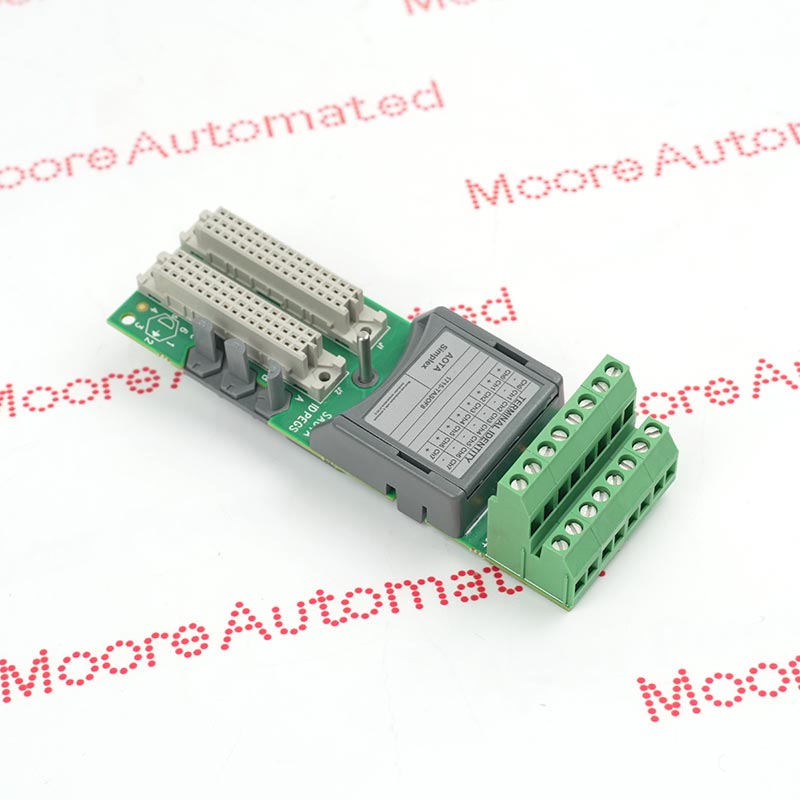
Allen-Bradley PN-173122 PN-200959
· Product image is representative; revision or series may vary. Contact us to request a specific version.

PN-173122 PN-200959

Inverter power supply board
In Stock
Ships by Tuesday, June 16
Fast Shipping Available

Product Information:

The PN-173122 PN-200959 are inverter and auxiliary power boards integrated into the Allen-Bradley PowerFlex 700 Series AC drives.

These boards act as internal core processors, handling sensor logic, managing local parameter execution, and generating gating pulses. They are designed to ensure voltage stability in standard industrial automation configurations.

Expand All
Collapse all

Technical specifications for PN-173122 PN-200959

  • Manufacturer:
    Allen-Bradley
  • Product Category:
    PLC System
  • Estimated shipping dimensions:
    15.2 x 10.4 x 18 cm
  • Weight:
    1.21 kg
  • Tariff Code:
    8537101190
  • Country of origin:
    USA
  • Place of shipment:
    Xiamen, Fujian, China
  • Product Type:
    Inverter power supply board
  • Category Series:
    PowerFlex Series
  • Power Consumption Range:
    15 kW to 110 kW
  • Power Supply:
    120 Vac (+10, -15%)
  • Current Capacity:
    20 mA
  • Operating Temperature:
    0°C to +60°C
  • Storage Temperature:
    -40°C to +70°C
  • Stock:
    1

Alternative Names

PN-173122 PN-200959 PN 173122 PN 200959 PN173122 PN200959 PN-I73I22 PN-200959 PN-I73I22 PN-173122 PN-2OO959 PN-2OO959 PN-I73I22 PN-2OO959 PN-173123 PN-200960

Information

Overview Manuals System Compatibility Operating principle

Features:

  • As the core internal power board of the high-voltage/high-current section of the PowerFlex 750 series frequency converters
  • It receives low-voltage pulse timing signals from the converter's main control architecture
  • It features high electrical isolation and can output sufficient transient high-pulse current to drive the gates of high-power frequency converter thyristors or IGBTs
This circuit board acts as a "power conversion and distribution center" in automated equipment. Its main function is to efficiently convert and regulate the input power, providing a stable and reliable low-voltage DC power supply to the inverter's core microprocessor, internal control bus, and various sensors.

It integrates a high-speed optocoupler isolation circuit, which can safely and accurately receive weak PWM pulse modulation signals from the main control PLC or inverter CPU, and linearly amplify them to convert them into high-power gate drive current that can directly trigger IGBTs or silicon controlled rectifiers (SCRs).

The PN-173122 PN-200959 Allen Bradley Inverter power supply board may still be available for purchase and support from Moore Automated Company beyond End-Of-Life (EOL) by the manufacturer (OEM).
Allen Bradley PN-173122 PN-200959 Inverter power supply board INFO(Datasheets), Link Important Notice: Other accessories, manuals, cables, calibration data, software, etc. are not included with this equipment unless listed in the above stock item description. All prices are shown in USD.
Typically used in PowerFlex 700 standard drives with a power range of 15 kW to 110 kW. Because they control critical low-voltage power distribution and hardware firmware processing, failure of any one component usually results in the drive display going completely black or immediately triggering an overcurrent/undervoltage fault.
1.Multiple Outputs of the Switching Power Supply: The onboard switching power supply circuitry first receives high-voltage DC power from the inverter's DC main bus. Through closed-loop regulation by high-frequency high-voltage switching transistors and a pulse-width modulation (PWM) chip, the high-voltage power is converted into multiple electrically isolated low-voltage DC power supplies: +5V, +12V, ±15V, and +24V. These power supplies are then distributed to low-voltage control circuitry and independent drive channels.
 
2.Drive Pulse Isolation and Amplification: When the inverter is running, six low-amplitude, low-current three-phase sinusoidal pulse-width modulation (SPWM) signals from the upper-level CPU enter the board via pins. Onboard high-speed isolation optocouplers provide complete physical electrical isolation between the high-voltage and low-voltage signals. These pulses are then amplified by a dedicated drive chip (e.g., a gate integrated driver) to provide sufficient dynamic charge-discharge capability (gate charging current) for precise control of the rapid turn-on and turn-off of the IGBT power transistors.
 
3.Closed-loop feedback protection monitoring: Throughout the dynamic triggering process, the onboard Hall current detection interface or Vce saturation voltage drop monitoring circuit will perform millisecond-level rigorous sampling of the electrical state of each arm of the inverter bridge. Once an abnormal feedback signal exceeding the safety threshold (such as an output short circuit) is detected, the hardware protection circuit on the control board will bypass the CPU software response and directly pull down the gate trigger voltage to achieve hardware-level instantaneous shutdown protection, ensuring the continuous and stable operation of the entire industrial drive unit.
Technical notes

The Allen-Bradley PN-173122 and PN-200959 combination is a core power control and trigger board (inverter trigger/power board) designed for industrial frequency converter or inverter drive systems. Its primary responsibility is to provide a stable internal power supply to the system and to accurately handle pulse triggering, control signal synchronization, and enhanced circuit protection in high-frequency and harsh industrial operating environments.

Ask our team:

  • How do Allen-Bradley PN-173122 and PN-200959 operate under their defined electrical input specifications and power architecture constraints?
    The PN-173122 and PN-200959 are designed for industrial automation integration and operate under defined electrical and system-level constraints to ensure stable performance.
  • How do PN-173122 and PN-200959 maintain signal integrity under electromagnetic compatibility (EMC) classification conditions?
    The PN-173122 and PN-200959 feature industrial-grade noise immunity design to ensure stable operation in harsh electrical environments.
  • How do PN-173122 PN-200959 ensure operational stability within the specified temperature range and environmental stress conditions?
    PN-173122 PN-200959 is designed for industrial-grade temperature tolerance and environmental adaptability, maintaining stability under continuous operation.
  • How can deterministic execution of PN-173122 and PN-200959 be optimized while meeting the timing and real-time control requirements of the PN-173122 and PN-200959 scan cycle?
    PN-173122 and PN-200959 ensure predictable control responses consistent with PLC scan-based execution models.
  • Under the PN-173122 PN-200959 diagnostic framework implementation, how do PN-173122 PN-200959 facilitate predictive maintenance?
    PN-173122 PN-200959 supports diagnostic visibility, enabling condition monitoring and early fault detection strategies.
Quantity
Upload
(gif, jpg, jpeg, png, bmp, doc, docx, xls, xlsx, ppt, pdf, csv)
For more information on how your data is processed and stored by Moore automated please read our privacy policy.
Trusted by 5,000+ plants worldwide | Backed by our vast inventory of top-tier control parts, drives and servo motors, fast shipments are dispatched to cover your urgent needs. ABOUT US >>
Moore Disclaimer: Moore Automated's sales automation equipment and related solutions are intended for industrial automation and business operational efficiency improvement purposes only. Product information, technical parameters, and application cases are for reference only and do not constitute an absolute guarantee of performance for any specific industry, scenario, or final application. Actual equipment performance may vary depending on factors such as the usage environment, system integration method, and maintenance conditions. Users should confirm compatibility and safety based on professional technical assessments. Moore Automated assumes no liability for any direct or indirect losses caused by improper use, modification, or failure to operate according to specifications, to the extent permitted by law.