

MP 3009X
Get A Quote
When you are the one standing next to a silent production line, staring at a faulted PLC or a dead VFD, your choice of automation supplier stops being a purchasing decision and becomes an uptime decision. Names like Moore Automated and Valin Corporation come up often at that moment, because both play in the industrial automation and controls space.
In this article I am not going to claim inside knowledge or publish scorecards for either company. The research you provided does not contain specific performance data about Moore Automated or Valin, and inventing numbers or capabilities would be irresponsible. Instead, I will walk through how I, as an on-site controls engineer, would systematically evaluate and compare suppliers in their role: as partners for PLC programming, HMI projects, and factory automation integration.
Think of this as a practical playbook you can use when your shortlist happens to include Moore Automated, Valin, or any other serious automation supplier. The principles, metrics, and questions come from standard supplier performance management and evaluation practices, backed by sources such as Art of Procurement, Caddi, Veridion, Praxie, Netstock, and others, and then translated into plant-floor realities.
Supplier evaluation is the structured, data‑driven process of assessing current or potential suppliers against predefined criteria like quality, cost, risk, capability, and strategic fit. Sources such as Esgrid and Caddi describe it as the way you choose suppliers who will support your long‑term business objectives, not just this week’s RFQ.
In industrial automation, those “objectives” translate into very concrete outcomes. You want safe, stable control systems, predictable lead times on panels and components, responsive field support, and a partner who does not disappear when a firmware bug or network storm takes a line down.
Supplier Performance Management, as described by Art of Procurement and Netstock, extends evaluation into an ongoing cycle of measuring, analyzing, and improving supplier performance across quality, delivery, cost, innovation, and risk. For automation suppliers, that means tracking things like:
On‑time‑in‑full delivery of PLCs, I/O cards, safety relays, and enclosure builds. Defect rates in panels, cables, and field devices that show up during FAT, SAT, or early production. Lead time and lead‑time variability for critical SKUs and standard engineered packages. Responsiveness and issue resolution time when you raise a field failure or software problem. Compliance with safety, cybersecurity, and industry standards.
Modern guidance from Beebolt and Veridion emphasizes building a scorecard with a manageable number of KPIs, often around ten to fifteen per strategic supplier, and ensuring those metrics are tied directly to real business outcomes such as production uptime, maintenance cost, and safety performance.
When you weigh Moore Automated against Valin (or any other automation partner), this is the lens you should use: a structured, measurable comparison, not “who bought lunch last time.”
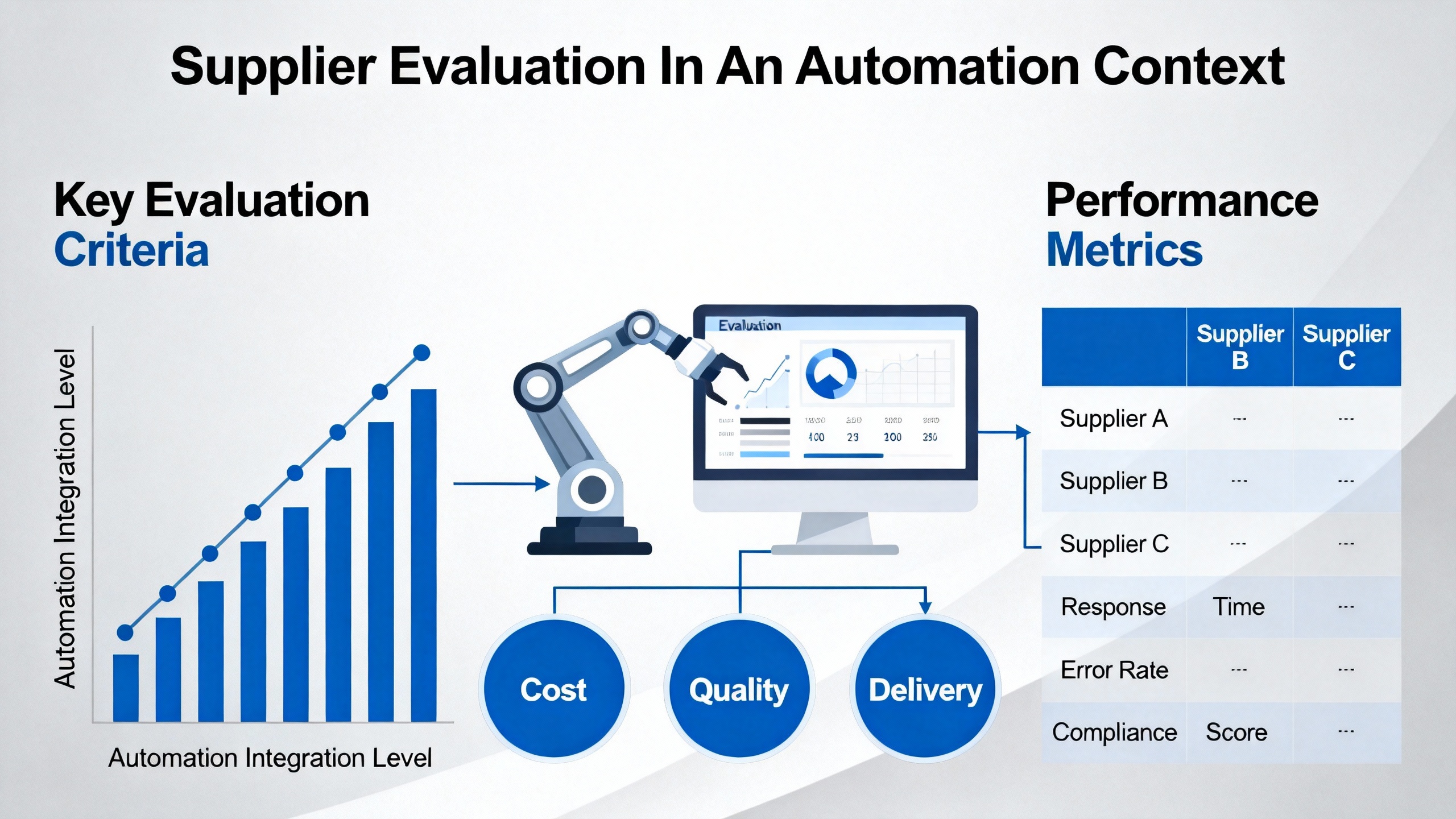
Generic supplier criteria like price and contract terms are necessary but not sufficient when you are dealing with controls hardware, safety systems, and integration services. You need to translate the standard evaluation categories described by Caddi, Veridion, Beebolt, and Praxie into automation‑specific questions.
Supplier quality is not just about bad parts. In automation, quality failures show up as intermittent faults, sporadic comms issues, nuisance trips, and firmware incompatibilities that cost days of debugging.
Praxie frames supplier quality metrics as the compass for managing supplier relationships, and that applies strongly here. For a supplier like Moore Automated or Valin Corporation, I want to know:
Whether they can consistently meet specifications on control panels, including wiring standards, labeling, segregation between low‑voltage and power circuits, and environmental ratings. How often their supplied devices or panels fail incoming inspections or factory acceptance tests. What their defect rate is on assembled systems and whether they track and report it. Whether they understand and support the specific PLC and HMI platforms I am standardizing on.
From the manufacturing side, Industrial Metallurgists points out that suppliers must understand the materials and processes they use and be able to control variation. In automation this becomes process capability on things like cable harnessing, enclosure machining, heat management, and EMC practices. If a supplier cannot control those, you see it as inconsistent panel temperatures, noisy analog signals, and drives tripping under load.
When comparing suppliers, review their technical documentation, sample panels, and any available quality metrics. Ask about their quality management system and whether they follow recognized standards (for example ISO 9001), as suggested by Fictiv and Praxie, and ask how they track corrective and preventive actions after quality escapes.
On paper, many automation suppliers claim they can get you parts quickly. In practice, you care about stable and predictable lead times more than rosy promises. Beebolt emphasizes that supplier lead time and its variability are critical, often more valuable than a small unit‑price advantage if production stoppages are costly.
When you evaluate Moore Automated against Valin, focus on:
Actual on‑time delivery percentage for the past year on your type of orders. Average and worst‑case lead time for common components, custom panels, and on‑site service. Their ability to deal with demand spikes, emergency shipments, and rush jobs without chaos. Evidence of capacity planning so your orders do not get bumped when a larger customer shows up.
Fictiv discusses the idea of a capacity “sweet spot” where suppliers are neither underutilized nor overloaded. You can use that thinking by asking not just what their current utilization is, but how they prioritize and schedule your work, how they handle constrained components, and how quickly they communicate when something slips.
For automation, I treat on‑time‑in‑full delivery and lead‑time variability as primary delivery KPIs, as recommended by Beebolt, Caddi, and OpenBOM. A supplier who misses quoted ship dates or repeatedly ships partial orders becomes a risk to your maintenance team and your production schedule.
Every source you provided makes the same point in different words: do not confuse lowest price with lowest total cost. Procurement Tactics, Veridion, Industrial Metallurgists, and NetSuite all stress total cost of ownership, including freight, duties, quality failures, downtime, and administrative overhead.
In automation this is even more acute. A small discount on a PLC rack means nothing if that family has long lead times or inconsistent firmware, and your maintenance team burns days troubleshooting. When you evaluate Moore Automated vs Valin, look beyond the quote and ask:
How often do quality issues, delayed shipments, or technical missteps lead to rework, weekend callouts, or rush freight. Whether they help you optimize standardization to reduce your spare parts holdings and simplify training. How much engineering time they save you with reliable application support, good documentation, and pre‑validated solutions.
Beebolt’s concept of a Supplier Performance Index, which combines total spend and non‑performance costs, is useful here. You may not calculate a formal index, but you can mentally treat late‑delivery penalties, scrap, rework, and downtime as hidden costs that belong on the supplier’s ledger.
Veridion and NetSuite highlight how often serious supplier risk only surfaces after onboarding. In controls and automation, risk shows up as:
Supply continuity problems for critical components and safety devices. Cybersecurity vulnerabilities in connected equipment and remote access solutions. Weak adherence to safety, electrical, and functional‑safety standards. Financial fragility that suddenly leaves you without a key integration partner.
Beebolt and Veridion also stress supplier concentration risk. Consolidating automation business with a single supplier can simplify life and improve pricing, but it also amplifies disruption if that supplier stumbles. When balancing Moore Automated and Valin Corporation, you should consciously decide how much of your automation spend to concentrate versus deliberately dual‑sourcing certain categories.
ESG and compliance matter as well. Articles from Beebolt and Veridion note that sustainability and ethics are now mainstream criteria, and Praxie emphasizes safety and compliance as part of quality. For automation suppliers this may involve conflict‑mineral declarations, safety certification practices, data‑security posture, and environmental management for panel shops and warehouses.
Most of the supplier‑evaluation literature you provided treats support, responsiveness, and innovation as strategic differentiators. Netstock, OpenBOM, Veridion, and NetSuite all emphasize that responsiveness and a continuous‑improvement mindset separate average suppliers from true partners.
On the plant floor, this shows up as:
How quickly a supplier returns calls when a line is down and you need help with a PLC program, a drive parameter set, or a network issue. Whether they bring useful ideas to the table, such as standardizing on more maintainable architectures, using better diagnostics, or improving safety designs. How proactive they are about lifecycle management, obsolescence notices, and migration paths.
Innovation metrics in Veridion’s performance‑metrics article include counts and impact of supplier‑proposed ideas and implemented improvements. You can adapt that by tracking how often a supplier like Moore Automated or Valin contributes to reducing downtime, simplifying changeovers, or accelerating project delivery.
From experience, the supplier that quietly helps you root‑cause an intermittent safety fault at midnight, and then updates your standards to prevent a repeat, brings more value than a slightly cheaper catalog.
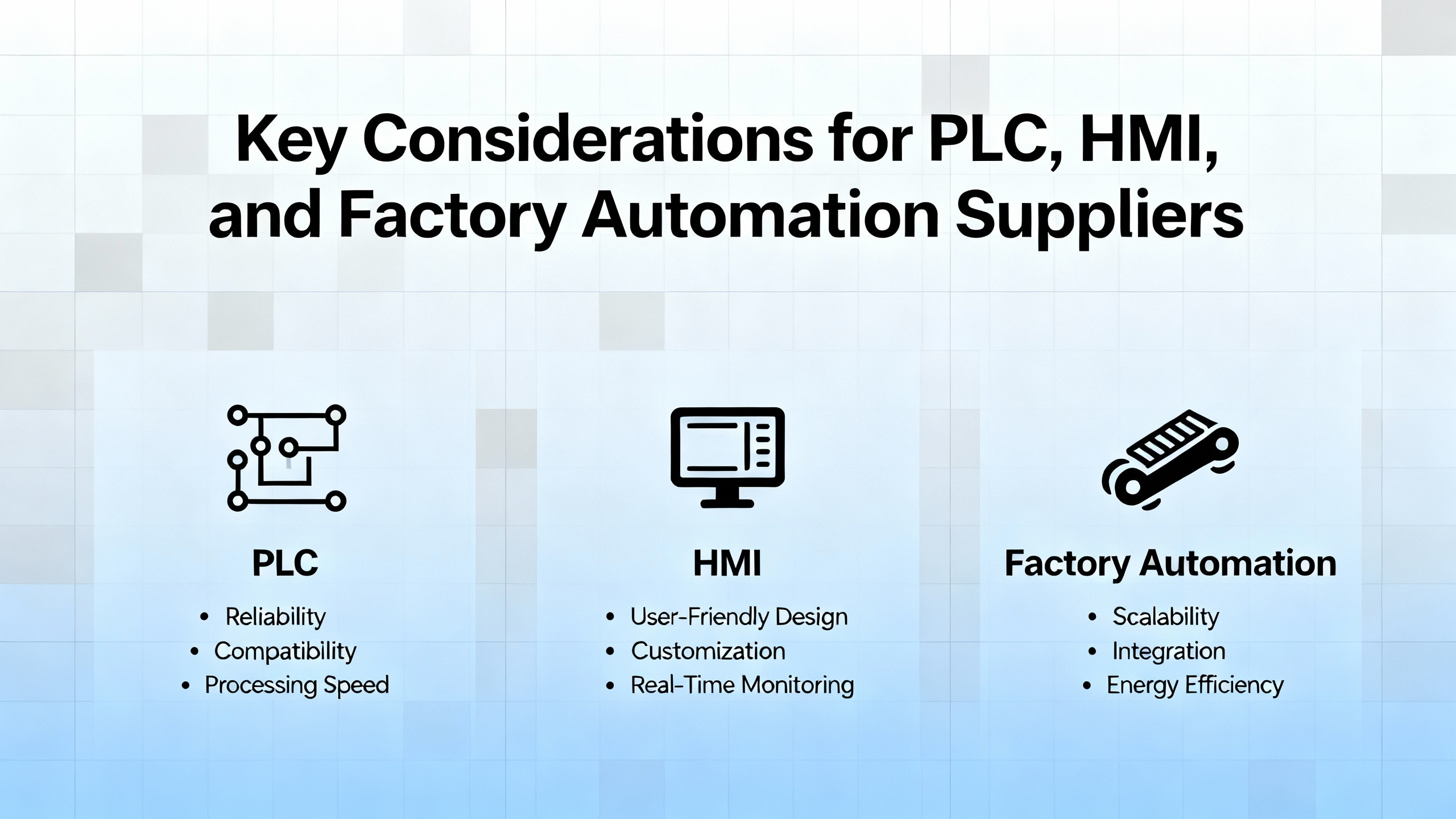
Research from Art of Procurement, Caddi, Veridion, Kodiak Hub, and Netstock converges on a few best practices for supplier scorecards.
Keep the number of KPIs manageable, often in the range of ten to fifteen for strategic suppliers. Weight criteria according to real business impact rather than tradition. Standardize definitions and data sources so you do not argue about the numbers. Blend quantitative metrics with structured qualitative assessments.
Here is an example of how you might structure a scorecard for automation suppliers like Moore Automated and Valin Corporation. The table is illustrative; you would populate the right‑hand columns with your data.
| Dimension | Example questions for Moore Automated vs Valin Corporation | Example metrics and evidence |
|---|---|---|
| Quality and reliability | How often do delivered panels or devices pass FAT and first power‑up without rework. | Percentage of orders passing first‑time inspection, defect rate. |
| Delivery performance | How reliably do they hit promised ship dates for components and projects. | On‑time‑in‑full percentage, average and max lead time. |
| Technical capability | How strong is their support on your PLC, HMI, safety, and network standards. | Certifications, case studies, internal SME assessments. |
| Responsiveness | How quickly do they respond to urgent issues and engineering questions. | Average response and resolution times on incidents. |
| Cost and TCO | How does their pricing compare when you include rework, downtime, and expediting. | Quoted price vs realized cost, Supplier Performance Index style. |
| Risk and continuity | How robust is their supply chain and financial position for your critical categories. | Incident history, risk scores, backup sourcing plans. |
| Compliance and ESG | How well do they align with your safety, cybersecurity, and sustainability requirements. | Audit results, certifications, policy review outcomes. |
| Innovation and support | How much do they contribute to better designs, faster commissioning, and fewer failures. | Number and impact of supplier‑driven improvements. |
Vendor‑rating guidance from Kodiak Hub suggests using weighted scoring, such as assigning higher weight to quality and delivery. For automation distributors and integrators, it is common to give quality and delivery the majority of the weight, then split the remainder between cost, risk, and innovation.
The exact weights should come from cross‑functional discussion between engineering, maintenance, operations, and procurement, as recommended by Esgrid and Caddi. For example, a plant with chronic downtime might emphasize delivery and quality even more strongly, while a greenfield project with long lead times to launch might give more weight to technical capability and innovation.
Most plants do not have the luxury of lengthy academic evaluations. You are juggling ongoing projects, unplanned outages, and budget pressure. The process has to be simple enough to execute and robust enough to protect you from bad decisions.
Research from Veridion, Caddi, 889 Global Solutions, and Industrial Metallurgists outlines similar steps, which translate cleanly into an automation‑supplier context.
First, clarify your requirements and constraints. Define the control platforms you standardize on, the volume and type of projects you expect, typical lead time needs, and any non‑negotiable safety or cybersecurity requirements. Caddi and 889 Global Solutions both stress starting with clearly defined specifications and success criteria.
Second, establish evaluation criteria and weights. Using the dimensions above, agree on what matters most for your site. Esgrid recommends tying criteria weights to real business impact, for example letting reliability and failure costs outweigh small price differences. For a safety‑critical plant or a highly automated packaging line, that is usually the right trade‑off.
Third, gather data from multiple sources. Veridion highlights how dangerous incomplete or inaccurate supplier data can be and advocates centralizing and cross‑checking information. For Moore Automated and Valin, that might mean pulling ERP data on on‑time delivery and defect rates, requesting structured scorecard responses, checking references, and capturing feedback from maintenance and project teams who have actually worked with them.
Fourth, perform structured evaluations. Caddi recommends using supplier scorecards with numeric ratings and, for critical suppliers, site visits to observe operations directly. In an automation comparison you might visit their panel shops, attend an engineering review, or observe how they handle a live issue. Use the same questions and metrics for both suppliers to keep comparisons fair.
Fifth, combine quantitative scores with qualitative insights. Veridion notes that purely score‑based decisions can fail if cultural fit or hidden risks are poor. In automation, qualitative factors include how well the supplier’s engineers understand your process, how they behave under pressure during a line outage, and how transparent they are about problems.
Sixth, document decisions and link them to performance management. Art of Procurement and Kodiak Hub both emphasize feeding supplier‑performance trends into sourcing decisions. If you award more business to either Moore Automated or Valin based on evaluation, make that conditional on hitting agreed targets, and monitor those via periodic reviews using the same KPIs.
Finally, treat evaluation as ongoing, not one‑off. Veridion and Netstock stress continuous monitoring because suppliers’ quality and financial condition change over time. For critical automation suppliers, a quarterly or semi‑annual review cadence is reasonable, with at least an annual deep‑dive that revisits both performance and strategy.
At some point in a Moore Automated vs Valin discussion, someone will ask whether to pick a “primary” supplier or split the business. The research notes on supplier concentration from Beebolt, as well as risk discussions from Veridion and NetSuite, give a good framework.
Consolidating more spend with one supplier usually improves pricing leverage and simplifies relationship management. It can also encourage the supplier to invest more in your success, for example by assigning dedicated engineers or stocking more of your preferred SKUs close to your plants.
However, high supplier concentration amplifies risk. If that supplier experiences a disruption, changes strategic direction, or is acquired, you may suddenly face long lead times, price shocks, or loss of key technical talent. Beebolt suggests explicitly defining your risk appetite and monitoring concentration metrics to avoid overreliance.
With two capable automation suppliers such as Moore Automated and Valin Corporation on the table, a pragmatic strategy often looks like this. Use one as the primary partner for specific platforms or regions while deliberately keeping the other active on a subset of work. That way you maintain competitive tension, preserve a viable fallback, and gain insight into relative performance over time.
Your scorecard and performance metrics should guide how you adjust that balance. If one supplier consistently outperforms on quality, delivery, and support, gradually moving more business their way makes sense, provided you keep risk in check.
Several sources, including Esgrid, Caddi, Netstock, and OpenBOM, emphasize that the best outcomes come when supplier evaluation is treated as a collaborative, continuous‑improvement process rather than a one‑time contest.
For automation suppliers, that means sharing your evaluation criteria and expectations up front, agreeing on measurable targets, and using review meetings to work through issues and opportunities. Instead of simply telling a supplier that their on‑time delivery is poor, walk the data with them, identify root causes, and co‑develop corrective actions with clear dates and owners.
Netstock points to examples where structured supplier performance management enabled major cost and efficiency gains for large companies by tightening cycle times and streamlining supply chains. The same pattern can apply on a smaller scale in your plants. When a supplier knows exactly how they are being measured, sees the impact on your operations, and has a voice in improvement plans, their behavior changes.
In my own on‑site work, the strongest automation partners are the ones who sit in the same room when a project slips, own their part of the problem, and help design a better standard for next time. A good evaluation framework gives you the facts to have those conversations without emotion taking over.
Sources such as Spendflo and Veridion recommend at least annual evaluations, with more frequent reviews for critical or high‑risk suppliers. In a controls context, I treat major automation suppliers as strategic. A light quarterly review that looks at on‑time delivery, defect trends, and key incidents, plus a deeper annual review tied to your scorecard, is a practical rhythm.
Veridion reports that most procurement leaders have suffered from misinformation about suppliers and highlights the risk of fragmented data. If your ERP and maintenance systems are patchy, start by standardizing how you log deliveries, quality issues, and support tickets from each supplier, even if it is a simple shared log. Be explicit about data quality when scoring and supplement numbers with structured interviews and site observations until your metrics mature.
Caddi, Esgrid, and 889 Global Solutions all argue for cross‑functional evaluation teams. In automation, I have seen the best decisions when engineering and maintenance define technical and reliability requirements, procurement leads commercial and contract discussions, and operations weighs in on risk tolerance and uptime impact. If any of those voices is missing, you risk optimizing for cost at the expense of reliability or vice versa.
When you strip away logos and sales pitches, evaluating Moore Automated versus Valin Corporation is the same job as evaluating any automation supplier: connect hard metrics and real plant experience to the things that matter most, which are safe operation, uptime, and life‑cycle cost. If you define clear criteria, measure what actually happens in your facility, and treat suppliers as partners in continuous improvement, the better choice tends to reveal itself long before the next 2:00 AM breakdown.


Copyright Notice © 2026 mooreautomated.com All rights reserved,Moore Automated is not an authorized distributor or representative of the manufacturers featured on this website. Brand names and trademarks featured are the property of their respective owners.
Leave Your Comment