

Registered Address: 32D Floor Guomao Building, No.388, Hubin South Road, Siming District, Xiamen,Fujian, China
3008
Get A Quote
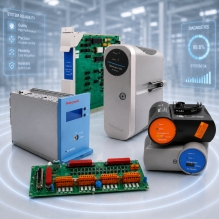
If you keep industrial lines running for a living, you eventually hit the same wall. The OEM stops supporting a drive family, a PLC series goes end of life, or lead times on a “genuine” module stretch into months while production still needs to hit this week’s numbers. At that point, third-party automation parts stop being a theoretical question and become a very real decision you have to make under time pressure.
The challenge is not just whether a part will power up. Reliability in industrial automation is tightly linked to uptime, product quality, and total operating cost, as explained in reliability-focused guidance from CNCTech, Limble, and similar engineering sources. A single weak link in a control panel, a safety loop, or a network backbone can quietly erode overall equipment effectiveness through intermittent faults, nuisance trips, and hard-to-reproduce quality drifts.
This is why standards matter. Industrial standards from bodies such as ISO and IEC, sector-specific frameworks like those promoted by ISA, and national electrical and functional safety codes are not paperwork; they are the backbone behind reliable automation. When you buy third-party components, you are really buying someone else’s interpretation of those standards. The rest of this article walks through how those standards work, which ones matter for third-party parts, and how to use them as a practical filter so you can save money without importing hidden reliability risk.
Reliability in industrial automation is more than mean time between failures on a datasheet. CNCTech’s guidance on designing reliable automation systems frames reliability as protecting uptime, product quality, and operating cost by reducing unplanned downtime, emergency repairs, and cascading delays across lines. Limble’s work on production reliability adds that reliable equipment and processes consistently deliver the planned output, at the expected rate and quality, with minimal unplanned interruptions.
In practice, that means several things at the component level. First, the device must continue to function correctly in the actual environment: temperature swings, vibration, electrical noise, and the realities of plant power quality. Second, it must fail in predictable, diagnosable ways that do not put people or assets at risk. Third, it must integrate cleanly into the control architecture, networks, and safety concept you already have, rather than forcing brittle special cases.
Software and logic play a role as well. RL Consulting’s guidance on PLC programming emphasizes that reliable control is rooted in clear program structure, accurate modeling of real equipment behavior, strong diagnostics, and well-designed safety interlocks. A third-party module that technically fits the rack but forces convoluted, opaque code can be just as damaging to long-term reliability as a cheaply built power supply.
Finally, reliability is not only a design property; it is also operational. Maintenance and reliability sources such as Panasonic’s plant reliability guidance and MachineMetrics’ work on quality assurance show that proactive maintenance, good data, and disciplined processes can extend equipment life and cut unplanned outages. When you evaluate third-party hardware, you have to consider how easy it is to monitor, maintain, and support over time, not just whether it passes a bench test on day one.
A standard, as described in OpenTAP’s discussion of test automation standards, is a formally agreed set of requirements or guidelines that harmonizes technical criteria to ensure consistency, quality, safety, interoperability, and efficiency. Standards bodies such as ISO, IEC, and IEEE publish de jure standards that are formally approved and often recognized in regulations. Other standards are de facto, emerging because the market widely adopts them, with compliance proven by testing against reference implementations.
PDFSupply’s overview of automation standards highlights how ISO’s International Classification for Standards, particularly ICS 25 for manufacturing engineering, organizes an extensive family of standards covering industrial automation and machine tools. IEC complements this with standards that focus on communications and networking, including industrial network connectivity profiles and Fieldbus requirements. Together they define how components should behave and talk to each other so engineers can design interoperable, dependable systems.
Automation IT’s guidance on standards in automated systems adds the national layer. International standards are often adopted or mirrored as regional and national codes. In their example, Australian standards such as AS3000 for electrical installations, AS61131 for programmable controllers, and AS4024 for machinery safety embed IEC and ISO concepts into legally enforceable rules. Similar patterns exist in other countries, even if the specific designations differ.
Industry organizations round out the picture. ISA acts as a global forum for asset owners, integrators, manufacturers, and service providers to develop consensus-based standards for automation and industrial cybersecurity. Testimonials summarized by ISA highlight standards like ISA-95, which is used as an ontology for describing manufacturing processes and integrating plant-floor data with higher-level systems. ISA’s work on alarm management has effectively turned good alarm practice into an international standard, directly influencing how control systems are designed and tuned for safe operation.
The core goals are consistent across these sources. Standards promote consistency in behavior and interfaces, raise quality by defining minimum performance and test criteria, improve safety for workers and the environment, enable interoperability across vendors, and support efficiency by avoiding constant re-invention. When third-party parts adhere to the same standards as the rest of your system, you are less likely to create islands of incompatible behavior or hidden safety gaps.
OpenTAP also draws a useful distinction between conformance and compliance. Some standards, such as the POSIX family in software, define what strict conformance looks like and allow looser compliance with subsets. The same idea shows up in automation. A device may claim full compliance with a Fieldbus profile, or partial compliance with some option sets omitted. Understanding exactly which parts of a standard a component supports is essential when you are replacing an OEM part with a third-party alternative.
Several standard families show up repeatedly across the reliability and automation sources in the research notes. The table below summarizes the most relevant categories when you evaluate third-party automation hardware.
| Standard family | Examples from sources | Scope in automation | Why it matters for third-party parts |
|---|---|---|---|
| Quality management systems | ISO 9001, ISO 9000 (mentioned by OpenTAP, Automate, MachineMetrics) | Defines how an organization manages quality, documentation, audits, and continuous improvement | Vendor-level assurance that design, production, and corrective actions follow a disciplined process rather than ad hoc practices |
| Manufacturing automation and interfaces | ISO ICS 25 for manufacturing engineering; IEC network and Fieldbus standards (from PDFSupply) | Covers industrial automation, machine tools, capacity profiling, service interfaces, data modeling, and network connectivity | Ensures controllers, drives, and networked devices implement compatible interfaces and data structures so they can integrate cleanly |
| Functional safety and machinery standards | AS4024, ISO13849, AS62061, AS61508, AS61511, ISO12100 (Automation IT); ISO/TS 15066, ISO 13482 (PDFSupply) | Define safety-related parts of control systems, risk assessment, and requirements for machinery and collaborative robots | Protects personnel and assets; critical when third-party parts participate in safety functions or alter machine behavior that affects risk levels |
| Programmable controllers and instrument interfaces | AS61131 for programmable controllers (Automation IT); SCPI on top of IEEE 488.2 for test instruments (OpenTAP) | Standardizes PLC behavior and instruction sets; defines command languages for programmable instruments | Reduces the risk that replacement modules or instruments behave unexpectedly or require fragile, device-specific code adaptations |
| Integration, data, and alarm management | ISA-95 ontology for manufacturing integration, ISA alarm management standards, SCADA and cybersecurity standards (ISA) | Provide common models for plant-to-enterprise integration, alarm philosophy, and secure system design | Helps ensure that third-party components fit into existing MES, SCADA, and alarm strategies without creating blind spots or noisy, unmanageable alarms |
| Regulatory and domain-specific frameworks | Oversight from FDA, NHTSA, FAA, and state laws on liability and privacy (PDFSupply) | Regulate automated equipment in healthcare, automotive, aviation, and other domains | Make certain applications effectively non-negotiable on standards; non-compliant third-party parts can create legal and certification problems |
These standard families are not academic. Automation IT warns that systems built without proper standards compliance may look cheaper up front but frequently become a false economy. They tend to carry higher life-cycle costs, more difficult upgrades, and greater safety and legal exposure. By contrast, PDFSupply emphasizes that well-applied automation standards reduce harm, support interoperability, lower installation and startup cost, and increase profitability.
For third-party parts, this means that a lower purchase price is only attractive if the component preserves your alignment with the relevant standards in all of these families. When it does, you get the economic benefit without undermining safety or long-term reliability.

Quality assurance and quality control are different but complementary. MachineMetrics describes QA as the proactive, process-based side of a quality management system and QC as the reactive, product-based inspection and testing step. Automate’s article on quality control in engineering and manufacturing shows that QC spans raw material checks, in-process inspections, finished product testing, and even post-market surveillance, often using methods like statistical process control, Six Sigma, and lean.
When you select a third-party automation vendor, you want evidence that both QA and QC are in place. An ISO 9001 or ISO 9000 certification, referenced in several sources, is not a guarantee of good product design, but it is a strong signal that the vendor follows structured processes, maintains documentation, and handles corrective actions systematically. It makes it more likely that engineering changes are controlled, traceability exists for components, and defects drive learning rather than random fixes.
In practical terms, that means asking suppliers for their quality certifications, documented procedures around testing and inspection, and examples of how they handle nonconforming product. Vendors that can speak clearly about their QA and QC processes are usually the ones that cause fewer surprises in the field.
Vendor-level quality systems are necessary but not sufficient. You also need to confirm that the specific part you are buying aligns with the standards relevant to its function. Automation IT’s discussion of functional safety and machinery standards makes it clear that when something goes wrong, everyone involved in the design of a system can be liable. Using parts that do not meet the safety standards your system was validated against can quietly erode your safety case.
For example, Automation IT highlights standards such as AS4024 for safety of machinery and ISO13849 for safety-related parts of control systems. PDFSupply adds ISO/TS 15066, which defines safety requirements for collaborative robots that work in close proximity to people, and ISO 13482 for personal care robots, with explicit emphasis on ethical and safety considerations like human freedom and confidentiality. When third-party components participate in emergency stop chains, guarding systems, or collaborative robot tooling, you should verify that they are designed and certified against the same functional safety standards as the OEM parts they replace.
Many safety-related standards rely on third-party certifications to give asset owners confidence. Automation IT points out the role of recognized bodies and certified functional safety engineers in demonstrating compliance with required laws and standards. When a vendor claims compliance, it is worth asking whether that is a self-declaration or supported by certification from an independent organization and what test evidence backs it up.
The conformance versus compliance distinction described in OpenTAP’s discussion of software standards applies here as well. A device might comply with a subset of a standard while not conforming to every option. That difference can matter in subtle ways. A network interface that omits certain diagnostic services while technically meeting the base profile might still be acceptable, but you need to understand that limitation before you deploy it in a system that relies heavily on advanced diagnostics.
PDFSupply’s treatment of interoperability emphasizes industrial software capacity profiling, service interfaces for application testing, and data management and modeling. IEC standards for industrial connectivity and Fieldbus, as cited there, are the backbone for getting different devices to talk reliably over shared networks.
OpenTAP’s article on SCPI, layered on IEEE 488.2, provides a concrete example on the test and measurement side. SCPI standardizes ASCII-based command sets so that multimeters, oscilloscopes, and spectrum analyzers can be scripted in a consistent way, regardless of vendor. Frameworks like OpenTAP use SCPI to avoid vendor-specific silos and enable portable, maintainable test automation.
The same principle holds on the plant floor. Third-party drives, I/O racks, and smart sensors that follow established network and interface standards are much easier to integrate and support over their life. Devices that rely on proprietary, poorly documented command sets or nonstandard wiring may work in a narrow context but create long-term brittleness.
When you evaluate a part, look for explicit reference to the Fieldbus or industrial Ethernet standards it supports and how fully it implements the relevant profiles. Check whether the device has passed conformance tests where those are available. This is particularly important if you plan to use advanced features like time synchronization, integrated diagnostics, or safety over the network.
Multiple sources emphasize the role of documentation in system reliability. Automation IT advises that complete documentation, including drawings, documented software code, and operation manuals, should be explicitly included in the scope of supply. Fresh Consulting’s guidance on manufacturing automation projects recommends that deliverables include mechanical drawings, electrical and pneumatic schematics, source code, and operating manuals, all of which make future maintenance and upgrades safer and faster.
From a reliability standpoint, third-party parts that come with sparse or generic documentation are a red flag. At minimum, you want clear wiring diagrams, environmental ratings, network configuration guidance, detailed timing and performance characteristics, and well-defined diagnostic information such as status codes and alarm messages.
On the software side, RL Consulting’s PLC programming best practices show that strong diagnostics and fault handling, including meaningful alarms and status tags, are essential for troubleshootability and fast recovery. When a third-party module exposes ambiguous or cryptic status information, every failure turns into a forensic exercise instead of a straightforward repair.
Traceability matters as well. Quality control guidance from Automate stresses the value of documentation and traceability for inspections, corrective actions, and process changes. Parts with clearly identifiable revision levels, date codes, and manufacturing history make it much easier to manage field issues, especially if you discover a design flaw that affects a particular batch.
Production reliability guidance from Limble recommends using metrics such as mean time between failures, mean time to repair, and overall equipment effectiveness, along with data on downtime and failure modes, to build a reliability baseline and prioritize improvements. MachineMetrics and Panasonic both advocate using real-time monitoring and predictive maintenance, supported by digital tools, to catch issues before they become outages.
Most third-party vendors will quote reliability metrics, but those numbers only matter if they map to your environment and are backed by realistic test conditions. Ask how those figures were generated, what duty cycles and temperatures were used, and whether any accelerated aging tests were performed, as suggested in CNCTech’s discussion of reliability testing.
Just as important is support for keeping the parts reliable in service. Limble and CNCTech both emphasize spare-part strategies, automated reordering, and clear maintenance procedures. A third-party supplier that maintains good spare availability, provides configuration backups, and supports diagnostic tooling will often outperform a cheaper vendor that ships you hardware and disappears. Over the life of a production line, that difference matters more than a small price gap.
PDFSupply describes how national regulators such as the FDA, NHTSA, and FAA oversee automation in domains like medical equipment, automated vehicles, and drones, and how states legislate liability, labor, and privacy. Automate’s quality control article and MachineMetrics’ quality assurance guidance both highlight that in safety-critical sectors, failures can result in serious harm, regulatory penalties, recalls, and long-term brand damage.
In those contexts, standards compliance is not optional. If your line produces medical devices, automotive components, or other regulated products, you must ensure that third-party automation parts do not undermine the compliance posture of the overall system. That can mean limiting third-party substitutions in safety loops, inspection systems, or other functions that are directly referenced in regulatory filings or validated processes, and demanding strong evidence of standards alignment where third-party parts are used.
As an engineer signing off on systems in these environments, it is wise to treat the regulatory and application risk as a primary filter. If you cannot demonstrate that a replacement part maintains your alignment with the applicable standards and approvals, the savings are not worth the risk.
Third-party automation parts exist for good reasons. With the industrial automation market projected to grow strongly, as outlined in SMC Data Systems’ overview of leading automation solutions, the demand for cost-effective, flexible components has exploded. Third-party suppliers often fill gaps where OEMs are slow, expensive, or have discontinued legacy product lines. When those suppliers follow the same standards as OEMs, they can deliver real value: shorter lead times, lower initial cost, and sometimes better availability of spares.
PDFSupply points out that automation standards, when applied well, can reduce installation and startup cost and increase profitability by providing conventional sizes and consistent interfaces. In the context of third-party parts, this means that standardized mechanical footprints, electrical interfaces, and network protocols make it easier to swap components without re-engineering entire panels or lines.
The downside shows up when standards are treated loosely. Automation IT warns that non-compliant or poorly engineered systems can be a false economy, with higher lifecycle costs, more frequent component replacement, reduced productivity, and difficult upgrades. For third-party parts, this shows up as modules that technically fit but behave differently, causing subtle timing issues, obscure faults, or incompatibilities with diagnostic tools.
There is also the risk of undermining functional safety and regulatory compliance. PDFSupply emphasizes that standards and regulations exist to guarantee the security, effectiveness, and ethical application of automation technology. If a third-party part compromises a safety function or changes how personal data is handled, the organization may be exposed to legal and certification consequences that far outweigh any savings.
Used thoughtfully, with standards as the guardrails, third-party parts can be a powerful tool in your reliability strategy. Used purely as a price play, they can quietly erode the very reliability you are trying to protect.
Turning standards into daily practice requires more than a purchasing policy. The most reliable plants treat standards as part of their reliability and quality culture, not just a checkbox at project kickoff. Guidance from Limble, CNCTech, Automate, Fresh Consulting, and ISA points toward a practical roadmap.
The first step is to map the standards landscape that applies to your site. That means identifying relevant international frameworks from ISO and IEC, domain guidelines from ISA and similar organizations, and any national or regional standards that have legal force, like the electrical and functional safety codes referenced by Automation IT. Once you have that map, you can tie each standard family to the asset classes on your floor: which standards govern your PLCs, drives, safety systems, robots, inspection equipment, and networks.
Next, categorize assets by criticality and risk. Limble recommends using production reliability metrics and failure impact to prioritize investments. High-risk areas include safety functions, quality-critical inspection points, and bottleneck equipment. For these assets, you should be more conservative with third-party substitutions and demand stronger evidence of standards compliance and testing. Less critical positions, such as non-safety utility drives or ancillary monitoring devices, can tolerate more experimentation once you have incoming inspection and monitoring in place.
Fresh Consulting’s project guidelines suggest being explicit and specific about requirements and deliverables. Apply that thinking to your spare-parts strategy. For each class of component, define what standards it must meet, what documentation you expect, what test or certification evidence is acceptable, and what diagnostics and integration features you require. Make those criteria part of your approved-vendor process and repeat them consistently in RFQs and frame agreements.
When you work with system integrators, make sure they share this mindset. Automation-focused integrators highlighted by sources such as Fresh Consulting and SMC Data Systems stress the importance of standards-based designs, clear documentation, and long-term support. If an integrator proposes third-party hardware, ask how it aligns with the standards landscape you already built and how they plan to validate its behavior in your specific application.
Quality control guidance from Automate and MachineMetrics reinforces the need for disciplined incoming inspection and ongoing monitoring. Even when a part is standards-compliant on paper, you still benefit from structured checks on arrival, statistical sampling where appropriate, and real-time monitoring once in service. Machine monitoring platforms like those described by MachineMetrics make it easier to connect part-level failures to trends in scrap, downtime, and quality, which in turn helps you refine your approved-part list over time.
Finally, treat the whole process as continuous improvement. Reliability sources from Flowdit and Limble emphasize root cause analysis, operator involvement, and a culture of reliability. When a third-party part fails unexpectedly, use that event as a learning opportunity: Was there a standards gap, a documentation issue, or an integration mismatch? Feed those findings back into your standards mapping, vendor criteria, and maintenance playbooks. Over a few years, you can build a catalog of third-party parts that you trust, backed by both standards and real plant data.
ISO 9001 or ISO 9000 certification, cited by OpenTAP, Automate, and MachineMetrics, is a strong indicator that a vendor has disciplined quality processes, but it is not sufficient by itself. You still need to check product-level alignment with functional safety, machinery, and interface standards, along with documentation quality and real reliability data. Think of ISO 9001 as a gatekeeper for vendor maturity, not as a guarantee that every product will behave correctly in your specific control system.
Sources such as Automation IT, Automate, and PDFSupply consistently show that in safety-critical and heavily regulated applications, the cost of failure is extremely high. For components that form part of safety-related control chains, functions governed by standards like ISO13849, AS62061, or collaborative robot standards such as ISO/TS 15066, and equipment that directly affects regulatory compliance, the bar for third-party substitution should be very high. Unless the third-party part can provide strong, specific evidence of compliance and successful use in similar contexts, sticking with the OEM or certified equivalents is usually the safer choice.
OpenTAP’s discussion of de jure and de facto standards explains that some standards emerge from widespread market adoption rather than formal approval. In automation, widely used command sets like SCPI and de facto protocol profiles can be just as important as formally ratified standards because they shape ecosystems of tools and best practices. When selecting third-party parts, pay attention not only to the formal standards listed on the datasheet but also to whether the device has proven interoperability in the ecosystems you rely on, such as specific test frameworks, MES platforms, or SCADA environments.
On real sites, under real pressure, third-party automation parts can be the difference between hitting production targets and waiting on a backorder. The plants that win long term are the ones that use international, national, and industry standards as a hard filter for every replacement, so cost savings never come at the expense of safety or stability. As someone who has had to sign off on systems expected to run for years without drama, I treat those standards as the non-negotiable backbone behind any third-party part that gets bolted into a panel.



Registered Address: 32D Floor Guomao Building, No.388, Hubin South Road, Siming District, Xiamen,Fujian, China
MooreAutomated.com is the official website and primary online platform operated by Moore Automation Limited. The website provides information about the company’s industrial automation parts sourcing services, product coverage and customer support. Moore Automation Limited operates as an independent supplier and is not an authorized distributor or representative of the manufacturers displayed on this website unless expressly stated.
Leave Your Comment