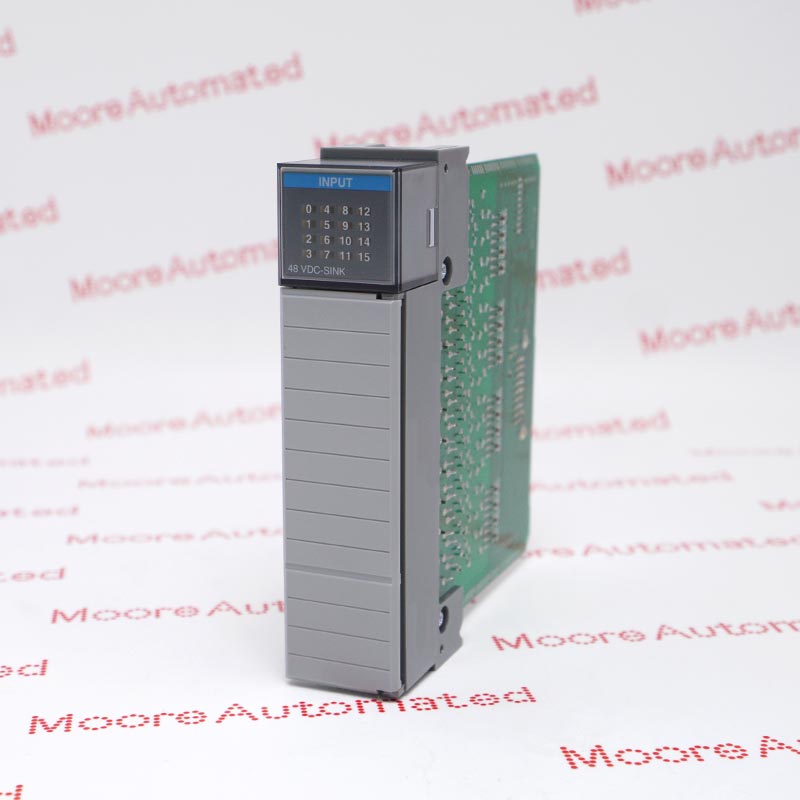
a Single-Slot Programmable Coprocessor (PCM) module
designed by GE Fanuc (now Emerson) for the Series 90-70
PLC platform. It acts as a performance booster, offloading
tasks like real-time computations, data acquisition, and
operator interfacing from the main CPU.
1. What is the system-level computational augmentation mechanism implemented in the IC697PCM711G, and how does it function as a deterministic co-processing entity within a Series 90-70 PLC architecture?
The IC697PCM711G operates as a single-slot programmable coprocessor module that offloads computationally intensive tasks from the primary PLC CPU. By executing parallelized real-time operations, it enhances deterministic system throughput and reduces CPU scheduling latency within the Series 90-70 backplane architecture.
2. How does the IC697PCM711G leverage its 80C186 microprocessor core to optimize real-time industrial control execution?
The IC697PCM711G integrates an 80C186 12 MHz microprocessor, enabling autonomous execution of logic routines, communication stacks, and data processing tasks. This architecture allows the IC697PCM711G to function as an independent processing node with embedded deterministic timing behavior.
3. In what way does the IC697PCM711G implement dual-tasking concurrency, and what are its implications for PLC workload partitioning?
The IC697PCM711G supports dual-tasking firmware execution, allowing simultaneous handling of computational and communication processes. This concurrency model enables efficient workload partitioning between the IC697PCM711G and the host PLC CPU, improving system responsiveness under high I/O demand conditions.
4. What are the memory hierarchy and data persistence mechanisms embedded in the IC697PCM711G for ensuring non-volatile program retention?
The IC697PCM711G utilizes battery-backed CMOS memory architecture, providing base user memory (approx. 96 KB) with optional expansion up to 512 KB. The IC697PCM711G maintains data retention for approximately six months without external power, ensuring operational continuity during maintenance cycles.
5. How does the IC697PCM711G manage multi-protocol serial communication within industrial automation networks?
The IC697PCM711G incorporates dual serial communication interfaces supporting RS-232, RS-422, and RS-485 standards. It can concurrently execute asynchronous communication streams, enabling integration with supervisory systems, HMIs, and distributed control nodes.
6. What is the electrical power consumption profile of the IC697PCM711G, and how is it derived from the PLC backplane?
The IC697PCM711G draws approximately 1.0 A from the 5 V DC backplane supply. This regulated power sourcing ensures stable operation while maintaining compatibility with Series 90-70 rack power distribution constraints.
7. How does the IC697PCM711G implement deterministic backplane communication with the host PLC CPU?
The IC697PCM711G communicates via the PLC backplane using high-speed shared memory mapping, enabling low-latency data exchange without requiring application-level protocol overhead, thereby preserving deterministic control timing.
For more information on how your data is processed and stored by Moore automated please read our privacy policy.
Trusted by 5,000+ plants worldwide | Backed by our vast inventory of top-tier control parts, drives and servo motors, fast shipments are dispatched to cover your urgent needs. ABOUT US >>
Moore Disclaimer: Moore Automated's sales automation equipment and related solutions are intended for industrial automation and business operational efficiency improvement purposes only. Product information, technical parameters, and application cases are for reference only and do not constitute an absolute guarantee of performance for any specific industry, scenario, or final application. Actual equipment performance may vary depending on factors such as the usage environment, system integration method, and maintenance conditions. Users should confirm compatibility and safety based on professional technical assessments. Moore Automated assumes no liability for any direct or indirect losses caused by improper use, modification, or failure to operate according to specifications, to the extent permitted by law.