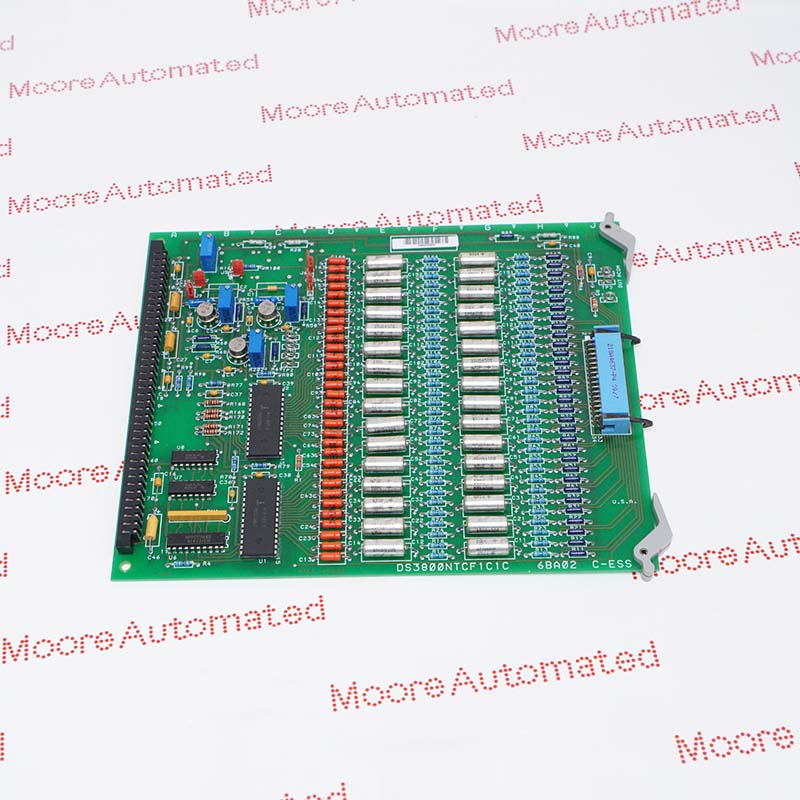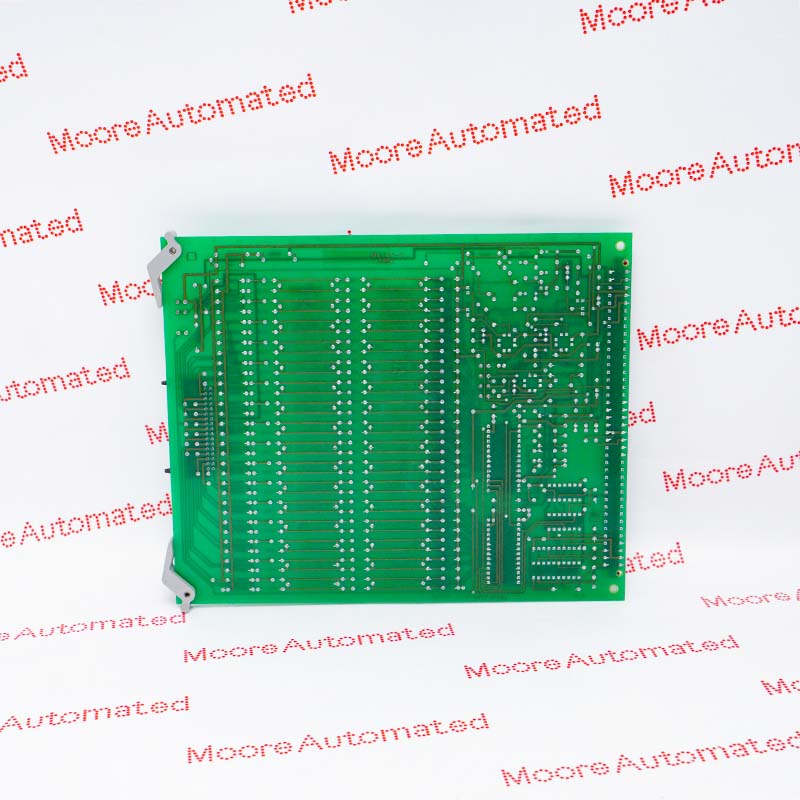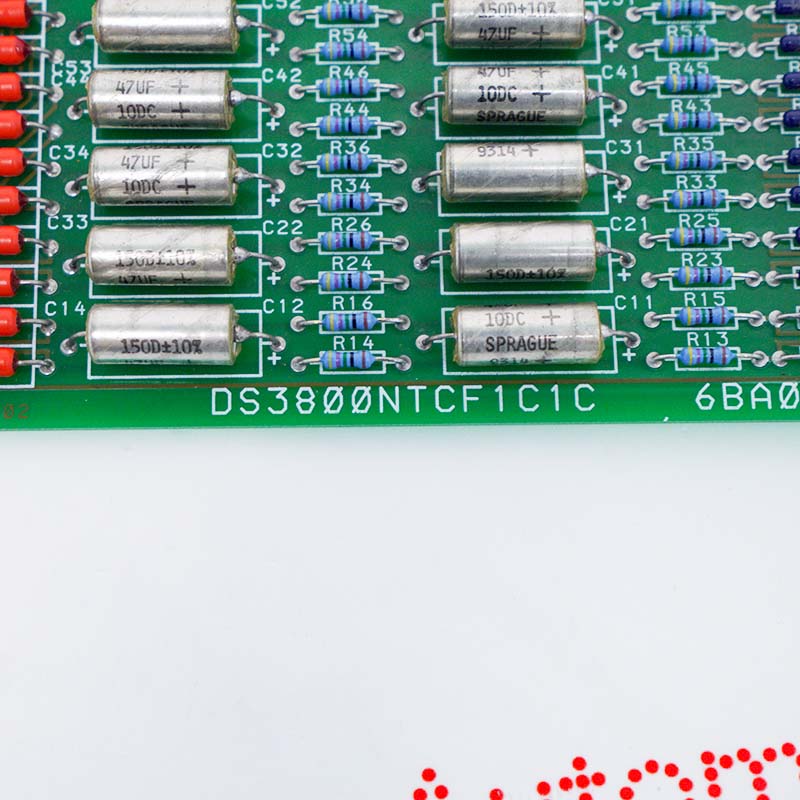
a Thermocouple Condition Card developed by GE
It is a part of the Mark N control system
This card is specifically designed to monitor and
regulate the exhaust temperature in turbine systems
ensuring optimal performance and preventing potential
damage due to temperature imbalances

1. What intrinsic functional architecture defines the DS3800NTCF1C1C within industrial control ecosystems?
The DS3800NTCF1C1C is architected as a highly specialized control and interface module, typically integrated within complex turbine or drive control systems. It embodies a multilayered circuitry design that facilitates signal conditioning, logic processing, and system-level interfacing, ensuring deterministic control behavior in mission-critical environments.
2. How does the DS3800NTCF1C1C orchestrate signal processing and what distinguishing methodologies does it employ?
The DS3800NTCF1C1C leverages precision analog-to-digital interfacing combined with discrete logic pathways to manage input/output signals. Its design often incorporates noise mitigation techniques, impedance matching, and transient suppression to preserve signal integrity under electrically noisy industrial conditions.
3. Why is the DS3800NTCF1C1C considered pivotal in legacy GE control systems architecture?
The DS3800NTCF1C1C plays a pivotal role due to its compatibility with legacy GE Mark IV or related control frameworks. Its robust engineering allows it to serve as a reliable intermediary between field instrumentation and central processing units, thereby sustaining operational continuity in aging yet critical infrastructure.
4. What environmental tolerances and operational thresholds govern the DS3800NTCF1C1C?
The DS3800NTCF1C1C is engineered to operate within stringent environmental parameters, including controlled temperature ranges, humidity resilience, and vibration tolerance. These specifications ensure stable functionality even in harsh industrial settings such as power generation facilities.
5. How does the DS3800NTCF1C1C ensure electromagnetic compatibility and minimize interference phenomena?
The DS3800NTCF1C1C integrates shielding strategies, grounded layouts, and carefully routed PCB traces to mitigate electromagnetic interference (EMI). Such design considerations are critical for maintaining signal fidelity and preventing cross-talk between adjacent circuits.
6. What diagnostic or fault-detection capabilities are embedded within the DS3800NTCF1C1C?
The DS3800NTCF1C1C typically incorporates onboard diagnostic indicators and test points that facilitate real-time troubleshooting. These features enable maintenance personnel to identify anomalies such as signal loss, voltage irregularities, or component degradation with greater precision.
7. In what ways does the DS3800NTCF1C1C contribute to system redundancy and reliability?
The DS3800NTCF1C1C supports redundancy schemes by maintaining stable and predictable signal pathways, which can be mirrored or backed up within the broader system architecture. Its high reliability reduces the probability of single-point failures in critical operations.
For more information on how your data is processed and stored by Moore automated please read our privacy policy.
Trusted by 5,000+ plants worldwide | Backed by our vast inventory of top-tier control parts, drives and servo motors, fast shipments are dispatched to cover your urgent needs. ABOUT US >>
Moore Disclaimer: Moore Automated's sales automation equipment and related solutions are intended for industrial automation and business operational efficiency improvement purposes only. Product information, technical parameters, and application cases are for reference only and do not constitute an absolute guarantee of performance for any specific industry, scenario, or final application. Actual equipment performance may vary depending on factors such as the usage environment, system integration method, and maintenance conditions. Users should confirm compatibility and safety based on professional technical assessments. Moore Automated assumes no liability for any direct or indirect losses caused by improper use, modification, or failure to operate according to specifications, to the extent permitted by law.