

Registered Address: 32D Floor Guomao Building, No.388, Hubin South Road, Siming District, Xiamen,Fujian, China
ISO 9001:2015 Certified
Our quality management system covers sourcing,testing and dispatch
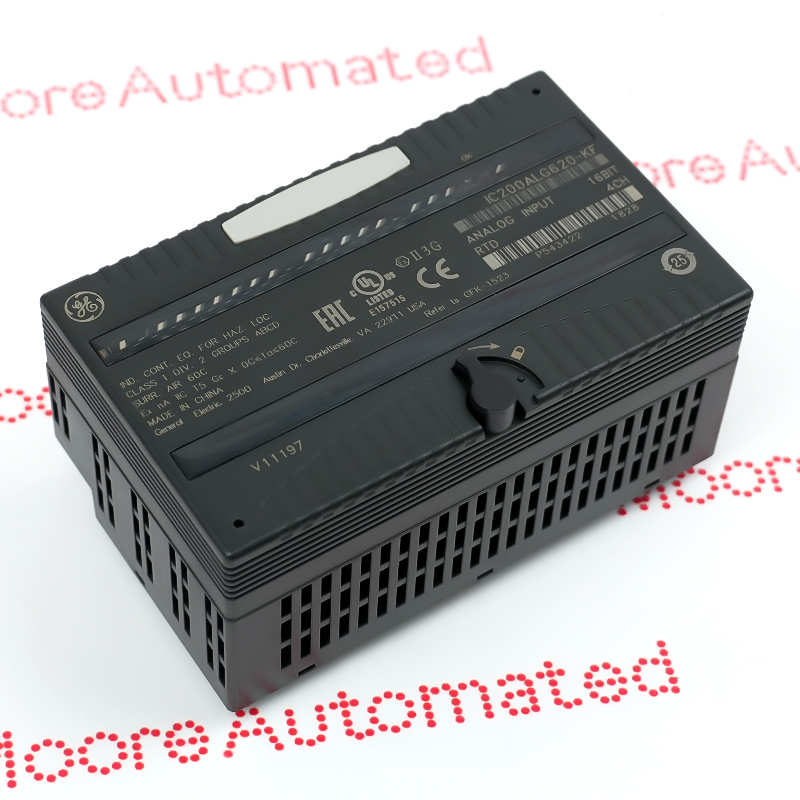
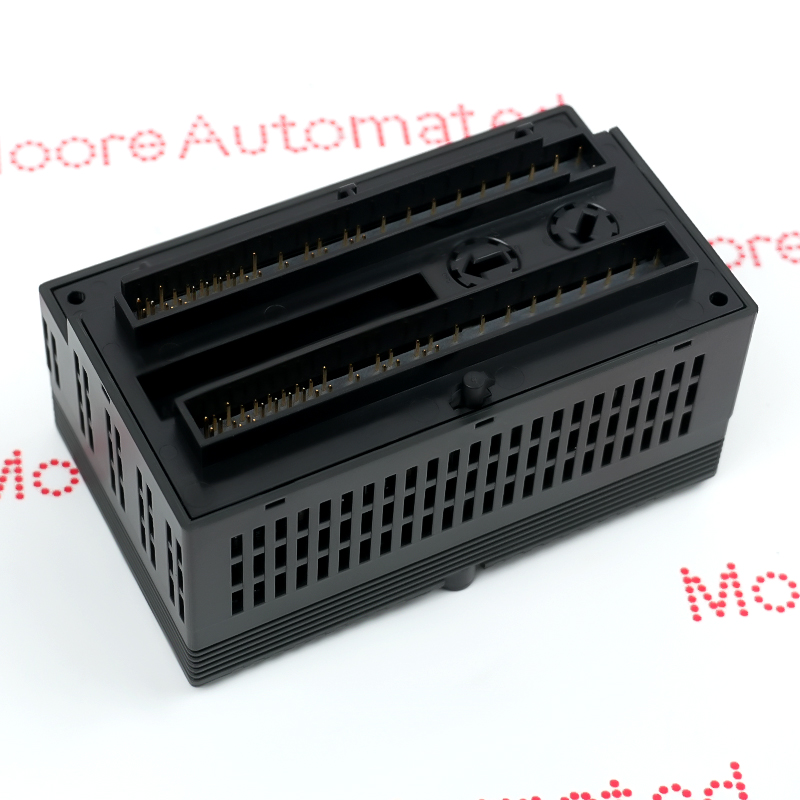
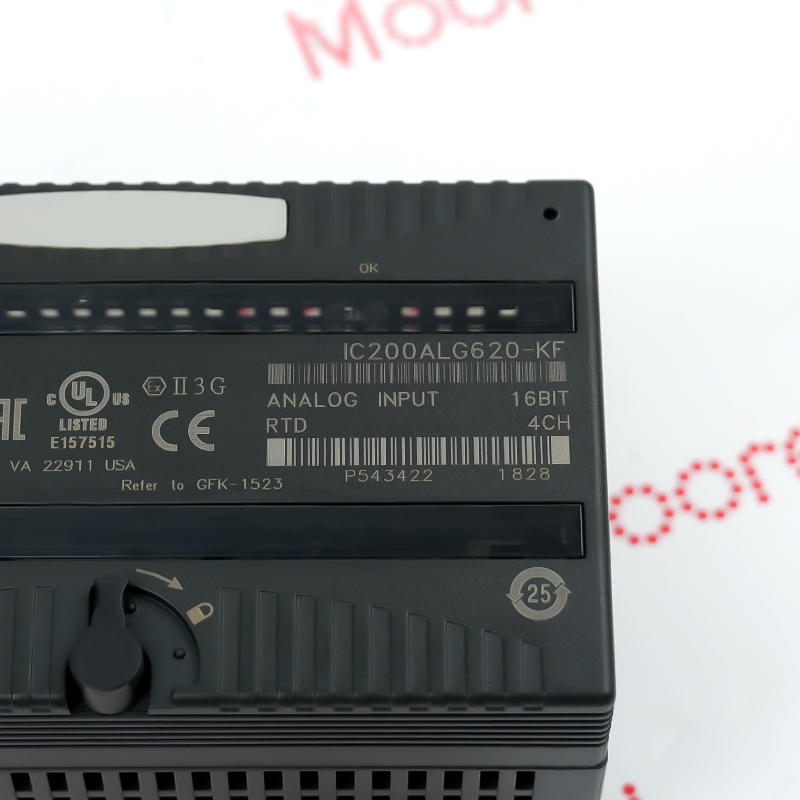
IC200ALG620 is a VersaMax analog input module for four independent 3-wire or 4-wire RTD channels. It accepts supported platinum, copper, nickel and nickel-iron RTDs and can report temperature or resistance values.
The module provides selectable 0–500 Ω and 0–3000 Ω resistance ranges, 15-bit-plus-sign digital resolution and automatic calibration. Channel diagnostics include open RTD, input short, under-range, over-range, wiring fault and high/low alarms.
IC200ALG620 is the VersaMax four-channel RTD analog input module listed by Emerson. Each channel can be configured independently for a supported RTD type, a 0–500 Ω or 0–3000 Ω resistance range, and the required engineering units.
The module draws its operating power from the VersaMax backplane and does not require a separate external field supply. Installation must preserve the documented carrier, terminal wiring, hardware revision and channel configuration.
Sensor wiring: Each of the four channels supports a documented three-wire or four-wire RTD connection.
Selectable elements: Platinum 25 Ω, 100 Ω and 1000 Ω; copper 10 Ω, 50 Ω and 100 Ω; nickel 100 Ω and 120 Ω; and nickel/iron 604 Ω.
Engineering format: Configure each channel for 0–500 Ω or 0–3000 Ω resistance, degrees Celsius or degrees Fahrenheit. Match the software setup to the connected element before enabling the channel.
Install IC200ALG620 on the documented VersaMax I/O carrier and verify the terminal assignment before reconnecting field wiring. The module is powered from the backplane and requires no separate external power supply.
Confirm the connected sensor type, three-wire or four-wire arrangement and channel range against the saved hardware configuration. For modules at firmware revision 1.11 or later, the published maximum lead resistance is 50 Ω per lead.
Before returning the RTD channels to service, compare the configured element type and engineering units with the field sensor schedule. Apply a known resistance or verified process temperature to each channel, confirm stable readings, and check that the PLC logic uses the correct channel data format.
The published channel update time is approximately 210 ms at 60 Hz or 230 ms at 50 Hz. Allow for this scan behavior when validating alarms, scaling and control responses.
Confirm the complete IC200ALG620 order code, the two-letter hardware revision, firmware level, module label and VersaMax carrier arrangement against the installed system documentation. If any identifier is unclear, provide a clear nameplate photograph before quotation so the exact RTD input module can be matched.
For an accurate IC200ALG620 quotation, provide the required quantity, complete model and revision, a clear nameplate photo, the installed VersaMax carrier or CPU/NIU, the connected RTD types and channel configuration, the destination country and the required delivery date.
IC200ALG620 remains listed in Emerson's current VersaMax product catalog. Moore Automated supplies high-quality GE VersaMax replacement modules and spare parts, with exact revision matching to reduce commissioning risk and plant downtime.

Registered Address: 32D Floor Guomao Building, No.388, Hubin South Road, Siming District, Xiamen,Fujian, China
MooreAutomated.com is the official website and primary online platform operated by Moore Automation Limited. The website provides information about the company’s industrial automation parts sourcing services, product coverage and customer support. Moore Automation Limited operates as an independent supplier and is not an authorized distributor or representative of the manufacturers displayed on this website unless expressly stated.