Overview
Manuals
Work environment
Primary Applications
Features:
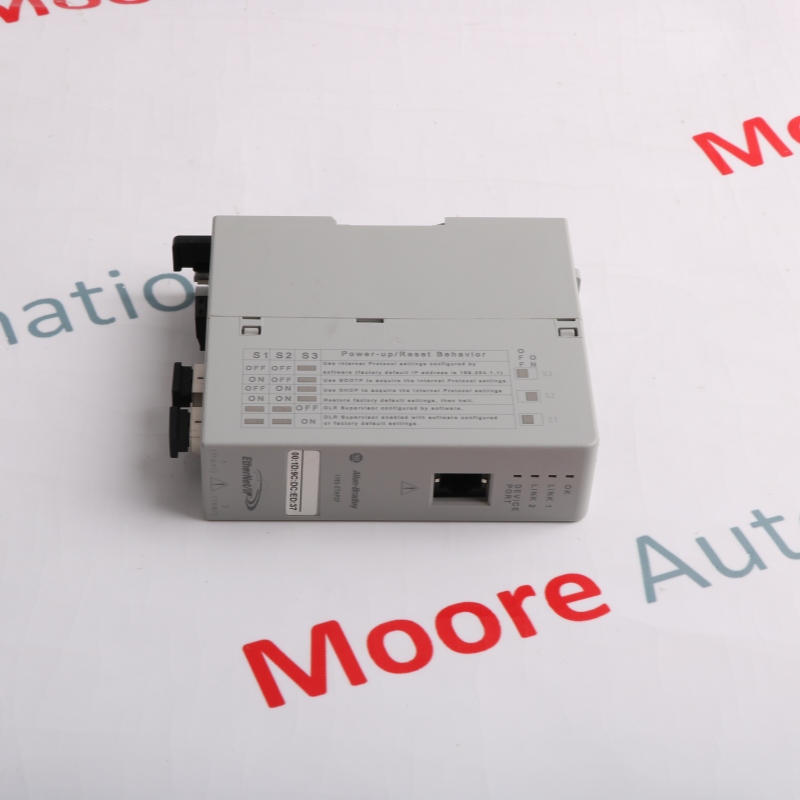
- Ethernet I/P Switch used for industrial Ethernet I/P communication
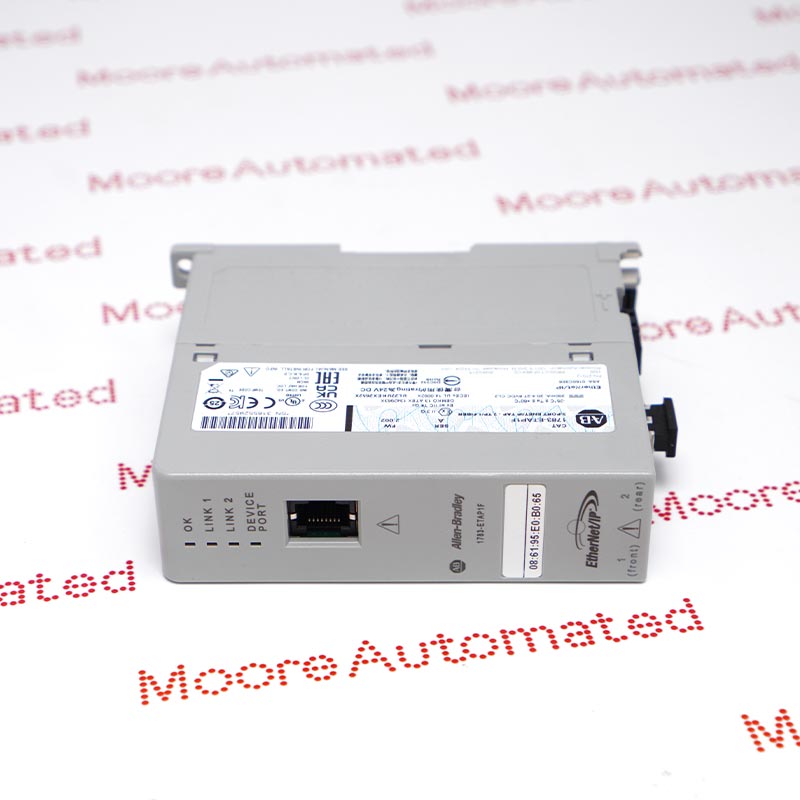
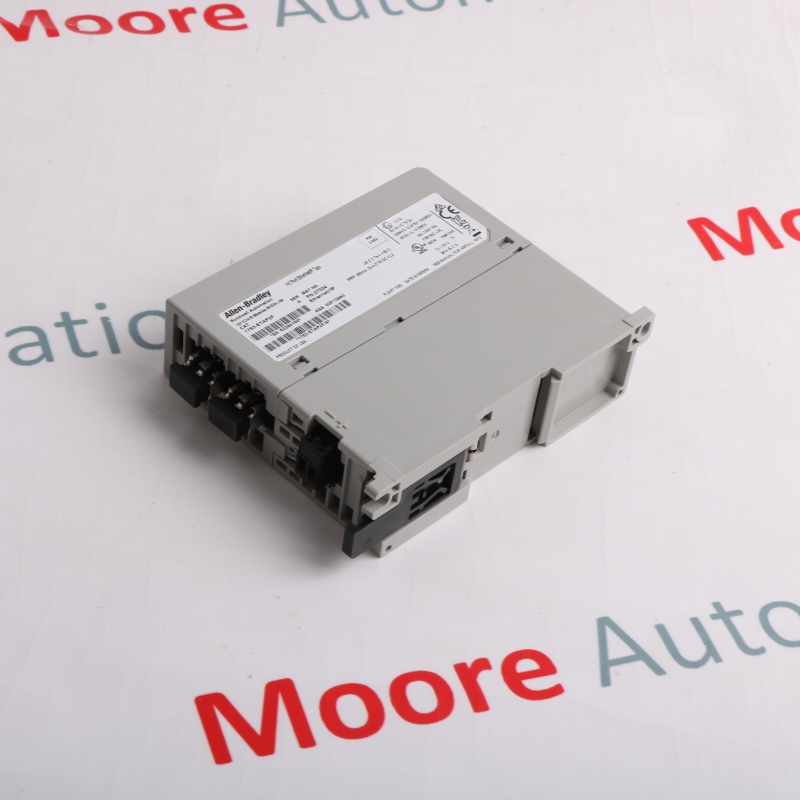
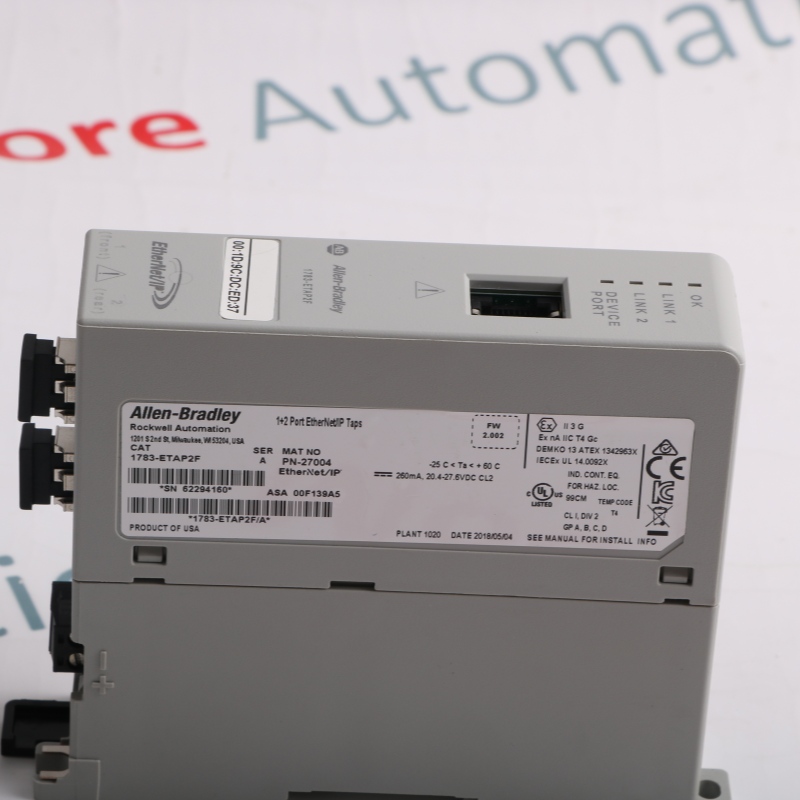
- This module has One (1) 10/100 Mbps, auto-negotiating copper port and Two (2) Fiber Optic interface
- This device support horizontal or vertical installation orientation using a standard DIN rail
The Allen-Bradley ETAP2F is an industrial Ethernet component featuring one copper port and two fiber optic interfaces, supporting 10/100 Mbps communication rates. It is compatible with Encompass partner modules as well as non-Allen-Bradley and third-party products.
The 1783-ETAP2F's single copper port supports 10/100 Mbps rates, features auto-negotiation, and supports full-duplex or half-duplex modes. The dual fiber optic ports also support 10/100 Mbps communication rates and longer communication distances, but are more susceptible to noise and electromagnetic interference.
The 1783-ETAP2F Allen Bradley Ethernet I/P Switch module may still be available for purchase and support from Moore Automated Company beyond End-Of-Life (EOL) by the manufacturer (OEM).
Allen Bradley 1783-ETAP2F Ethernet I/P Switch module manual(Datasheets), Link
Important Notice: Other accessories, manuals, cables, calibration data, software, etc. are not included with this equipment unless listed in the above stock item description. All prices are shown in USD.
The 1783-ETAP2F tap changer features an open housing. Its operating temperature range is -25 to 60 degrees Celsius, its storage temperature range is -40 to 85 degrees Celsius, and its relative humidity range is 5% to 95%. The non-operating shock rating and operating shock rating of the 1783-ETAP2F tap changer are 50 G and 30 G, respectively. Its vibration rating is 5 G, with a frequency range of 10 to 500 Hz. The 1783-ETAP2F tap changer has a radiation rating of Class A.
Device-Level Ring Network (DLR) Integration: Connects single-port EtherNet/IP hardware (such as frequency converters, human-machine interfaces (HMIs), or traditional control cabinets) to a highly resilient, fault-tolerant DLR ring network via its dual fiber optic ports.
Long-Distance Infrastructure Bridging: Utilizing fiber optic media, bridging distances far exceed the standard 100-meter physical distance limit of copper cabling.
Electrical Noise and Grounding Isolation: Deployed in environments or buildings with high electromagnetic interference (EMI), its non-conductive glass fiber optic media prevents electrical noise and grounding loops.
Fiber-to-Copper Media Conversion: As a stand-alone, unmanaged media converter, it can operate in linear or star topologies, directly bonding local copper cabling signals to the fiber optic backbone.