Get Repair Quote
Name
Company *
Phone *
Email *
Address
City
State / Province / Region
Zipcode
Country
Quantity *
Part Number *
Manufacturer
Preferred Condition
Additional Information
Cancel
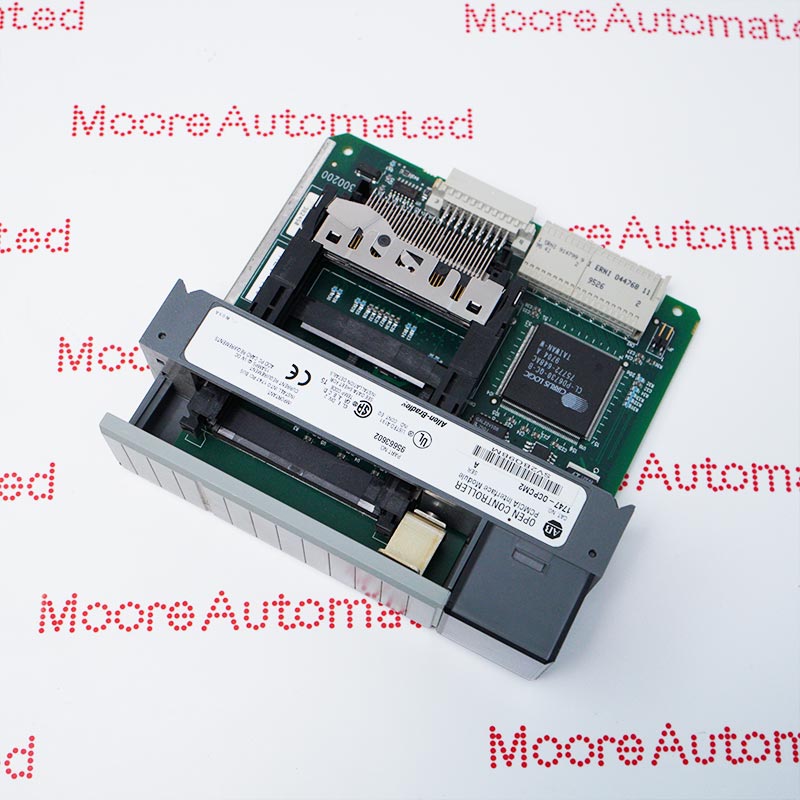
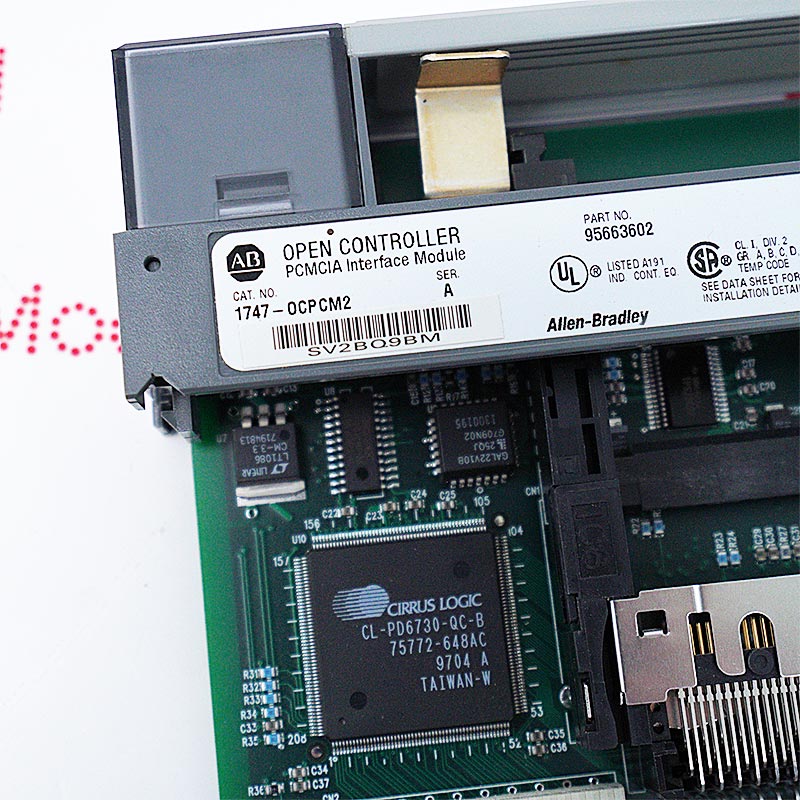
Allen-Bradley 1747-OCPCM2
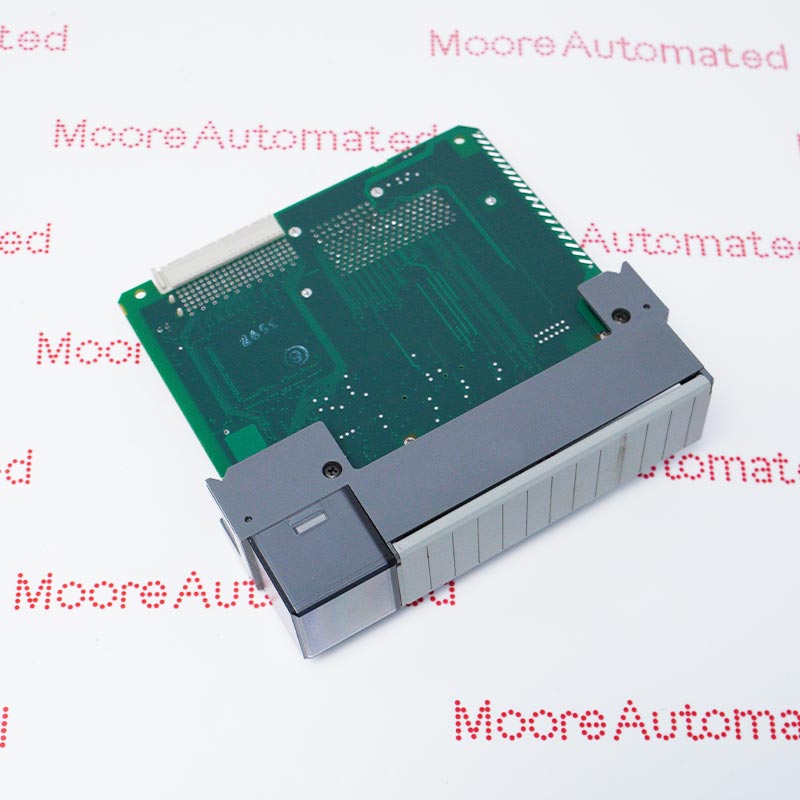
· Product image is representative; revision or series may vary. Contact us to request a specific version.

1747-OCPCM2

Dual PCMCIA Interface Module
In Stock

Product Information:

Dual PCMCIA Interface Module

designed specifically for use with

the 1747-OC series Open Controllers

within an SLC 500 PLC system

Expand All
Collapse all

Technical specifications for 1747-OCPCM2

  • Manufacturer:
    Allen-Bradley
  • Product Category:
    PLC System
  • Estimated shipping dimensions:
    15.2 x 20 x 14.8 cm
  • Weight:
    2.1 kg
  • Tariff Code:
    8537101190
  • Country of origin:
    USA
  • Place of shipment:
    Xiamen, Fujian, China
  • Product Type:
    PCMCIA interface module
  • Category Series:
    SLC 500 PLC system
  • Storage Temperature:
    0°C to +40°C
  • Operating Temperature:
    0°C to +40°C
  • Maximum Operating Humidity:
    80% (Non-Condensing)
  • Maximum Storage Humidity:
    80% (Non-Condensing)
  • Stock:
    30

Information

Overview Manuals Principle Core Applications

Features:

  • Dual PCMCIA Interface Module
  • SLC 500 series spare parts
  • Designed specifically for use with the 1747-OC series Open Controllers
It provides an interface for advanced communication tasks, enabling the controller to exchange data with external computers, networks, and monitoring systems. By offloading communication processing from the main PLC CPU, this module helps improve the overall system responsiveness and supports complex data-driven applications.

In addition to enhanced communication capabilities, the 1747-OCPCM2 also supports efficient integration with third-party devices and advanced monitoring solutions. Its modular design facilitates installation within the PLC rack and ensures reliable operation in industrial environments requiring stable, high-speed data exchange.

The 1747-OCPCM2 Allen Bradley Dual PCMCIA Interface Module may still be available for purchase and support from Moore Automated Company beyond End-Of-Life (EOL) by the manufacturer (OEM).
Allen Bradley 1747-OCPCM2 Dual PCMCIA Interface Module manual(Datasheets), Link Important Notice: Other accessories, manuals, cables, calibration data, software, etc. are not included with this equipment unless listed in the above stock item description. All prices are shown in USD.
During operation, the 1747-OCPCM2 receives commands and data from the PLC backplane, processes communication protocols through its onboard coprocessor, and manages data transmission and reception with external devices. This separation of communication tasks ensures faster PLC execution speeds, stable data flow, and reliable real-time system operation.
This module is primarily used in industrial environments to bridge the gap between PC-based control systems and the SLC 500 chassis. Key applications include:
Massive Data Logging: Storing large amounts of production data, recipe documents, or system event logs using PCMCIA memory cards, exceeding the internal storage space of a standard PLC CPU.
External Storage Expansion: Increasing the available storage space for custom PC control applications running on the Open Controller.
Third-Party Communication: Enabling the Open Controller to communicate with non-Rockwell devices using dedicated communication cards (e.g., specific fieldbus or network cards).
Software Distribution: Serving as a medium for loading or updating custom MS-DOS or Windows NT application software to the controller.
Ask our team:

  • What are the main communication and coprocessor functions of the 1747-OCPCM2 in a PLC-based automation system?
    As an advanced coprocessor and communication module, the 1747-OCPCM2 provides advanced data processing, protocol processing, and enhanced connectivity for industrial control architectures.
  • How does the 1747-OCPCM2 improve data processing efficiency in complex automation environments?
    The 1747-OCPCM2 offloads communication and computational tasks from the main controller, thereby accelerating the execution of control logic and optimizing system throughput.
  • In which industrial scenarios is the 1747-OCPCM2 most commonly used?
    The 1747-OCPCM2 is widely used in manufacturing automation, monitoring, and process control, applications that require advanced data exchange and external device integration.
  • Why is firmware and system compatibility crucial when integrating the 1747-OCPCM2 into an existing PLC infrastructure?
    Ensuring good compatibility with the 1747-OCPCM2 guarantees seamless communication with the backplane, stable protocol processing, and reliable synchronization with the host controller.
  • How does the 1747-OCPCM2 promote system scalability and modular expansion?
    The 1747-OCPCM2 supports modular integration, allowing automation systems to expand their communication capabilities without redesigning the core control architecture.
  • Why is the 1747-OCPCM2 considered a key component for advanced data communication in the PLC ecosystem?
    Its dedicated processing power, robust communication capabilities, and seamless integration make the 1747-OCPCM2 a critical component for high-performance industrial automation systems.
Quantity
Upload
(gif, jpg, jpeg, png, bmp, doc, docx, xls, xlsx, ppt, pdf, csv)
For more information on how your data is processed and stored by Moore automated please read our privacy policy.
Trusted by 5,000+ plants worldwide | Backed by our vast inventory of top-tier control parts, drives and servo motors, fast shipments are dispatched to cover your urgent needs. ABOUT US >>
Moore Disclaimer: Moore Automated's sales automation equipment and related solutions are intended for industrial automation and business operational efficiency improvement purposes only. Product information, technical parameters, and application cases are for reference only and do not constitute an absolute guarantee of performance for any specific industry, scenario, or final application. Actual equipment performance may vary depending on factors such as the usage environment, system integration method, and maintenance conditions. Users should confirm compatibility and safety based on professional technical assessments. Moore Automated assumes no liability for any direct or indirect losses caused by improper use, modification, or failure to operate according to specifications, to the extent permitted by law.