

Registered Address: 32D Floor Guomao Building, No.388, Hubin South Road, Siming District, Xiamen,Fujian, China
3008
Get A Quote
When a PLC rack dies at 2:00 AM and a bottling line or press line is down, nobody wants to hear about “standard lead times” and “procurement cycles.” In those moments, emergency procurement of automation parts is the difference between a rough night and a multi-day shutdown that ruins delivery promises and damages customer trust.
As an automation engineer on site, I have lived both versions. Plants that treat emergency buying as a controlled, pre-engineered process get back online quickly. Plants that improvise every time end up with unsafe temporary fixes, bad part substitutions, and expensive surprises at month-end.
This article walks through how to design streamlined urgent ordering for automation parts, anchored in published guidance on procurement automation, emergency purchasing, and resilience, and translated into practical steps you can actually run from the shop floor.
Emergency procurement is not just “rush ordering.” In public-sector guidance, emergency procurement is framed as buying under unusual and compelling urgency when waiting for normal competitive processes would cause harm. Federal acquisition rules describe built-in flexibilities in these situations, such as limiting competition, using pre-established contracts, and relaxing some registration and qualification requirements, while still insisting on documentation and oversight.
Industry guidance on emergency procurement manuals describes a similar idea in private organizations: a structured, pre-agreed roadmap that purchasing teams follow when normal supply is disrupted. It combines risk assessment, predefined roles, supplier strategies, and communication plans so the organization can move quickly without improvising every decision.
For an automated plant, emergency procurement of automation parts is any purchasing activity triggered by an event that threatens worker safety, disrupts or shuts down operations, or risks significant property or environmental damage if not addressed immediately. That aligns with how OSHA defines a workplace emergency and how Emergency Action Plans are expected to function. In other words, when a failed servo drive or safety relay turns into a genuine emergency, your procurement response needs to be as well engineered as your interlocks.
Emergency breakdowns rarely come out of nowhere. Supply-chain and planning research highlights three familiar root causes for emergency replenishment: inaccurate demand forecasting, poor anticipation of supplier lead times, and unreliable suppliers whose deliveries are late, missing, or defective. Industry articles on avoiding emergency breakdowns also underline weak safety stock strategies, lack of alternative sourcing, and poor visibility into supplier defect rates as major drivers.
On top of those structural issues, automation hardware brings its own set of triggers.
Aging control platforms that have been stretched well past their intended life, with spare modules long obsolete, are common in plants that have grown by accretion. Environmental stress such as heat, dust, vibration, or power-quality spikes slowly kills I/O cards, network switches, and drives. Sudden demand spikes or upstream material shortages, described in emergency procurement manuals for material shortages, can drain stock of common sensor or valve families. If your forecasting and supplier monitoring are weak, you only discover the gap when the last spare is used, often during a critical run.
Academic work on emergency procurement resilience describes a volatile, uncertain, complex, and ambiguous context, and emphasizes that shocks at the procurement stage ripple through the entire emergency supply chain. That picture matches what happens on the plant floor: a single failed controller with no replacement becomes a resilience problem, not just a maintenance task.
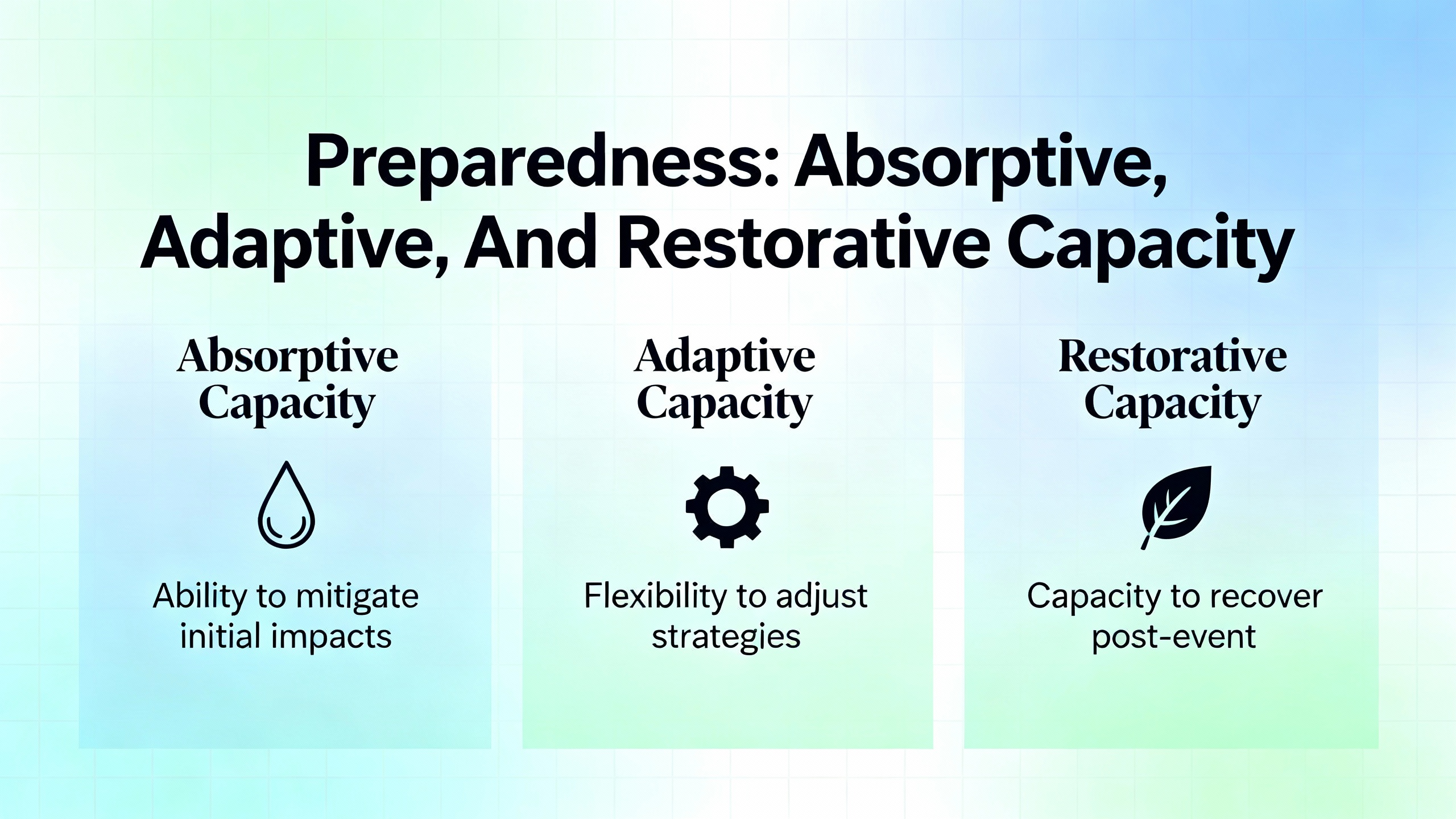
A recent review of resilient emergency procurement strategies breaks resilience into three capacities: absorptive, adaptive, and restorative. That framework is useful for automation parts as well.
Absorptive capacity is the ability to absorb a disruption with minimal immediate impact. In procurement research, recommended strategies include supplier diversification, multi-sourcing, and inventory pre-positioning based on scenario analysis. Industry guidance on emergency procurement manuals and supply-chain planning complements this with safety stock, robust inventory management, and careful classification of SKUs so that efforts focus on high-impact items.
In automation, absorptive capacity looks like a well-thought-out critical spares strategy. That includes safety stock of PLC CPUs and communication cards, key safety relays and light curtains, core VFD models, critical sensors, and industrial network hardware that would otherwise strand entire cells. Supply-chain best practices suggest sizing safety stock with demand variability, supplier reliability, and product criticality in mind, often using ABC methods to focus on the small set of items that drive most of your operational risk.
Preparedness guidance from OSHA stresses that each site should have a tailored emergency plan based on hazard assessment and layout. For automation parts, that means each plant needs its own critical list based on installed base, failure history, and process criticality, not a generic corporate catalog.
Adaptive capacity is the ability to adjust your sourcing and contracting during the disruption. The emergency procurement literature emphasizes dynamic supplier selection, backup suppliers, and contractual flexibility so organizations can scale orders up or down. Public-sector emergency procurement manuals highlight maintaining strong relationships with multiple preferred suppliers, with up-to-date contact details and material lists, to secure alternative sources during crises.
Supplier-risk guidance recommends formal risk assessment, structured questionnaires, and risk scorecards to rate suppliers on logistics reliability, financial stability, quality, and strategic fit. That same discipline applies to automation. You want multiple credible sources for critical control components: OEMs, authorized distributors, panel shops, repair houses, and, where appropriate, marketplace sellers whose quality and authenticity have been checked. The point is not to scatter spend but to have options ready when your primary route is blocked.
In the public sector, micro-purchase rules allow agencies to buy small-dollar items quickly without full competition, which accelerates response when time is critical. While private plants are not bound by those thresholds, many procurement best-practice guides recommend similar tiered approval rules, where small urgent buys within policy are streamlined and larger, higher-risk buys invoke more oversight.
Restorative capacity is the ability to return to a stable state after the disruption. Academic studies on emergency procurement talk about minimizing time-to-recovery, managing disruption costs, and using stochastic models and predictive analytics to plan recovery paths. In practice, this means understanding how long it takes to fully restore normal operations and what process changes can shorten that time next time.
Digital procurement transformation case studies, including work at FEMA, highlight how AI and robotic process automation across sourcing, contracting, and invoice matching provide the “trophy” of time: faster cycle times and clearer visibility. Only a small share of agencies in that research had fully implemented AI, but many were piloting it specifically to make existing procurement processes faster and easier without adding complexity.
For an automation plant, restorative capacity means more than getting a line running again. It involves capturing what happened, cleaning up any temporary bypasses, updating bills of material, provisioning new spares, and feeding the data into both maintenance and procurement systems so the next event is handled better. Without that loop, every emergency feels like the first time.
Most procurement automation content focuses on the end-to-end procure-to-pay cycle, but the core ideas map directly to emergencies: standardization, automation where rules are clear, and visibility from request to payment. One procurement workflow guide notes that manual workflows can cost businesses up to thirty percent more due to inefficiencies and human error, which is exactly what shows up in frantic emergency buys, duplicate orders, and expedited shipping.
A streamlined urgent ordering workflow in an automated plant typically has five stages.
Everything starts with diagnosis. The maintenance or controls engineer needs to identify the failed item, its function, and the acceptable replacement options. This is where structured data matters. Guides on procurement automation emphasize that poor data quality, scattered spreadsheets, and outdated records undermine every automation effort. The same problems cripple emergencies: if BOMs are wrong and vendor part numbers are missing, you burn precious time just figuring out what you actually need.
A good urgent ordering process gives engineers a simple, standardized digital form to capture the technical need: asset, location, exact part number, firmware or revision constraints, known compatible alternatives, and whether reprogramming or revalidation will be required. Several procurement best-practice sources stress the value of standardized intake forms and clear process documentation; emergency workflows benefit from this structure even more because people are operating under stress.
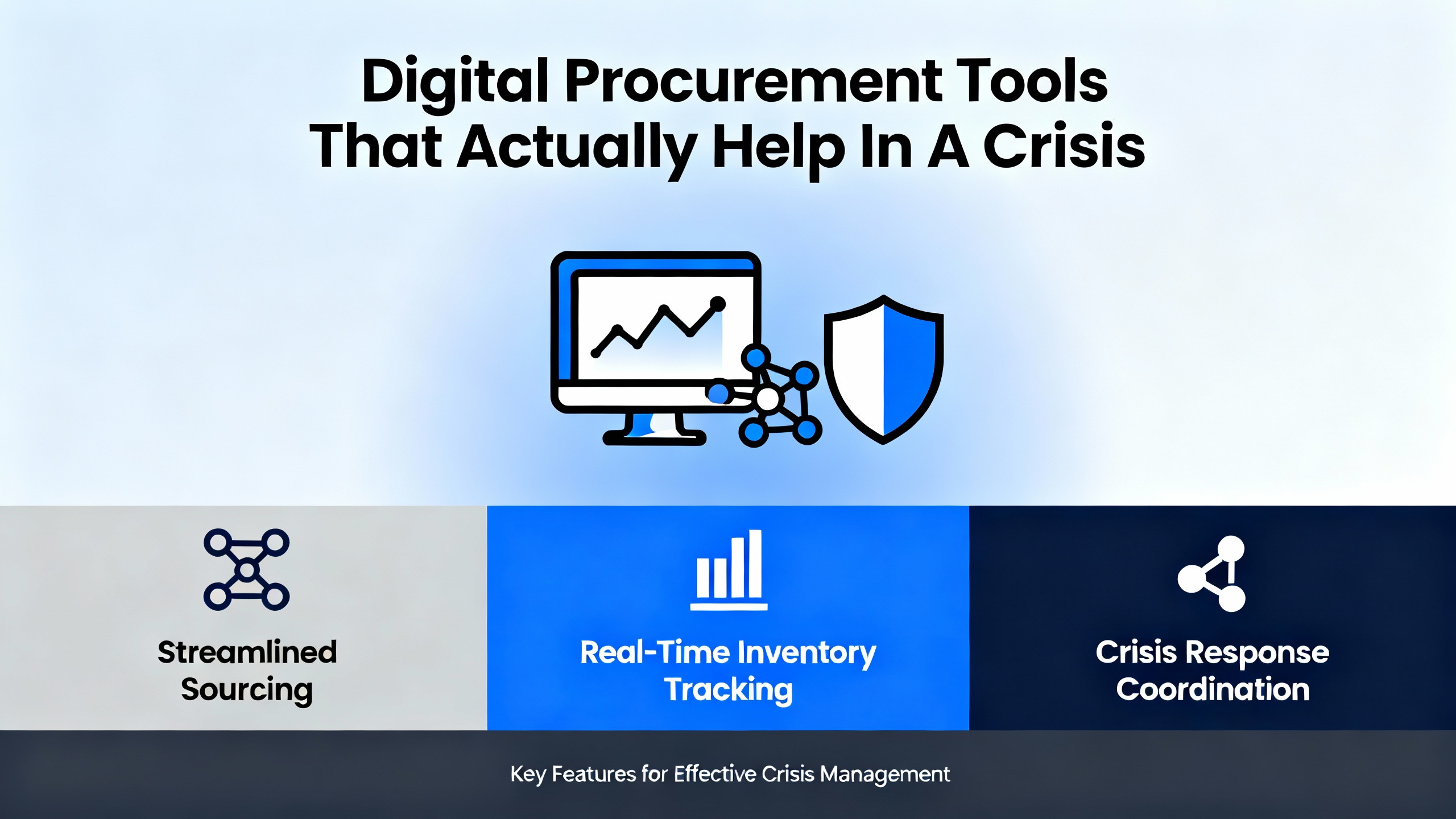
Once the need is clear, the next step is sourcing. Procurement automation platforms for manufacturing emphasize using digital catalogs, preferred supplier lists, and integrated marketplace access to centralize sourcing in one place. For emergency parts, that central hub should immediately show on-hand inventory in your network, contract availability with preferred suppliers, and external marketplace options, including lead times and pricing.
Research on procurement automation shows that digital tools can cut purchasing cycle times roughly in half and save significant costs by flagging overspending and tail spend early. When applied to emergencies, the emphasis is less on shaving a few dollars off unit price and more on seeing all viable options quickly so the team can make an informed tradeoff between lead time, compatibility risk, and cost.
Emergency procurement lives or dies on approvals. Studies on procurement automation and spend control repeatedly highlight automated approvals based on thresholds and categories as one of the most powerful features. Cloud-based platforms and marketplace-integrated tools support pre-defined approval chains, budget checks, and route requests automatically, replacing the traditional email chase.
In the public sector, guidance on procurement preparedness recommends explicit decision frameworks and clear steps for expedited purchasing during crises. Private plants can mirror that logic: define who may approve what under emergency conditions, how exceptions are documented, and which categories are allowed for streamlined approvals. Financial-control best practices emphasize tying approvals to purchase value, maintaining audit trails, and generating alerts for unusual spending; these same controls can run in the background, even when the front-end process is intentionally fast.
Once the order is placed, the focus is logistics and coordination. Procurement automation references talk about three-way matching, digital invoice processing, and automated payment scheduling. For emergency automation parts, the critical capabilities are shipment tracking, clear delivery instructions to the plant, and fast confirmation that the correct item arrived.
Automated invoice processing and document extraction, as described by document-management providers, reduce the paperwork friction that often delays receipt and payment. Instead of copying data from emailed PDFs under time pressure, OCR tools capture invoice details, match them to the purchase order and receipt, and flag discrepancies. This not only keeps finance accurate, it avoids after-the-fact disputes with suppliers who helped you in a crisis.
The final stage is closing out the event. Procurement and automation articles on continuous improvement and analytics emphasize the importance of tracking cycle times, spend under management, supplier performance, and exception rates. Emergency procurement literature adds resilience metrics such as time-to-recovery and disruption cost.
In practical terms, the closeout step should update spares inventory, refresh BOMs, record any substitute parts used, and capture what went well or poorly in the process. That information feeds future safety stock calculations, supplier assessments, and playbook revisions. Without this step, emergency procurement never matures; it just repeats.
The contrast between manual and automated procurement is especially stark when the plant is down. Procurement automation guides for SaaS and manufacturing provide helpful comparisons that translate well to urgent orders of automation hardware.
Here is a simplified view.
| Step | Manual emergency ordering | Streamlined, automated urgent ordering |
|---|---|---|
| Request intake | Phone calls, emails, and scribbled part numbers; high risk of misidentification | Standardized digital request with required fields, linked to asset and BOM data |
| Approvals | Ad hoc manager signoffs, delays when people are offline | Rule-based routing with thresholds and pre-approved emergency paths |
| Sourcing visibility | Calling multiple vendors one by one, no unified view of price and availability | Central view of contracts, stock, and marketplace offers with lead times and terms |
| Tracking and communication | Status hidden in inboxes, repeated calls between maintenance, purchasing, and suppliers | Real-time tracking of request, order, and shipment status visible to all stakeholders |
| Documentation and analytics | Inconsistent records, hard to reconstruct after the crisis | Automatic logging of decisions, timestamps, and spend data for later analysis and auditing |
One procurement article notes that automating purchase orders addresses inefficiencies acknowledged by around forty-three percent of organizations. That statistic reflects business-as-usual scenarios, but the underlying cause is the same in emergency buys: fragmented communication and manual data entry.
Multiple procurement automation guides converge on a few capabilities that are particularly valuable for emergency automation parts.
First, e-procurement and requisition tools create a single entry point for purchase requests, with standardized data capture and built-in policies. Articles aimed at manufacturers emphasize digital requisition forms, auto-routed approvals, and tight integration with ERP and MRP systems so stock levels and budget data stay in sync.
Second, automation of purchase orders, invoice capture, and approvals cuts cycle time and error. Industry sources describe how automated three-way matching and rule-based invoice checks enable touch-free approval of low-risk invoices, freeing staff to focus on exceptions. Some vendors report that applying AI across procurement categories can deliver double-digit percentage savings and reduce purchasing cycle times by up to half. While these figures are broad and not specific to automation hardware, the mechanism—eliminating rework and handoffs—is directly relevant.
Third, spend and supplier analytics turn emergency procurement from a pure firefight into a data-driven improvement loop. Procurement software providers and workflow tools stress the value of spend cubes, supplier performance dashboards, and contract analytics for spotting maverick buying, tail spend, and poor-performing vendors. For emergency automation parts, these same tools help identify which parts are driving repeated urgent orders and which suppliers consistently deliver under pressure.
Finally, AI and robotic process automation are starting to play a role. Public-sector case studies show that only a small fraction of agencies have fully implemented AI, but pilots are already using AI to find suppliers faster, match invoices automatically, and ensure compliance. Commercial platforms similarly advertise AI-driven demand forecasting, anomaly detection, and autonomous sourcing. The key is to use these tools to augment, not replace, the judgment of engineers and buyers.
One caution from procurement automation research is important here: automating flawed processes makes problems worse. If your data is inaccurate, your supplier base is poorly managed, and your emergency rules are unclear, automation will simply speed up bad decisions. Several authors recommend process audits, stakeholder feedback, and data cleansing before large-scale automation, and that advice applies doubly to high-stakes emergency workflows.
Emergency procurement cannot be a shortcut around basic governance. The Federal Acquisition Regulation’s emergency flexibilities illustrate this balance: contracting officers may relax certain requirements in urgent situations, such as formal synopsis notices or full competition, but they are still expected to consult disaster registries, document the rationale for limited competition, and maintain auditability. Agencies can use tools like letter contracts and extraordinary contractual actions to start work quickly, yet must follow defined rules and justify their decisions.
For industrial plants, internal governance plays the same role. Procurement best-practice guides highlight the importance of segregation of duties, approval workflows tied to value, audit trails, and alerts for unusual spending. Digital platforms make it easier to enforce those controls even when a buyer is moving fast.
Safety standards add another layer. OSHA requires Emergency Action Plans with procedures for reporting emergencies, evacuating, and accounting for workers, and recommends detailed communication and coordination with responders. While those requirements do not dictate procurement methods, any emergency parts strategy must respect safety functions and regulatory obligations. You cannot quietly bypass safety devices or swap in non-compliant components just because the line is down.
Guidance from the Department of Homeland Security and standards bodies on equipment selection emphasizes using recognized standards in purchasing to ensure gear meets minimum performance and safety criteria. The responsibility often falls on the purchaser to verify compliance rather than relying solely on vendor claims. In automation, that means emergency-buying a safety relay or encoder should still go through the same standards lens as normal purchasing; the process must be faster, not looser.
Industry guidance on emergency procurement manuals recommends a deliberate, staged approach: gather a cross-functional team, analyze current processes, draft practical procedures, train staff, and keep the manual current. For automation parts, that playbook should connect maintenance, engineering, procurement, finance, and IT.
A good starting point is scenario mapping. OSHA encourages hazard assessments tailored to each site, and resilience research uses scenario-based models for inventory pre-positioning. For an automated plant, map scenarios such as failure of a main PLC chassis, loss of a central network switch, or simultaneous failure of multiple drives on a key production line. For each, document what part families are involved, what safety implications exist, and what recovery paths are acceptable.
Next, decide what to pre-stock and what to source on demand. Emergency procurement manuals and supply-chain planning articles recommend defined safety stock levels and reorder points, balanced against the cost of overstocking. Combining safety stock concepts with ABC classification ensures that the highest-impact automation items receive the most protective stocking policies, while lower-impact SKUs rely more on supplier capacity and flexible sourcing.
Supplier strategy is the third pillar. Newji’s emergency procurement manual guidance stresses strong relationships with multiple preferred suppliers, while resilience research highlights backup suppliers as a crucial adaptive mechanism. Supplier-risk frameworks recommend questionnaires, scorecards, and ongoing database updates to keep risk assessments current. In automation, that translates into a curated supplier portfolio with clear roles: primary OEM channels, secondary distributors, repair partners, and vetted marketplace or surplus sources for last-resort situations.
Integration and training are the final pieces. Procurement automation case studies for manufacturers stress phased rollouts, training workshops, simulations, and power users to support adoption. OSHA’s Emergency Action Plan guidance emphasizes drills, roles, and communication methods. An emergency automation parts playbook should be rehearsed in tabletop exercises, with engineers and buyers walking through sample breakdown scenarios using the actual tools and forms they will use at two in the morning.
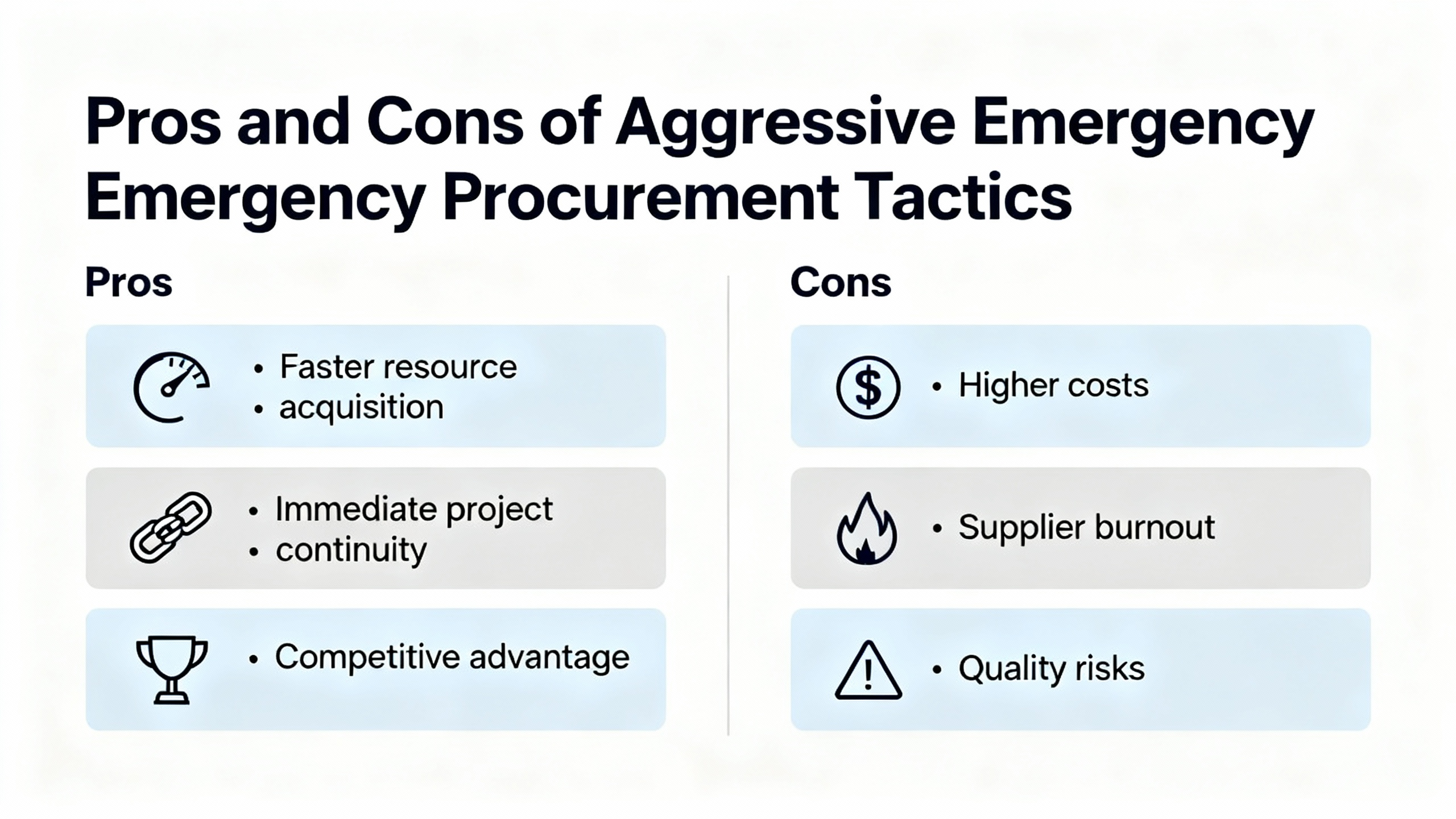
When plants start formalizing emergency procurement, they often consider more aggressive tactics: paying premiums for guaranteed response, holding large spare inventories, or centralizing all emergency authority in a small expert group. Each approach has tradeoffs.
Pre-approving premium-priced emergency spot buys can dramatically cut time-to-order, especially when suppliers offer dedicated emergency services. The upside is speed and clarity; the downside is the risk of normalizing expensive shortcuts and eroding discipline on total cost of ownership. Emergency procurement literature warns that focusing only on immediate availability without controlling budget can create significant indirect disruption costs.
Holding large sets of critical spares increases absorptive capacity, reducing the likelihood that any single failure becomes an emergency. Supply-chain planning research acknowledges this, while also pointing out that overstocking ties up capital and increases carrying cost and obsolescence risk. For automation hardware with short product lifecycles, the risk of holding obsolete stock is real and should be considered explicitly.
Relying on a single local distributor for emergencies creates simplicity and often strong relationships, but contradicts resilience research that underscores supplier diversification and backup options. Single-supplier strategies are fragile when disasters, logistics disruptions, or local events hit that supplier.
Heavy reliance on automation platforms in emergencies brings its own pros and cons. On the positive side, several sources show that digital workflows, AI, and RPA can slash manual effort, reduce errors, and provide the “breathing room” teams need to focus on strategy. On the negative side, if the underlying processes and data are poor, automation can amplify mistakes. Fairmarkit’s analysis of procurement automation risks uses the example of uncorrected over-ordering errors that, once automated, rapidly create surplus inventory and tied-up capital.
The right answer is usually a balanced portfolio: defined but limited premium options, safety stock tuned by risk and lifecycle, multiple suppliers with clear roles, and automation that is introduced after the foundations—data, policies, and training—are solid.
You cannot improve what you do not measure. Procurement automation platforms and resilience studies suggest a range of useful metrics.
On the procurement side, recommended metrics include average cycle time from requisition to approval, percentage of spend under purchase order, touchless order rate, and rates of invoice-PO mismatches or exceptions. Manufacturing-focused guides add spend under management, supplier compliance, and inventory-related KPIs. These metrics show how efficiently your urgent ordering process runs relative to your baseline.
Resilience research introduces metrics like time-to-recovery, disruption cost, and performance levels maintained during and after disruption. For automation parts, time-to-recovery can be defined in practical terms: time from failure detection to safe restoration of full capacity. Disruption cost may be harder to quantify precisely, but even qualitative scoring helps compare events and prioritize improvements.
Emergency procurement manuals recommend regular reviews and updates to incorporate lessons learned from past shortages and disruptions. After each significant emergency event, assemble a short, structured review: what triggered the event; how the urgent ordering process performed; where delays, errors, or rework occurred; and what changes should be made to inventory, suppliers, approvals, or digital tooling.
Over time, this loop turns emergency procurement from a hero-driven activity into a managed capability, just like preventive maintenance or safety management.
How much safety stock of PLC and drive parts should we hold for emergencies?
Industry guidance emphasizes safety stock and buffer inventory as critical tools to mitigate demand variability, shortages, and delays, but it does not prescribe one-size-fits-all numbers. A practical approach is to combine demand and failure history, supplier lead-time reliability, and ABC classification. High-impact automation items that can stop production or create safety risk deserve higher safety stock and more conservative reorder points. Lower-impact or easily substitutable items can be managed with leaner buffers and stronger supplier commitments instead.
Can we rely on online marketplaces for emergency automation parts?
Procurement preparedness and disaster-response programs in the public sector use e-procurement platforms and integrated eCommerce sources to speed access to critical goods, but they also stress prequalified suppliers, standards-based specifications, and clear compliance checks. For automation parts, online marketplaces can be valuable for locating scarce items quickly, especially during widespread disruptions. However, you should pre-vet sellers where possible, check that products meet relevant standards, and integrate marketplace buying into your formal procurement workflows so documentation, approvals, and traceability remain intact.
Who should own the emergency procurement playbook: maintenance, engineering, or procurement?
Across both emergency procurement manuals and procurement best-practice guides, the consistent recommendation is cross-functional ownership. Procurement brings expertise in contracts, compliance, and tools; maintenance and engineering bring technical and risk knowledge; finance brings budget oversight; and safety and operations ensure that emergency decisions align with broader emergency action plans. In practice, one function should coordinate, but the playbook itself should be developed, reviewed, and trained jointly.
Strong automation is not just about how your PLC code handles edge cases; it is also about how your organization handles real-world edge cases in supply. If you design emergency procurement of automation parts with the same rigor you apply to safety functions and interlocks, you will spend less time firefighting and more time improving the plant. The best time to engineer that urgent ordering process is before the next line-stop call, not after.



Registered Address: 32D Floor Guomao Building, No.388, Hubin South Road, Siming District, Xiamen,Fujian, China
MooreAutomated.com is the official website and primary online platform operated by Moore Automation Limited. The website provides information about the company’s industrial automation parts sourcing services, product coverage and customer support. Moore Automation Limited operates as an independent supplier and is not an authorized distributor or representative of the manufacturers displayed on this website unless expressly stated.
Leave Your Comment