

MP 3009X
Get A Quote
When you spend your days on factory floors and in electrical rooms, you stop thinking of “power” as a simple on/off condition. It is a chain of vulnerable links: incoming utility, switchgear, transfer switches, breakers, UPS systems, PLC power supplies, and hundreds of seemingly ordinary components that quietly keep everything alive. When any one of those links fails during a storm, a wildfire‑related blackout, or a grid disturbance, you do not just lose lights. You risk downtime, product loss, safety incidents, and in some facilities, life‑safety systems going dark.
The U.S. Energy Information Administration has reported that nearly all electrical customers experience at least one outage per year, with typical events lasting more than an hour. Other research points out that outages and grid instability are trending in the wrong direction, driven by extreme weather and aging infrastructure. In that environment, an emergency electrical components supplier is not a “nice to have.” It is a strategic partner that keeps your power and control systems recoverable when the grid or your own equipment lets you down.
As an industrial automation engineer, I have been on calls where a single obsolete breaker or a failed generator battery has stopped a whole production line. The facilities that ride through those events with the least pain are the ones that have already built relationships with suppliers who know how to respond fast, source hard‑to‑find parts safely, and support emergency power systems around the clock. This article breaks down how to think about emergency electrical components, how rapid‑response suppliers operate, and what to look for when you choose one.
Before talking about suppliers, it is worth clarifying what “emergency power” actually covers. In code language, emergency power supply systems and the components that feed them are more structured than most people realize.
An emergency power supply system (EPSS), as described by NFPA 110, is the entire arrangement that delivers backup power when the primary utility fails. It includes the generator or other power source, the controls, switchgear, transfer switches, batteries, fuel system, and associated wiring. Within that EPSS, the emergency power supply (EPS) is the actual power source. Most commonly that means an engine‑generator set fueled by diesel, natural gas, propane, or gasoline, sized to pick up all loads designated as emergency or standby.
NFPA distinguishes between Level 1 and Level 2 systems. Level 1 systems are those where failure could result in loss of human life or serious injury. In practice, they feed loads such as emergency lighting, fire alarm systems, fire pumps, smoke control equipment, elevators dedicated to egress, and life‑sustaining medical equipment. Level 2 systems support less critical functions like HVAC, ventilation, water treatment, and some industrial processes where power loss creates hazards or hampers rescue or firefighting, but is less immediately life‑critical.
Outside the code world, emergency power solutions for homes and small facilities are often grouped into a few practical categories, based on guidance from manufacturers and backup‑power specialists:
Fuel‑based generators. Gasoline, diesel, or propane units produce power on demand. Propane and gas sets can supply high wattage and long run times if you can get fuel. They are the traditional answer for long, frequent outages or large loads but are noisy, produce exhaust, require outdoor‑only operation, and need regular maintenance.
Battery‑based portable power stations. These are rechargeable battery packs with inverters and multiple output ports. They may be charged from wall outlets, vehicle outlets, or solar panels. Modern units highlighted by several manufacturers deliver from roughly 500 W up into the 1,500 to 3,000 W range, with batteries sized from a few hundred to several thousand watt‑hours. They are quiet, safe to use indoors, and excellent for sensitive electronics.
Solar generators. When you pair a portable power station with properly sized solar panels, you get a “solar generator” that can recharge during daylight without fuel. Articles from solar providers describe systems in the three kilowatt range powering refrigerators, pumps, and other household loads for extended periods, as long as the panels receive enough sunlight.
Hybrid strategies. Some users deliberately combine a solar generator for everyday and short‑duration outages with a fuel‑based generator as a secondary backup for long emergencies or whole‑facility support. This mirrors what we do in industry: multiple layers of backup, each suited to a different scenario.
From an automation standpoint, the takeaway is that emergency power is a system, not a single device. The supplier that will actually help you during a power crisis understands this system view and can support not only the generator, but also the transfer mechanism, distribution components, and the controls that sit on top of it.
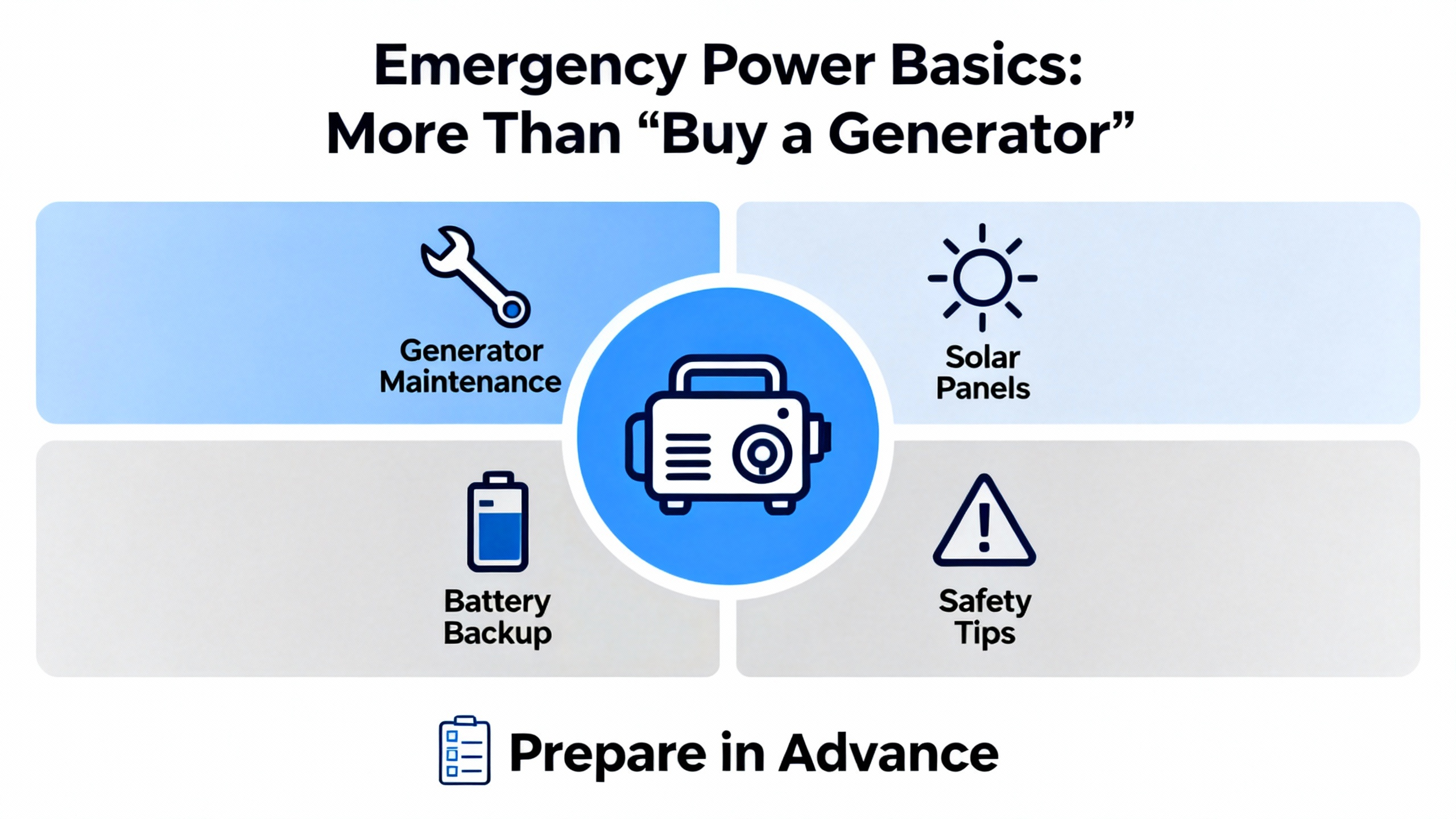
When people think “emergency power,” they tend to picture a generator on a concrete pad. On real jobs, the failures I see most often are not the generator engine itself but the supporting electrical and control components. Typical trouble spots include automatic transfer switches that fail to transfer, breakers that trip and will not reset, contactors welded closed, corroded lugs in temporary power panels, and deeply ordinary items like power supplies for PLC racks.
Research into industrial sourcing shows that “hard‑to‑find electrical parts” often include obsolete components, legacy system parts, specialty items with limited production runs, and parts affected by global supply disruptions. United Industries reports that seventy‑three percent of industrial buyers experience delays due to component shortages and that obsolete parts alone can account for about forty percent of production downtime. In other words, the part that fails in an emergency is often the one you cannot buy quickly through normal channels.
The global electrical components market is projected by United Industries to exceed $600 billion by 2033, nearly doubling from current levels. Yet that huge market is fragmented. About sixty‑eight percent of industrial buyers reportedly use more than fifty different electrical suppliers, but only twenty‑three percent have real‑time visibility into supplier inventory. That fragmentation is exactly why an emergency specialist supplier, who already curates inventory and relationships across many channels, becomes valuable when you are trying to restore power under time pressure.
From a plant perspective, the emergency components you will most often be scrambling for fall into a few groups.
Critical distribution components. These include molded‑case and power breakers, fuses, switchboards, bus plugs, contactors, motor starters, and transfer switches. When a breaker fails mechanically or a transfer switch controller dies as a storm hits, your ability to bring power back safely depends on finding an equivalent or pre‑approved alternative fast.
Emergency power system parts. These are generator controls, engine sensors, fuel system components, voltage regulators, governor cards, paralleling gear parts, and batteries. NFPA guidance calls for weekly and monthly inspection of Level 1 and Level 2 EPS and associated components, plus periodic load and conductance tests on batteries. When those tests reveal weak batteries or failing controls, you need replacements before storm season, not after.
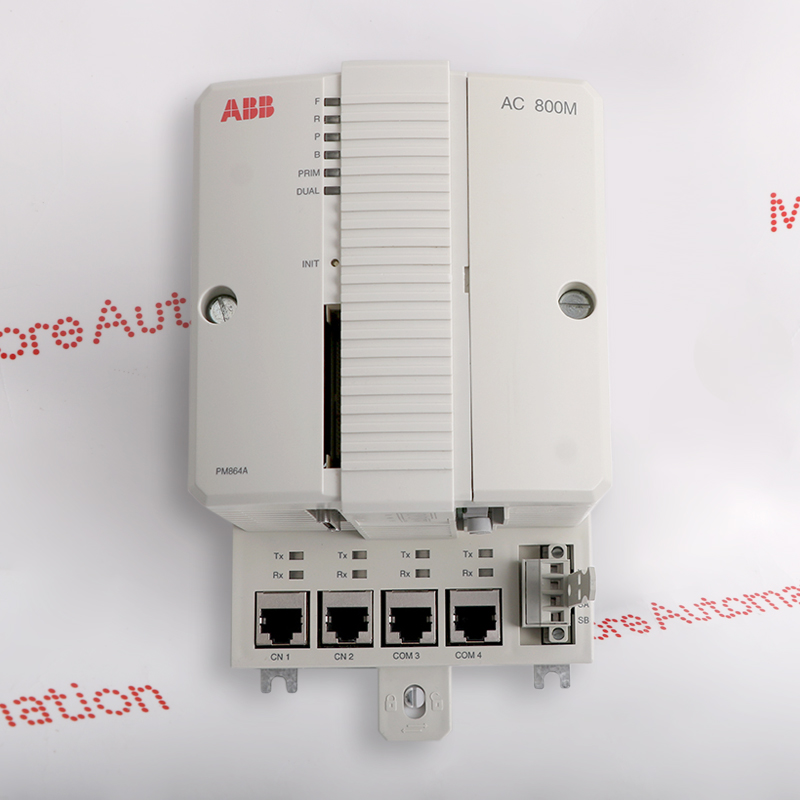
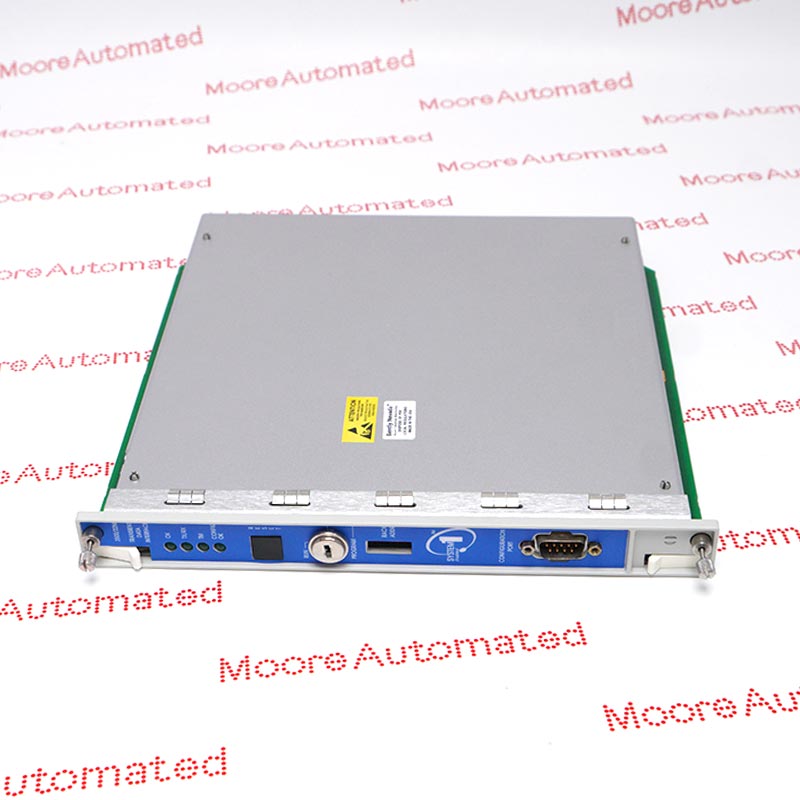
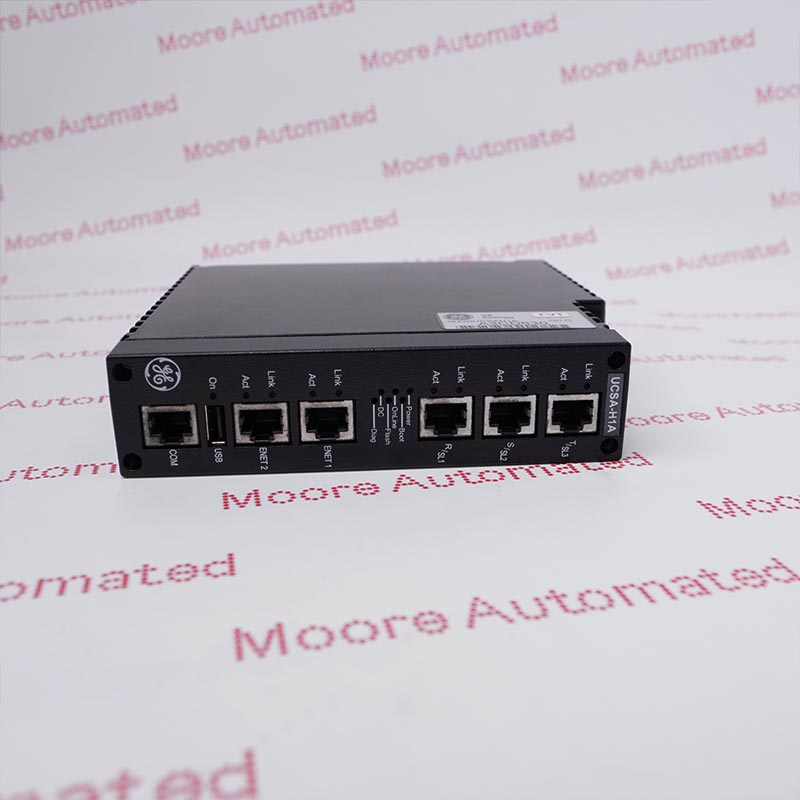
Automation and control hardware. PLCs, remote I/O modules, industrial Ethernet switches, VFDs, and HMI panels are frequently on allocation or end‑of‑life. In emergencies, component sourcing specialists and independent distributors help fill the gap when standard channels cannot supply a legacy PLC power supply or a specific safety relay that is holding up a restart.
Temporary power gear. Cables, cam‑lock connectors, portable distribution panels, portable transfer switches, and step‑down transformers are the plumbing between a rental generator and your facility. They fail mechanically, are sometimes misapplied, and often are not stocked in large quantities by general distributors.
An emergency electrical components supplier focused on rapid response will build inventory and sourcing capability around exactly these categories, with an eye toward the parts that tend to be scarce when major storms, wildfires, or geopolitical shocks ripple through the supply chain.
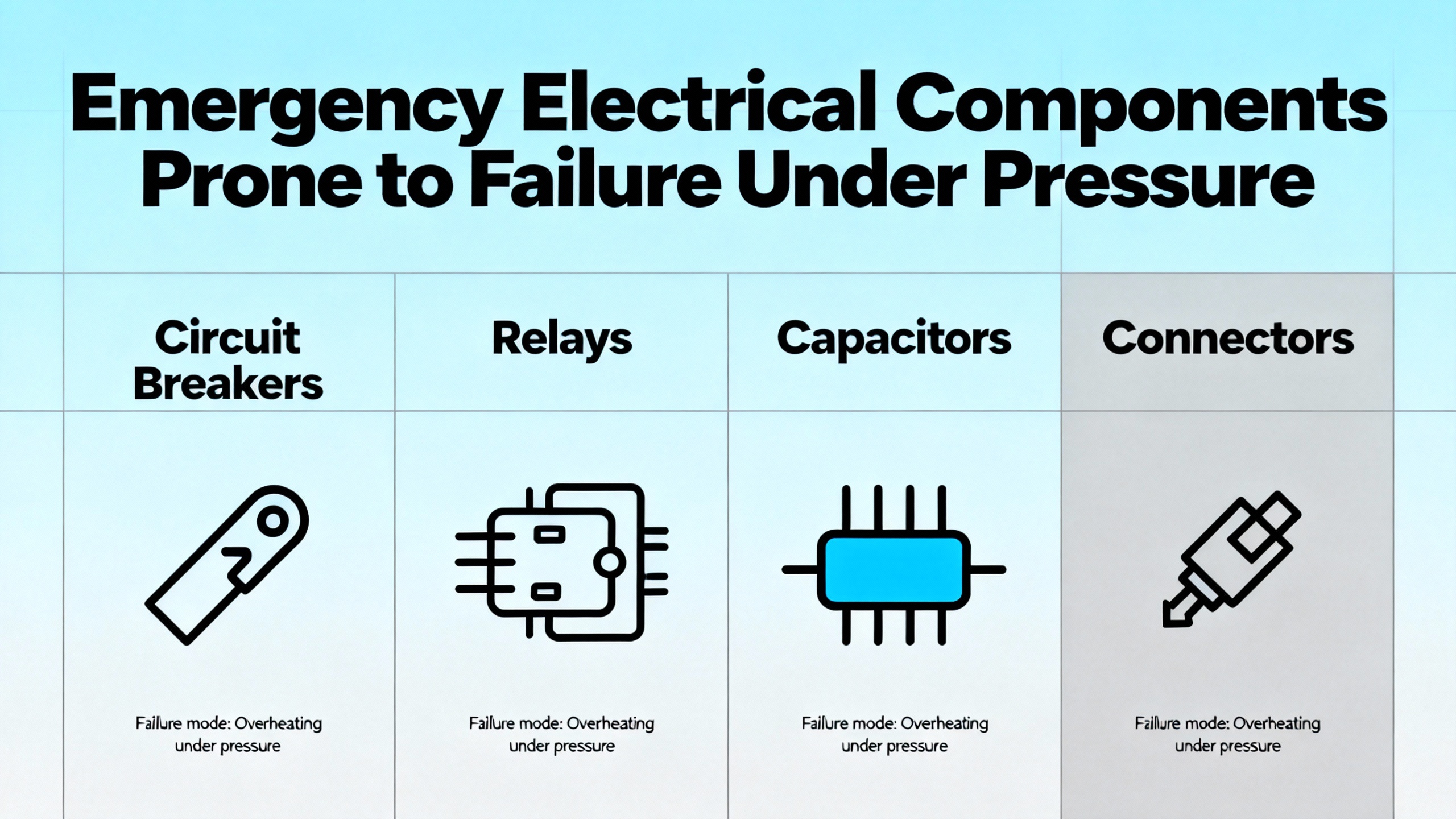
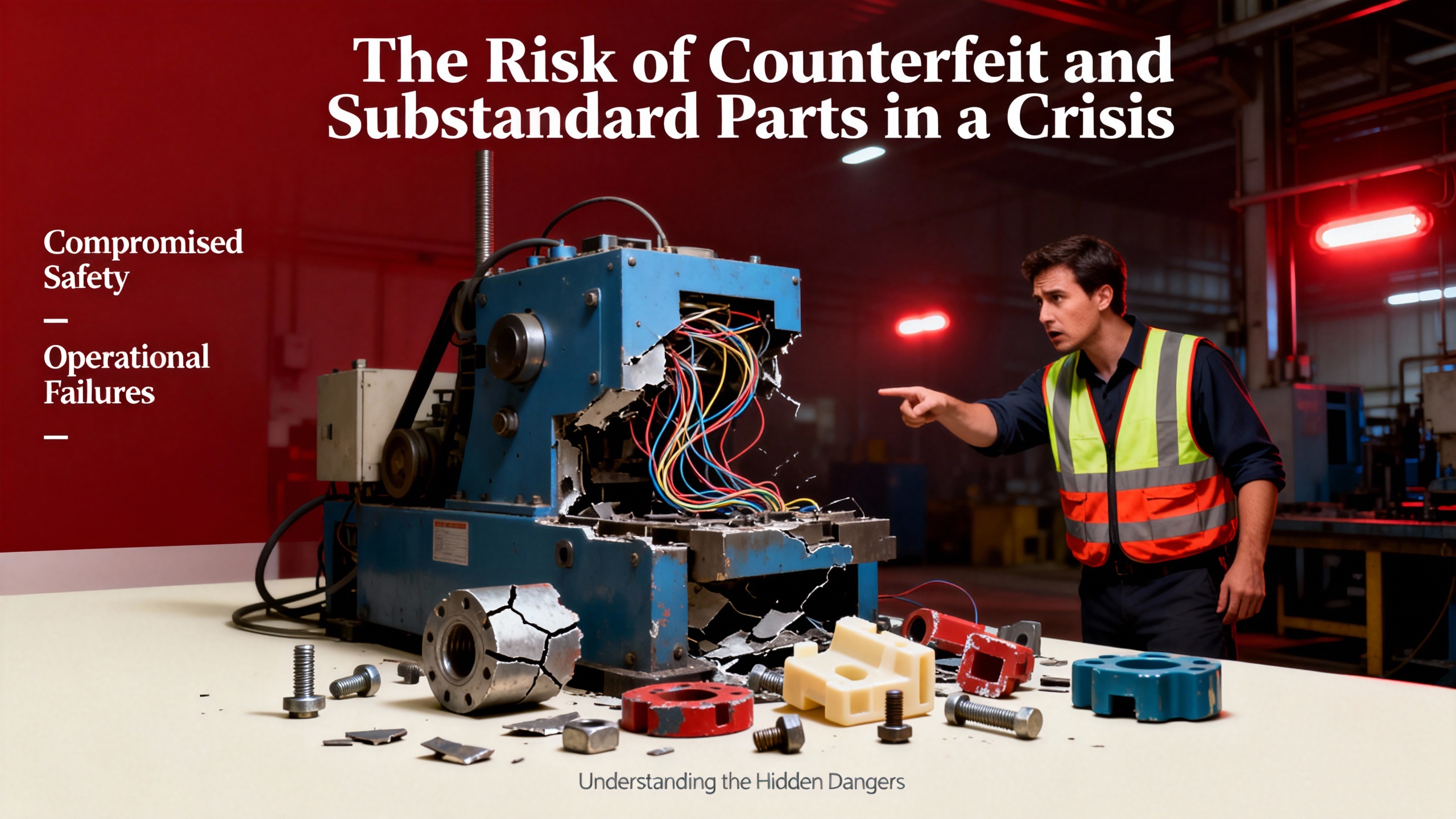
A power emergency is exactly when organizations are most tempted to buy from unfamiliar brokers or online sellers offering “in stock” inventory at suspiciously low prices. Unfortunately, research on counterfeit electronic and electrical components shows that this is a dangerous reflex.
United Industries points to the global counterfeit electronics market as a serious safety and reliability threat, especially for obsolete components. Red flags include pricing far below market from unverified sources, missing or altered manufacturer markings and date codes, poor packaging with spelling errors or inconsistent branding, and unusual shipping origins outside authorized distribution regions. ERAI, a well‑known industry watchdog, reported more than 1,055 suspect counterfeit or nonconforming parts in 2024, the highest level in nearly a decade.
Quality and authenticity programs recommended by multiple sources converge on similar themes. Buyers should prioritize suppliers with recognized certifications, such as ISO 9001 for quality management, AS9120 for aerospace and defense supply chains where applicable, and membership in organizations like ERAI that focus on counterfeit avoidance. They should demand documentation for components: certificates of compliance from the original manufacturer, test reports and inspection data from accredited labs, chain‑of‑custody records that show handling history, and traceability back to manufacturing batches.
When we integrate those recommendations with what I see at industrial sites, the lesson is straightforward. During an outage, do not let urgency override quality discipline. Work only with emergency suppliers who can show you their counterfeit‑avoidance procedures, documentation standards, and access to third‑party test labs. For high‑risk components that feed life‑safety systems or critical production equipment, third‑party visual, X‑ray, and electrical testing before installation is a reasonable safeguard, not a luxury.
In theory, rapid response is just marketing language. In practice, for an industrial facility, it shows up as concrete behaviors.
The calls that go well typically start with a supplier who knows your site and critical loads before anything goes wrong. They have your single‑line diagrams on file, understand which panels feed life‑safety loads versus process loads, and know which breakers, relays, and PLC modules are truly single‑source risks. That preparation is consistent with best practices on vendor risk profiling and disaster preparedness documented by organizations that study supply chain resilience.
When something fails, time is lost if a supplier has to ask basic questions about voltage, fault current, enclosure type, or short‑circuit ratings. Good emergency suppliers work more like engineering partners. They verify the failed part, cross‑reference acceptable equivalents, and confirm that any substitute preserves form, fit, and function.
Research on emergency component procurement in the semiconductor space, where mature‑node MCUs, power ICs, and memory devices have seen severe shortages, shows how experienced emergency partners manage lead time and risk. They insist on real‑time inventory proof, such as serial‑numbered available‑to‑promise data and traceable lot codes, rather than vague claims of “in stock.” They are transparent about whether a part is coming from authorized channels, pre‑vetted independents, or surplus inventories, and they pair that with rigorous inspection and testing.
For emergency generators, analysis from procurement specialists emphasizes that sourcing is a strategic activity, not an ad‑hoc rental decision. A buy‑versus‑rent strategy depends on your outage patterns, critical load profile, and capital budget. Renting generators for seasonal or unpredictable needs reduces upfront spend and shifts maintenance responsibility to the rental provider, while permanently installed standby units offer automatic, long‑duration support for sites that cannot tolerate extended downtime. In both cases, early planning matters. Procurement leaders are advised to collaborate with operations teams to define voltage, fuel type, emissions requirements, cabling, and switchgear needs, and to account for lead times and peak‑season constraints like hurricane or wildfire seasons.
On site, that planning shows up as pre‑engineered tie‑in points, pre‑verified cable sets, and clear procedures. When a rental generator arrives, you want to roll it into place, land cables on known connectors, confirm proper phasing, run a brief load test, and then transition loads under controlled conditions. An emergency components supplier with both equipment and parts on hand can support that process far better than a generic rental yard.
Rapid response is only half the story. The other half is whether the solution keeps you in compliance with safety standards and your own reliability goals.
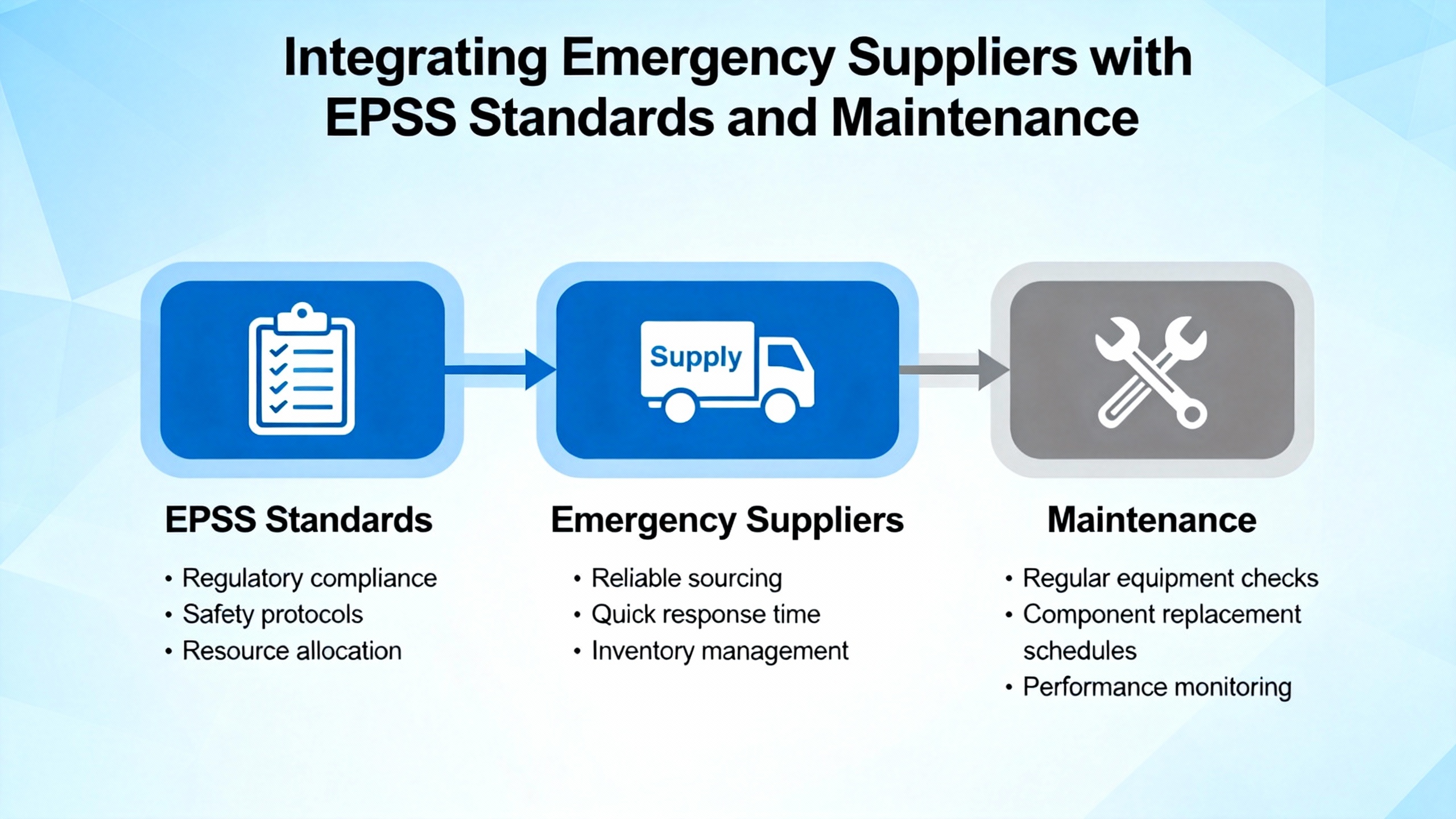
NFPA 110 sets expectations for how EPSS equipment should be installed, operated, maintained, and tested. It calls for weekly inspection of Level 1 EPS components, monthly inspection for Level 2, monthly load exercises for both, and a more extended test of Level 1 systems at least once every thirty‑six months for the duration of their assigned class, up to four hours. Those class ratings describe how long the system must be able to run without refueling. A Class 2 system is designed for two hours of operation, while a Class 48 must run for forty‑eight hours.
Inspection requirements drill down into details. Level 1 emergency power supplies and their batteries must be checked weekly for electrolyte level, voltage, and physical condition, with quarterly load tests and monthly records of electrolyte specific gravity or equivalent tests for non‑maintainable batteries. Transfer switches and paralleling gear must be operated at least monthly to verify that they transition correctly between normal and emergency positions and back. Fuel quality should be tested at least annually.
From an engineering standpoint, those requirements matter because they drive your demand profile for emergency components. If you are following NFPA 110 properly, you will discover weak batteries, failing transfer switches, and marginal generators during routine tests, not during hurricanes. That means you will be buying replacement parts on a regular cadence, which in turn means your emergency supplier should be stocked and ready to support those planned interventions as well as unplanned failures.
A strong supplier understands NFPA expectations and can recommend components and maintenance strategies aligned with them. For example, they might suggest rotating through your generator fuel storage with annual quality testing, replacing suspect fuel and filters ahead of severe‑weather seasons, and upgrading battery systems when repeated tests show declining performance. When you do bring in a rental generator or temporary switchgear, they should help ensure that it does not undermine the coordination and protection scheme your EPSS was originally designed around.
Traditional phone‑and‑spreadsheet sourcing breaks down during crises. Several studies on electronic and electrical procurement stress how important digital tools are to maintaining both speed and control.
Online marketplaces and B2B platforms for components reportedly process tens of millions of part searches per day, with AI algorithms matching buyers to inventory in a matter of seconds. Companies that adopt these platforms are seeing sourcing cycle times cut significantly compared with manual phone and email methods. For electrical contractors and industrial buyers, digital procurement systems provide a single interface to track what is being bought, from whom, at what price, and how often, instead of scattering that data across emails and paper purchase orders.
Federal programs such as the Federal Energy Management Program encourage organizations to integrate energy‑efficient product procurement into their purchasing processes. They provide tools to search for energy‑efficient products, sample contract language that embeds efficiency requirements, and guidance on low‑standby‑power equipment. While those resources are targeted at federal agencies, the underlying idea applies to any facility: when you are replacing electrical components or specifying emergency power equipment, you should favor products that are both reliable and energy‑efficient where possible.
A high‑performing emergency electrical components supplier will lean into these digital and efficiency trends. They will offer online catalogs with real‑time stock visibility, integrate with your procurement system or ERP, and tag products that meet recognized efficiency or environmental standards. On the analytics side, they will use demand forecasting tools and market intelligence to stock safety inventory of components that are prone to long lead times or shortage cycles, reducing your risk of being caught without key parts.
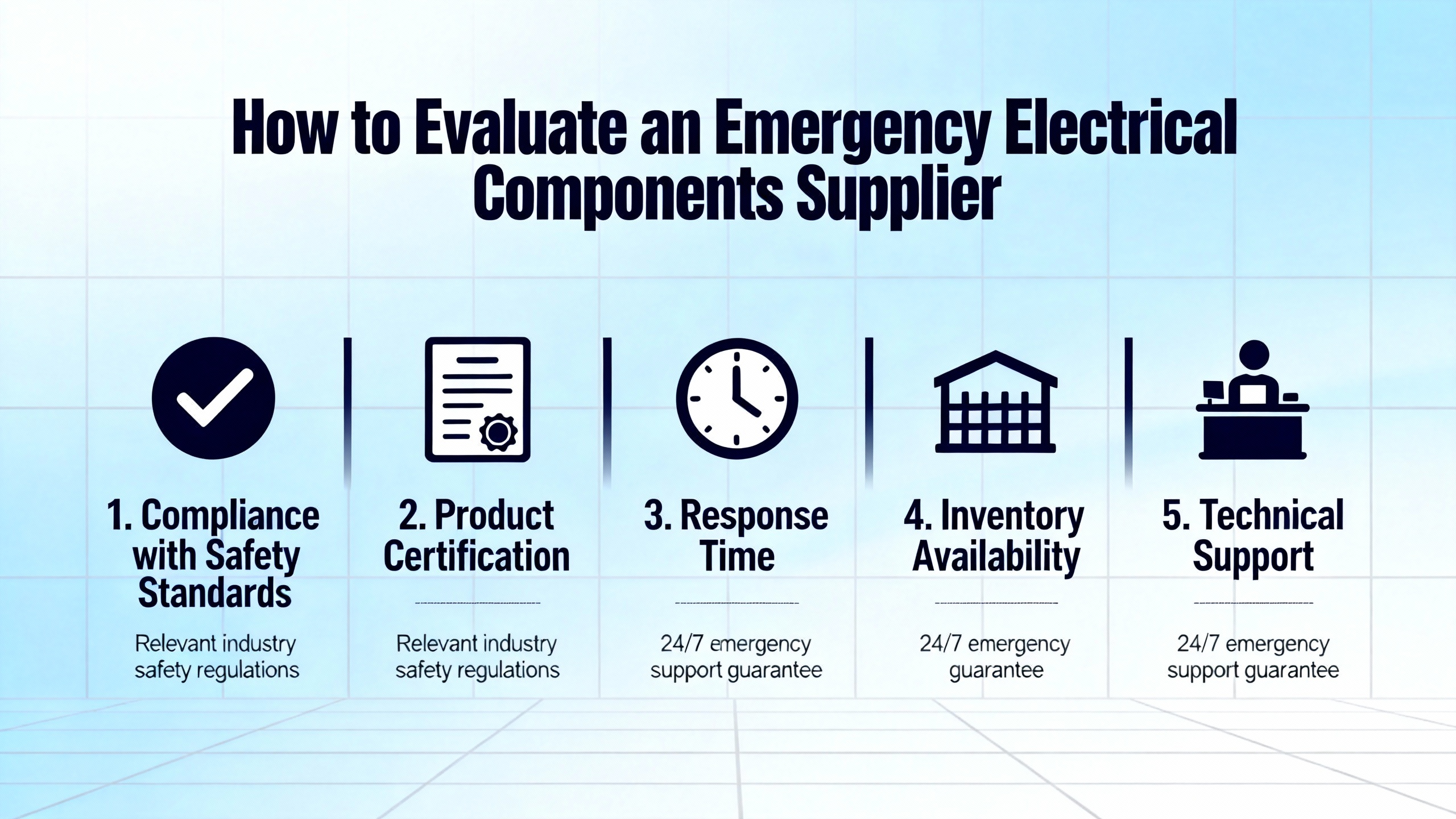
Choosing an emergency supplier is not about who has the flashiest website. The research on industrial sourcing, electrical contractor supply, and risk‑management strategies points to several attributes worth scrutinizing.
Availability and lead‑time performance are foundational. Look for evidence that the supplier tracks and reports their on‑time delivery performance, particularly during past events like hurricane seasons or regional wildfire blackouts. Suppliers that maintain multi‑channel sourcing—combining authorized distributors, independent surplus suppliers, certified brokers, and OEM‑direct relationships—tend to be more resilient, as long as they maintain quality discipline. Several guides recommend maintaining at least three channel types per critical component category.
Quality and compliance practices should be visible, not hidden behind marketing claims. Ask how the supplier ensures that all electrical equipment complies with the National Electrical Code and is certified by Nationally Recognized Testing Laboratories where required. For electronic and electrical components, ask which quality certifications they hold themselves and which they require from their upstream suppliers. Confirm whether they are part of counterfeit‑monitoring organizations and what their inspection protocols look like, especially for surplus or used equipment.
Technical capability separates parts shops from true emergency partners. A good supplier for industrial automation and power work will have engineers or application specialists who can discuss fault‑current ratings, selective coordination, generator sizing and derating, transfer schemes, and component substitution at the level your plant engineers expect. They should be comfortable referencing standards like NFPA 110, NFPA 70, NFPA 70B, and the Life Safety Code and understand how changes in components can ripple into arc‑flash studies, coordination curves, and PLC program behavior.
Digital tools and communication style matter more than most teams admit. Suppliers that provide online portals, API integrations, and real‑time order tracking remove a lot of friction, particularly when you are trying to manage multiple work sites or coordinate with contractors. They should be able to share clean documentation packages—datasheets, certificates, test reports—in one place, rather than forcing you to chase them down via email every time.
Finally, consider their approach to pricing and total cost of ownership. Guides on electrical procurement emphasize that the lowest upfront price is often a trap if it comes at the cost of lower quality, higher energy consumption, or unreliable delivery. The best emergency suppliers will help you compare not only part prices but also the lifetime operating and risk costs associated with different options, whether you are choosing between generator types, breaker technologies, or alternative components for an obsolete control module.
A simple way to organize your evaluation is to think in terms of how a supplier helps you across four dimensions: uptime, safety, compliance, and operating cost. The table below frames this concept.
| Evaluation Dimension | What the Supplier Should Contribute | Why It Matters During Power Issues |
|---|---|---|
| Uptime | Fast access to critical components, temporary power equipment, and knowledgeable support staff who understand your systems | Reduces duration of outages and keeps production or critical services running |
| Safety | Components that meet appropriate codes and standards, plus guidance aligned with NFPA and NEC requirements | Prevents fire, shock, and life‑safety hazards during abnormal conditions |
| Compliance | Documentation, traceability, and testing practices that satisfy regulators and internal auditors | Avoids legal penalties and ensures your EPSS and electrical systems pass inspections |
| Operating Cost | Advice that balances capital, fuel, maintenance, and efficiency when selecting equipment | Controls lifecycle cost instead of chasing short‑term savings that backfire later |
No supplier, no matter how good, can compensate for a facility that has no plan. Agencies like FEMA and CISA, along with supply‑chain specialists, repeatedly stress the need for documented disaster preparedness and resilient power strategies.
At a minimum, every industrial site or large commercial facility should have an up‑to‑date, written plan that covers loss‑of‑power scenarios. In practice, this involves identifying critical loads, mapping which switchgear and feeders supply them, and classifying which loads must be maintained for life safety, environmental protection, and business continuity. On the automation side, it means identifying which PLCs, HMIs, and communication networks must stay online and how they behave if power is lost unexpectedly.
That analysis should feed directly into your sourcing strategy. For every critical electrical component that has a long lead time, is at risk of obsolescence, or is unique to a legacy system, you should know in advance where you can get it. United Industries recommends proactive obsolescence management: monitoring product lifecycles, planning last‑time buys for at‑risk components, qualifying alternatives while the original parts are still available, and using resale or exchange channels to manage excess inventory.
Supply‑chain experts also call for vendor risk profiles that track each supplier’s status, shipment history, and exposure to risks such as severe weather, geopolitical events, or cyberattacks. Enterprise resource planning systems and integrated procurement platforms help build that picture, giving you visibility into inventory and shipments across the network and enabling faster reconfiguration when something breaks.
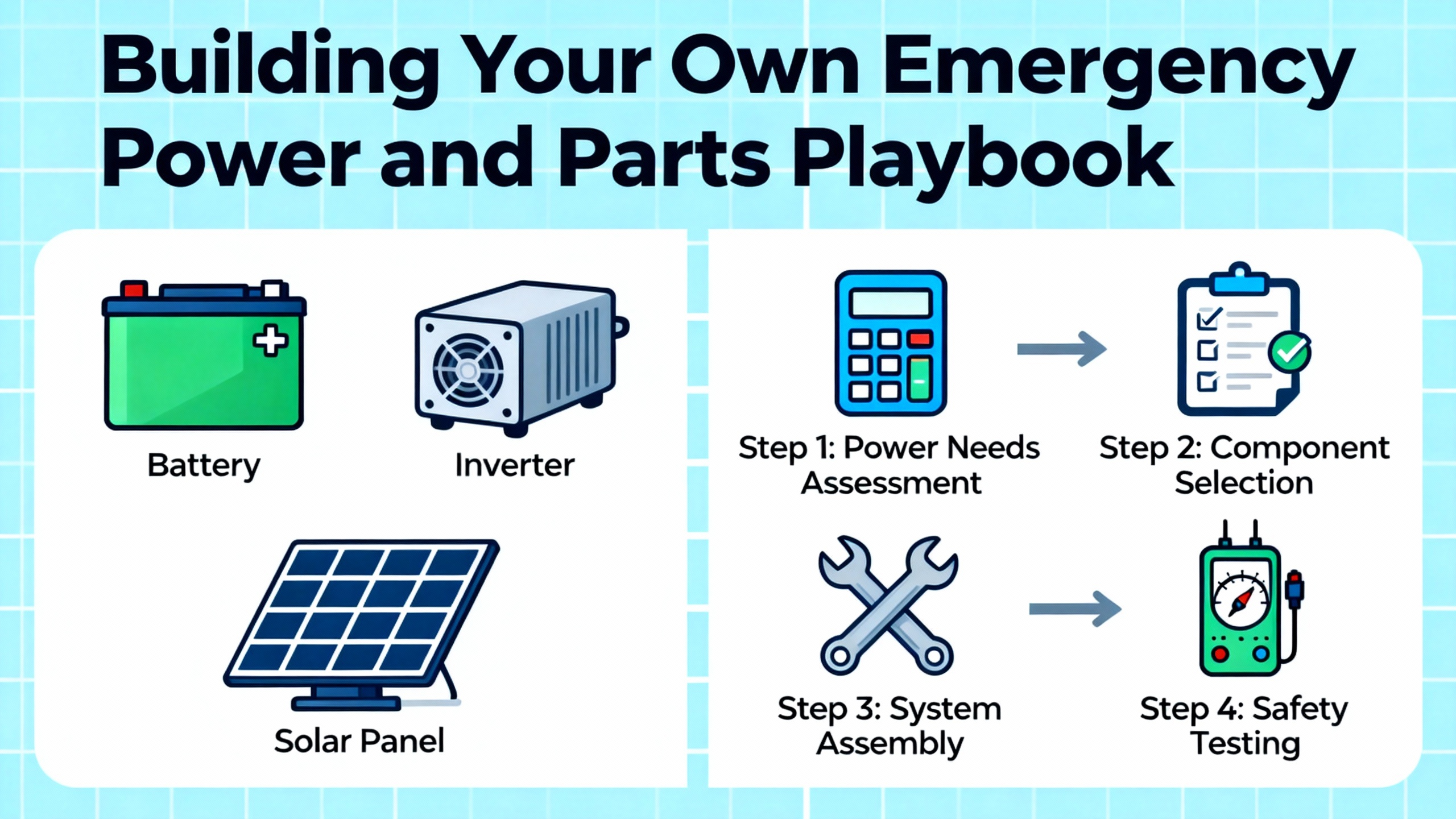
In practice, a healthy emergency playbook has both technical and procurement components. On the technical side, it defines how you will safely connect temporary generators, when you will shed loads, how you will protect sensitive equipment, and how you will test your EPSS. On the procurement side, it identifies the emergency suppliers you will call for components and power equipment, the contractual frameworks in place, and the decision rules for when to rent versus when to buy.
Facilities that practice that playbook—through tabletop exercises or actual drills—are invariably more composed when the outage hits. They know which breakers to open, which contractors and suppliers to call, and how long they can sustain critical loads on their current configuration. That level of preparation turns emergency suppliers into true partners instead of last‑minute saviors.
Q: What is the difference between an emergency electrical components supplier and a generator rental company? A: A generator rental company focuses on providing temporary power sources, usually engine‑generator sets and associated fuel services. An emergency electrical components supplier may arrange rentals but also stocks and sources the supporting components required to restore and safely distribute power: breakers, contactors, transfer switches, cabling, temporary distribution panels, control modules, and more. For industrial and commercial facilities, restoring power safely often depends as much on those components as on the generator itself.
Q: Are battery‑based portable power stations useful in industrial settings, or are they just for homes and camping? A: Battery‑based power stations, especially higher‑capacity units in the 1,500 to 3,000 watt range described by several manufacturers, are very effective for supporting control systems, instrumentation, networking gear, and service tools in industrial environments. They are clean, quiet, indoor‑safe, and well suited to sensitive electronics. They are not a replacement for large standby generators feeding heavy motors or whole plants, but they are excellent for keeping PLCs, HMIs, laptops, and communication gear alive during maintenance or localized outages.
Q: How often should we review our emergency sourcing and power plan with suppliers? A: A practical cadence is to revisit the plan at least annually, and additionally before seasons with known risk in your region, such as hurricane or wildfire seasons. Many standards call for annual or multi‑year testing of EPSS performance; coupling supplier and sourcing reviews with those milestones works well. The review should cover critical‑parts lists, obsolescence status, supplier performance metrics, and any changes in your load profile or regulatory obligations.
Q: Should we standardize on fewer component brands to make emergency sourcing easier, or diversify to reduce risk? A: Research on sourcing and risk points to a balance. Standardizing on a limited set of vendors and product families simplifies maintenance, training, and stocking, but relying on a single brand or source for critical components increases vulnerability when that line goes on allocation or reaches end of life. A robust strategy standardizes where practical but also qualifies alternate components and maintains multi‑channel sourcing for the most critical parts. An experienced emergency electrical components supplier can help you design your bill of materials to preserve that balance.
When power problems hit, there is no substitute for a solid EPSS, disciplined maintenance, and a calm operations team. But in my experience, the difference between a bad day and a disaster often comes down to how quickly you can get the right electrical components and temporary power equipment on site. Investing time now to select the right emergency electrical components supplier, align on standards and documentation, and build a joint playbook is one of the most practical steps you can take to keep your plant, building, or campus running when the grid does not.


Copyright Notice © 2026 mooreautomated.com All rights reserved,Moore Automated is not an authorized distributor or representative of the manufacturers featured on this website. Brand names and trademarks featured are the property of their respective owners.
Leave Your Comment