
Registered Address: 32D Floor Guomao Building, No.388, Hubin South Road, Siming District, Xiamen,Fujian, China
ISO 9001:2015 Certified
Our quality management system covers sourcing,testing and dispatch

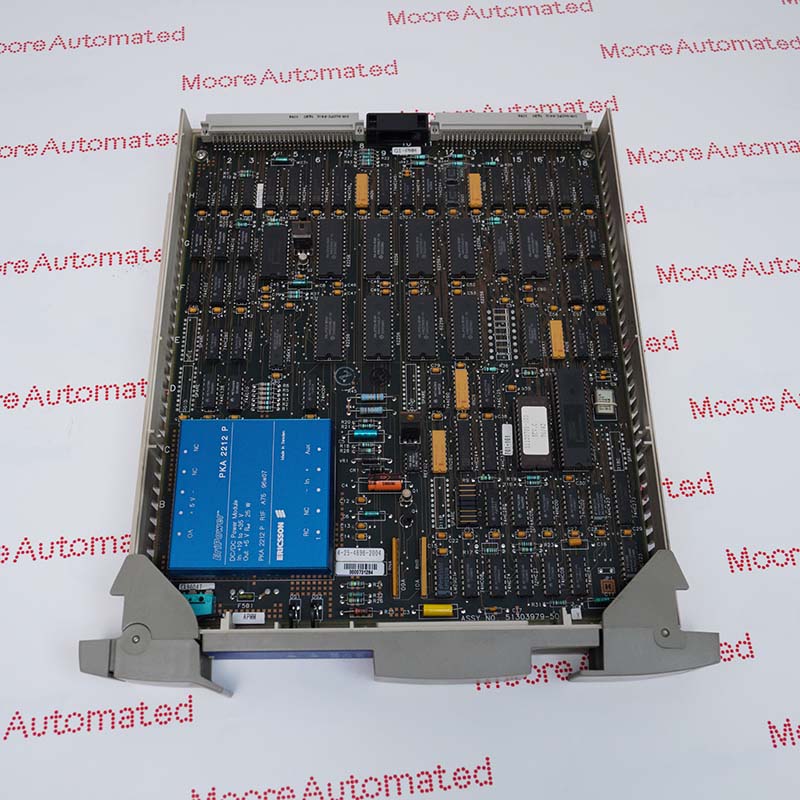
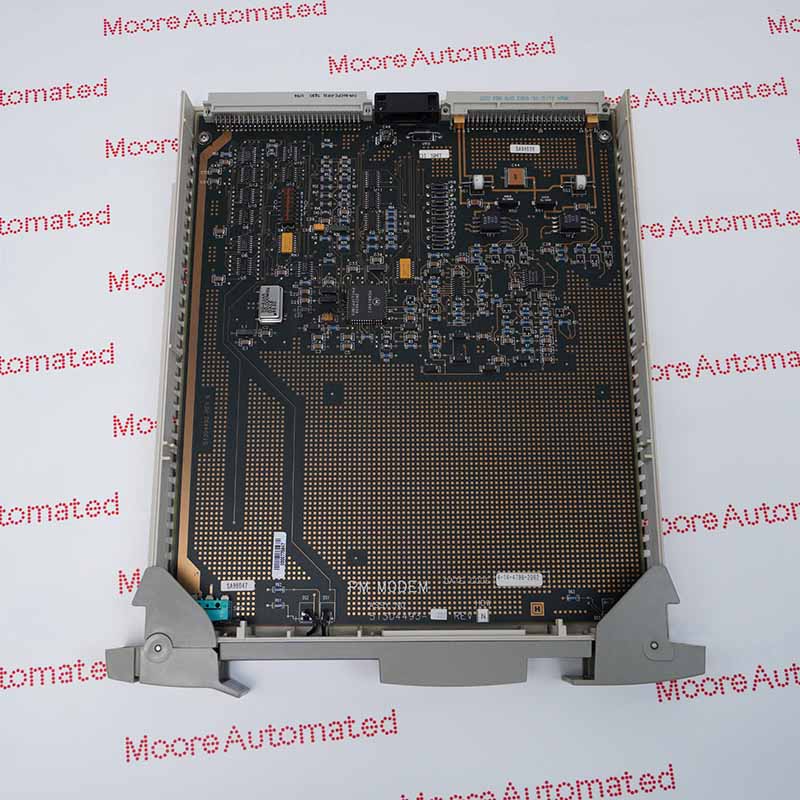
Honeywell HPM Planning identifies MU-TAMT03 51309223-125 as a CE-compliant, 16-point Low Level Analog Input Multiplexer thermocouple field termination assembly with local cold-junction reference and compression terminals. It is separate from the MU-PLAM02 IOP and MU-TLPA02 adapter. Confirm the installed thermocouple wiring and complete part label before replacement.
Honeywell HPM Planning table 12-1 identifies MU-TAMT03 as an LLMux thermocouple FTA and gives exact part number 51309223-125. Its other field assembly tables list 16 points, compression terminals and a local cold-junction reference. The parts table also distinguishes MC-TAMT03 51309223-175 as coated, while MU-TAMT13 is the separate remote-CJR thermocouple FTA. These documented distinctions matter when replacing an installed termination assembly. The catalog description alone does not establish the particular thermocouple sensor type, configured measurement span, installed compensation wiring or accuracy of a complete process loop.
In the Honeywell LLMux configuration, the MU-TAMT03 FTA communicates with a separate MU-PLAM02 IOP through the MU-TLPA02 power adapter and specified cabling. The manufacturer warns that LLMux assemblies are not compatible with RHMUX assemblies. Before an authorized change, record the actual FTA marking, local reference wiring, sensor types, terminal assignments, adapter, processor, cable, cabinet and system release. Follow site isolation and current Honeywell instructions. After fitting, inspect connections and verify each affected thermocouple indication and diagnostic state against known conditions. Do not substitute a remote-CJR or coated assembly solely because its model prefix resembles the installed part.
Honeywell HPM Planning table 12-1 directly maps MU-TAMT03 to 51309223-125 as an LLMux thermocouple field termination assembly. Additional manufacturer FTA listings show 16 points and compression terminals. This is exact-model support for the website identity, but an offered item's condition and revision must still be confirmed from its physical label. The FTA is not the signal-processing IOP.
Honeywell lists MU-TAMT03 as the local cold-junction-reference thermocouple FTA and separately names MU-TAMT13 for remote CJR. The differing reference arrangements should not be merged in purchasing or installation descriptions. Document the installed temperature reference, actual thermocouple types, field terminals and configuration before replacement. Do not infer a universal sensor accuracy or measurement range from the FTA model alone.
The manufacturer diagram connects the thermocouple FTA to MU-PLAM02 through the separate MU-TLPA02 adapter. Honeywell says LLMux assemblies are not compatible with RHMUX assemblies. Match the installed adapter, IOP, cable, cabinet and CE requirement along with the FTA. After approved installation, verify each input and diagnostic indication using the plant's controlled measurement test procedure.
Confirm MU-TAMT03 51309223-125 on the actual FTA. Honeywell identifies a 16-point compression-terminal thermocouple arrangement with local cold-junction reference. Verify the CE non-coated execution, sensor terminal assignments, installed reference wiring, cabinet and revision. Identify the separate LLMux adapter and IOP. Do not substitute remote-CJR MU-TAMT13, coated MC-TAMT03 or an RHMUX assembly without documented approval. Sensor ranges and complete loop accuracy require configuration and current system documentation.
Capture the old assembly's label, terminal map, sensor types, cold-junction arrangement, adapter, IOP, cabling and baseline temperature indications. Isolate the low-level circuits under authorized plant and Honeywell procedures. After fitting the verified FTA, inspect compression-terminal security and reference wiring, restore the approved configuration and prove every affected thermocouple channel and diagnostic state. Do not transfer RTD FTA data or a remote-CJR instruction to this local-reference product merely because the models share an LLMux family name.

Registered Address: 32D Floor Guomao Building, No.388, Hubin South Road, Siming District, Xiamen,Fujian, China
MooreAutomated.com is the official website and primary online platform operated by Moore Automation Limited. The website provides information about the company’s industrial automation parts sourcing services, product coverage and customer support. Moore Automation Limited operates as an independent supplier and is not an authorized distributor or representative of the manufacturers displayed on this website unless expressly stated.