From Traditional PLCs to Industrial Backbone Networks: Understanding the Allen-Bradley SLC-500 System
2026-06-04 09:55:59
8 min read
About the author
Written by Miya Zheng , Director of Moore Automated
Miya Zheng's linkedin:
Miya Zheng, Sales Director at Moore Automated, brings more than twelve years of deep, hands-on industry experience and a consistently demonstrated ability to drive commercial success. Throughout her career, miya has developed a comprehensive understanding of automation technologies, market dynamics, and customer requirements across diverse sectors. Her track record includes building sustainable client relationships, leading high-impact sales initiatives, and delivering revenue growth in both established and emerging markets.
What is the SLC-500 system? What industrial control problems does it solve?
The Allen-Bradley SLC-500 system is Allen-Bradley's classic small programmable logic controller (PLC) platform, widely used in discrete manufacturing and process control. Its core value lies in replacing traditional relay logic with modular control, thereby achieving higher reliability, maintainability, and scalability. With its stable scan cycle, flexible I/O configuration, and strong adaptability to industrial environments, the SLC-500 became an important control foundation for factory automation in the 1990s and early 21st century.
System Architecture
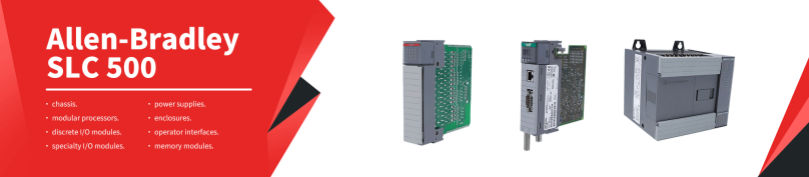
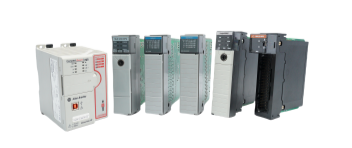
The SLC-500 employs a modular architecture, consisting of a processor (CPU), power supply module, I/O module, and communication module, mounted on a standard 1746 series rack. The CPU executes ladder logic scan cycles, while the I/O modules connect field sensors and actuators for signal acquisition and control output. Its communication capabilities support industrial networks such as DH+ and Ethernet (via expansion modules), enabling data exchange with host systems or other PLC systems to build distributed control systems.
How does the SLC-500, composed of modular components, achieve industrial-grade real-time control and communication?
Industrial Applications and Impact on Traditional Systems
The SLC-500 has been widely used in industries such as automotive manufacturing, packaging lines, water treatment, and material handling systems. Its exceptionally long service life and robust design have made it the de facto standard PLC platform for decades. Although it has been largely superseded by newer platforms such as ControlLogix, the SLC-500 remains significant in traditional systems where long-term stability and maintenance continuity are crucial, and it continues to influence the design principles of modern PLC architectures.
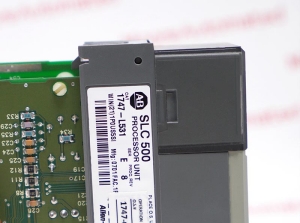
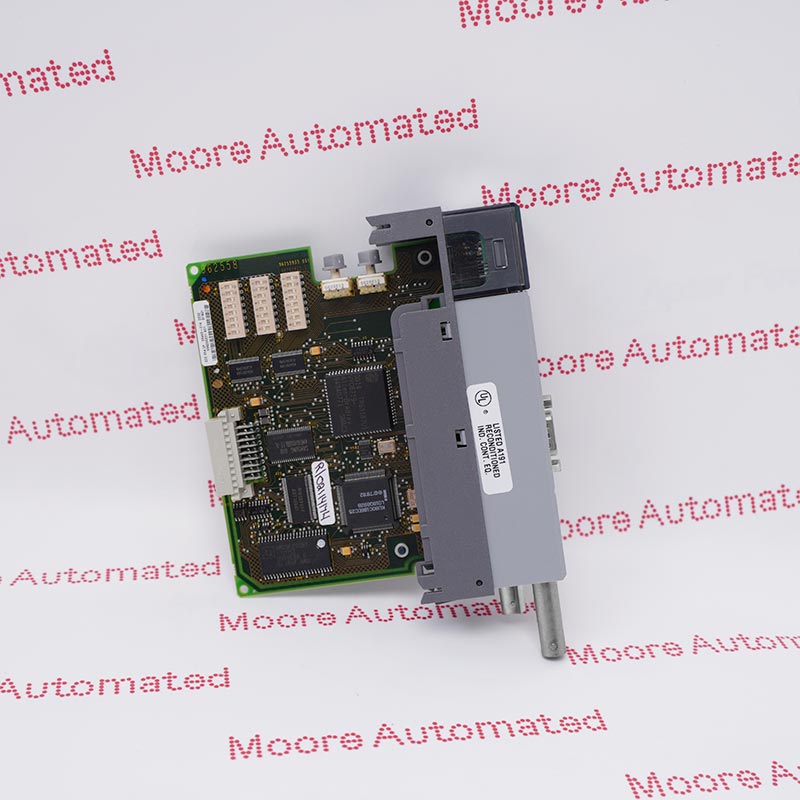
Allen Bradley 1747-L531/E CPU Processor Module Overview
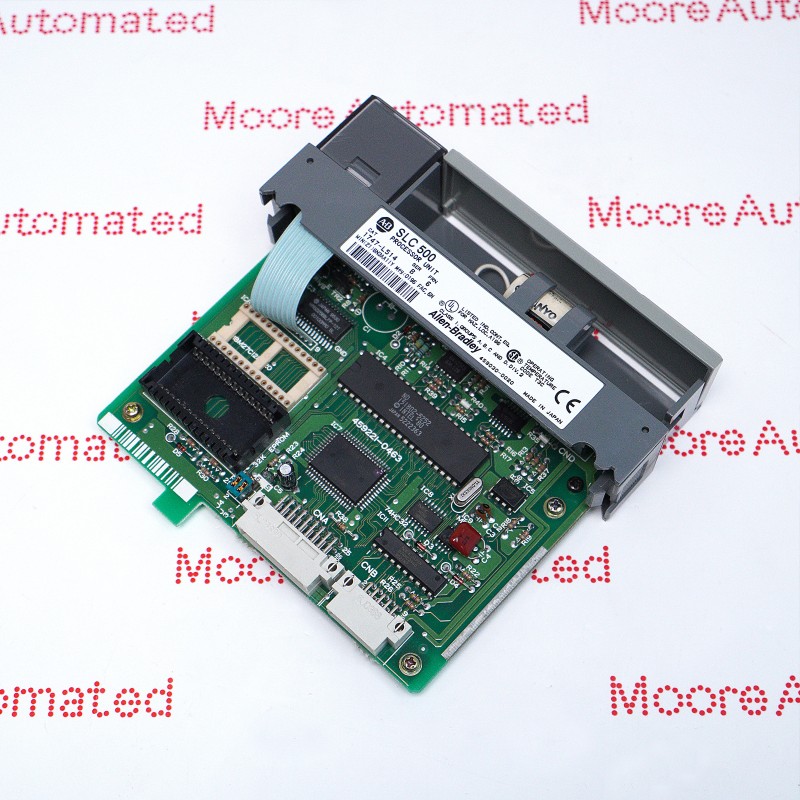
The 1747-L531/E is a mid-range processor module in the Allen-Bradley SLC-500 system, designed for industrial automation control tasks requiring medium-sized programs and fast deterministic scan performance. It typically supports approximately 16K words of user memory and is commonly used in stand-alone machines or small to medium-sized control systems, such as packaging equipment, conveyor systems, and process skids. The module executes ladder logic in fixed scan cycles and provides reliable real-time control through distributed I/O interfaces on the SLC backplane. As a member of the SLC-500 family, the 1747-L531/E is favored for its ruggedness, long service life, and compatibility with a variety of 1746 series I/O and communication modules, making it a common choice for legacy industrial systems.
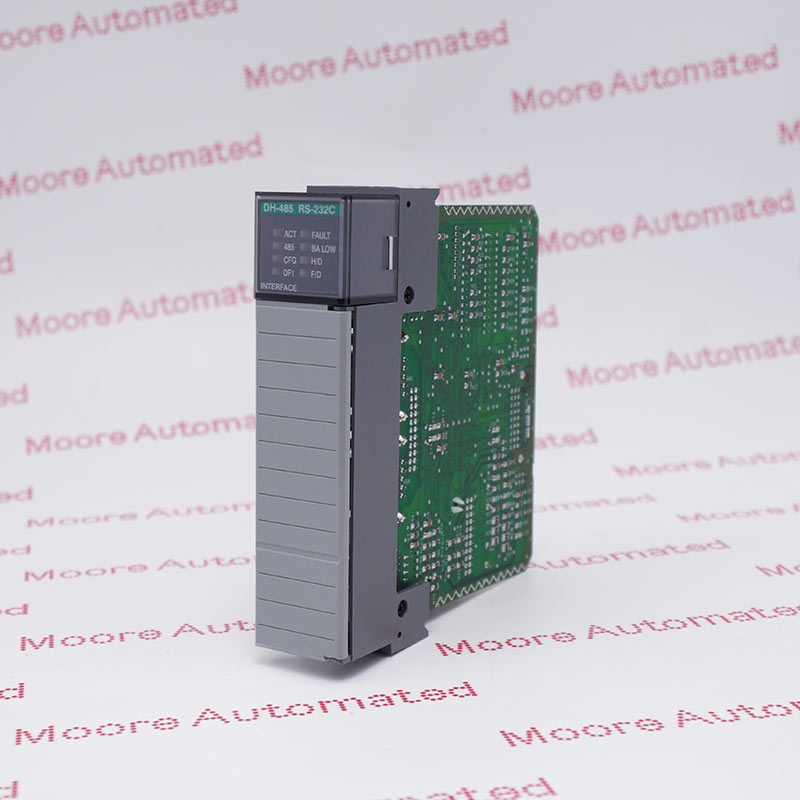
The 1747-OCPCM2 is a communication processor module specifically designed for Allen-Bradley SLC-500 systems, enabling high-speed data exchange between the SLC-500 backplane and external industrial networks or controller-level devices. It is typically used in applications requiring enhanced connectivity and deterministic communication performance, facilitating the integration of traditional PLC systems into broader automation architectures.
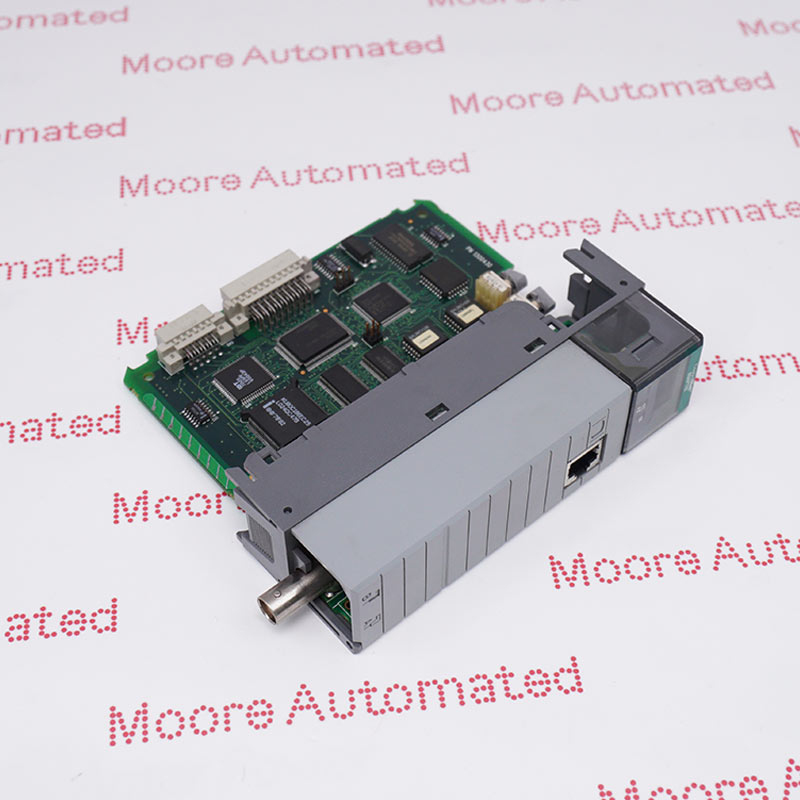
The 1747-OC-EBCBA is a communication interface module for the Allen-Bradley SLC-500 system, used to connect the PLC backplane to an Ethernet-based industrial network. It is typically used in legacy automation systems that require integration with modern monitoring systems such as SCADA or HMI platforms, enabling data exchange without replacing the core control hardware.
The 1747-L532/E is a processor module in the Allen-Bradley SLC-500 system, designed for mid-range industrial control applications requiring higher program capacity and faster processing speeds, offering performance superior to the entry-level SLC-500 CPU. It executes ladder logic using deterministic scan cycles and supports integration with a variety of 1746 series I/O and communication modules via the SLC backplane.
The 1746-OB32E is a high-density digital output module for Allen-Bradley SLC-500 systems, providing 32 24V DC outputs for controlling field devices such as relays, solenoid valves, and indicator lights. Designed for compact I/O configurations requiring a large number of output points in a single slot, this module helps reduce chassis space while maintaining reliable switching performance. It is widely used in industrial automation systems requiring efficient control of multiple actuators.
Automation Spare Parts & Controller
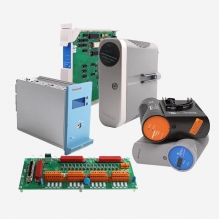
High-quality automation spare parts
Reliable spare parts and controllers are essential for maintaining Helping our customers is paramount and has guided our company from the very beginning. With this spirit, we have built relationships and trust, striving to become a leading company in the industrial automation spare parts distribution market. Our expertise lies in stocking parts that manufacturers have discontinued. This relieves our customers of the worry of lost time in their factories and the cost of machinery. One of our top priorities is comprehensive, professional, and timely customer service. Our primary goal is to ensure there are no unnecessary expenses or stress.
Q1:What is the Allen-Bradley SLC-500 system used for?
The SLC-500 system is a modular PLC platform designed for industrial automation control, widely used in manufacturing, material handling, packaging, and process control. It executes ladder logic programs and manages real-time machine operation through reliable deterministic scans, making it suitable for both standalone machines and distributed control systems.
Q2:How does the SLC-500 architecture demonstrate its reliability in industrial environments?
Its reliability stems from its robust modular design, which separates the CPU, power supply, and I/O modules onto a backplane chassis. This architecture reduces single points of failure and allows for flexible system expansion. The system is designed for harsh industrial environments and maintains stable operation over a longer lifespan, even compared to currently operating legacy systems.
Q3:How does Moore Automated support SLC-500 users?
Moore Automated focuses on providing automation hardware, such as SLC-500 components, including processors, I/O modules, and communication cards. Moore Automated is committed to providing tested and quality-verified surplus or replacement parts to help customers maintain or extend the life of their existing control systems without requiring a full system migration.
Q4:Does Moore Automated still offer discontinued SLC-500 modules?
Yes, many SLC-500 modules are discontinued, but Moore Automated typically maintains inventory of discontinued or hard-to-find parts. This allows industrial users to continue operating older systems, avoiding costly downtime or immediate platform upgrades.
Q5:Is the SLC-500 system still suitable for modern industrial operations?
While newer PLC platforms are available, the SLC-500 remains suitable for plants with stable and mature existing infrastructure. Many plants continue to use the system because it integrates deeply into long-running production lines, and replacement parts from suppliers like Moore Automated effectively maintain these systems.










Leave Your Comment