Get Repair Quote
Name
Company *
Phone *
Email *
Address
City
State / Province / Region
Zipcode
Country
Quantity *
Part Number *
Manufacturer
Preferred Condition
Additional Information
Cancel
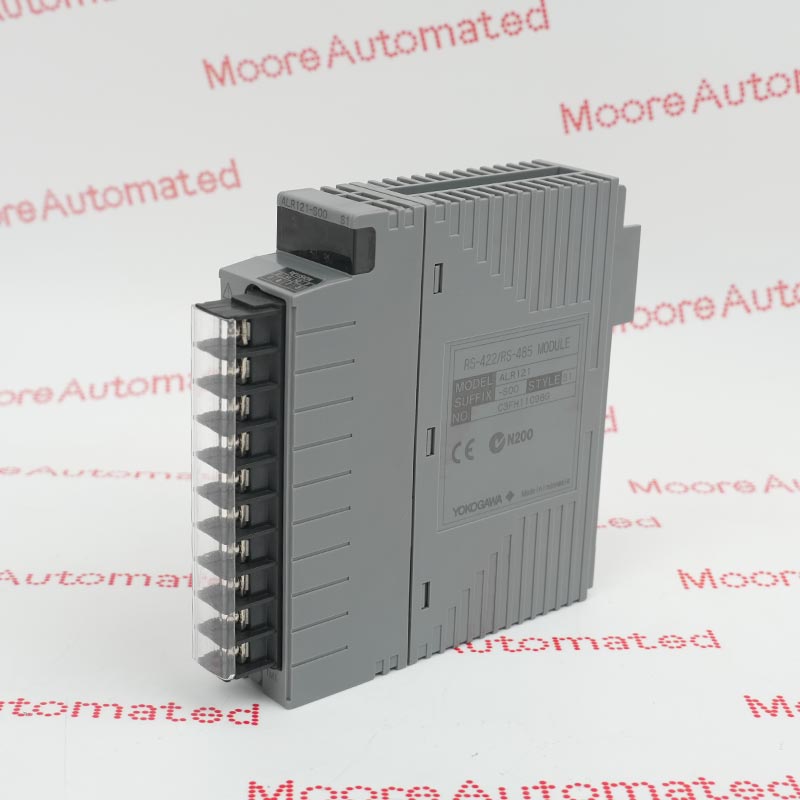
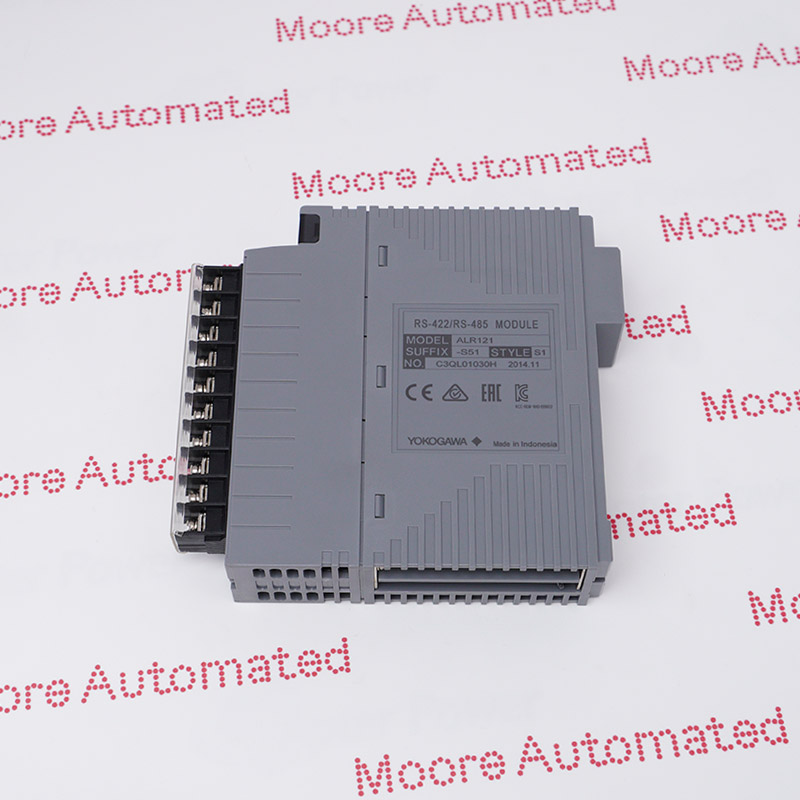
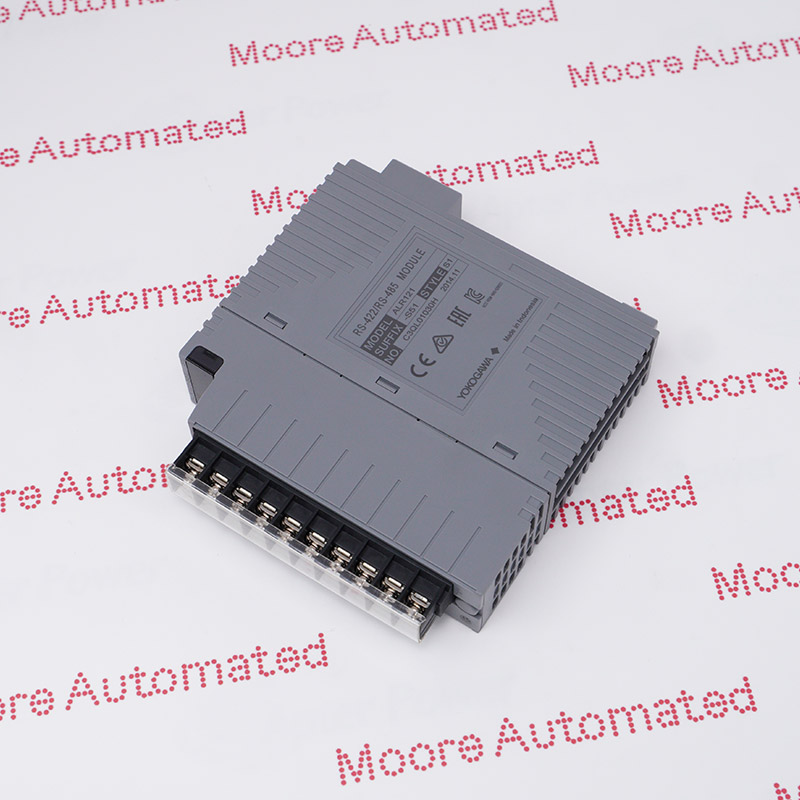
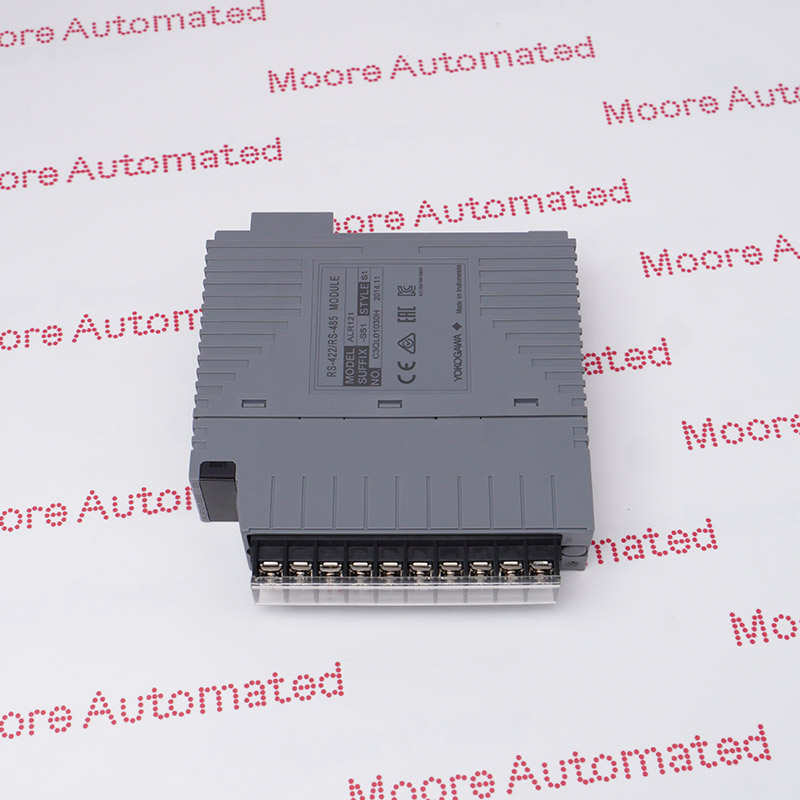
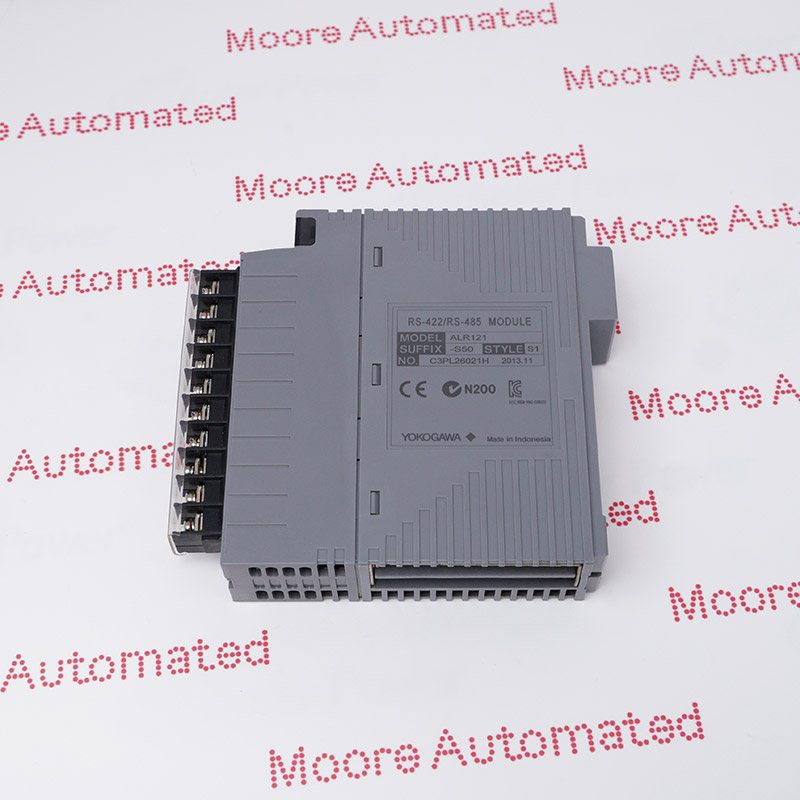
Yokogawa ALR121-S51 S1
· Product image is representative; revision or series may vary. Contact us to request a specific version.

ALR121-S51 S1

Serial Communication Modules
In Stock

Product Information:

Serial Communication Modules

ALR111 and ALR121 Serial Communication

Modules used with a safety

control station (SCS) for performing

Modbus communication

Expand All
Collapse all

Technical specifications for ALR121-S51 S1

  • Manufacturer:
    Yokogawa
  • Product Category:
    DCS System
  • Spare Part Number:
    ALR121-S51
  • Estimated shipping dimensions:
    12.5 x 20 x 14.8 cm
  • Weight:
    0.34 kg
  • Tariff Code:
    8537101190
  • Country of origin:
    Japan
  • Place of shipment:
    Xiamen, Fujian, China
  • Interface:
    RS-422/RS-485 (4-wire system)
  • Communication function:
    Half-duplex
  • Transmission speed:
    1200/2400/4800/9600/19200/38400 bps
  • Stop bit length:
    1/2 bits
  • Lag time after data transmission:
    1 ms
  • Transmission distance:
    Maximum 1200 m (total extended length)
  • Current consumption:
    0.5 A
  • Product Type:
    Serial Communication
  • Stock:
    10

Information

Overview Manuals Main Features Core Applications and Functions

Features:

  • Serial Communication Modules
  • Dual-redundant Communication
  • ALR121 Serial Communication Modules used with a safety control station (SCS) for performing Modbus communication
The dual-redundant configuration can be provided by setting the serial communication modules on an adjacent slot. Each of the ALR111 and ALR121 modules has two ports; however, the dual-redundant communication requires two communication modules.

The two sets of dual-redundant communication are enabled by two ports of ALR111/ALR121; however, the communication control is defined by each communication module. When one of the communication ports detects an error, both ports switch over the control/stand-by sides to the redundant module.

The ALR121-S51 S1 YOKOGAWA Serial Communication Modules may still be available for purchase and support from Moore Automated Company beyond End-Of-Life (EOL) by the manufacturer (OEM).
YOKOGAWA ALR121-S51 S1 Serial Communication Modules DATASHEET(manual), Link Important Notice: Other accessories, manuals, cables, calibration data, software, etc. are not included with this equipment unless listed in the above stock item description. All prices are shown in USD.
ALR121 acquires ProSafe-SLS events and data by the ProSafe-SLS communication function, which enables SCS to use those events and data in the same way as general analog and digital I/O signals. ProSafe-SLS’s system time has to be synchronized with ProSafe-RS by digital input and output modules to match the event time stamp. A bleeder resistor has to be connected on the ProSafe-SLS side to match the I/O specification of ProSafe-SLS and ProSafe-RS.
  • Subsystem Integration: Acts as a bridge between the Field Control Station (FCS) or Safety Control Station (SCS) and external devices such as PLCs (e.g., Modbus, FA-M3, MELSEC-A, SLC500), burner management systems, and emergency shutdown systems.
  • Communication Protocols: Primarily uses Modbus (as master or slave), but also supports proprietary protocols for communication with FA-M3, YS, and other controllers.
  • Safety-Critical Automation: Commonly used in high-integrity industries such as oil and gas, chemical, and power generation, and can be part of a SIL3 certified safety strategy.
  • Redundancy Support: Two modules can be configured as a dual-redundant pair, ensuring uninterrupted data exchange even if one module or communication path fails.
Ask our team:

  • What are the basic system-level functions performed by the ALR121-S51 S1 in an industrial automation architecture?
    As an industrial interface or module, the ALR121-S51 S1 is designed to facilitate signal acquisition, processing, and communication exchange in distributed automation systems, ensuring deterministic integration between field devices and the control platform.
  • Why is the ALR121-S51 S1 designed to integrate into modular and scalable control system topologies?
    The ALR121-S51 S1 employs a modular deployment architecture, enabling seamless expansion in automation frameworks requiring system expansion, functional segmentation, and hardware interoperability.
  • What communication or interface mechanisms define the connectivity architecture of the ALR121-S51 S1?
    The ALR121-S51 S1 typically uses a standardized industrial communication interface for structured data exchange with controllers, monitoring systems, or field instruments.
  • How does the ALR121-S51 S1 facilitate deterministic signal processing in automated control loops?
    The ALR121-S51 S1 supports predictable and synchronous signal processing, which is crucial for maintaining deterministic behavior in closed-loop control and real-time automation systems.
  • Why is the ALR121-S51 S1 suitable for distributed control systems (DCS) and PLC integration environments?
    The ALR121-S51 S1 is designed for compatibility with distributed architectures and can be integrated into the PLC and DCS ecosystem where coordinated data acquisition and control execution are required.
Quantity
Upload
(gif, jpg, jpeg, png, bmp, doc, docx, xls, xlsx, ppt, pdf, csv)
For more information on how your data is processed and stored by Moore automated please read our privacy policy.
Trusted by 5,000+ plants worldwide | Backed by our vast inventory of top-tier control parts, drives and servo motors, fast shipments are dispatched to cover your urgent needs. ABOUT US >>
Moore Disclaimer: Moore Automated's sales automation equipment and related solutions are intended for industrial automation and business operational efficiency improvement purposes only. Product information, technical parameters, and application cases are for reference only and do not constitute an absolute guarantee of performance for any specific industry, scenario, or final application. Actual equipment performance may vary depending on factors such as the usage environment, system integration method, and maintenance conditions. Users should confirm compatibility and safety based on professional technical assessments. Moore Automated assumes no liability for any direct or indirect losses caused by improper use, modification, or failure to operate according to specifications, to the extent permitted by law.