Overview
Manuals
Principle
Integration & Redundancy
Features:
- GE Gas Exciter ISBus Board EX2100 Excitation Control
- Mark VIe & Mark VIeS Control Systems
- Mark VI IS200 Series produced by General Electric
High-performance control processor module designed specifically for the Mark VIe distributed control system platform. Its primary functions are executing control logic, sequential management, and real-time data processing, making it suitable for industrial automation and power generation applications. As the central processing unit in the control architecture, the module coordinates communication between I/O modules, field devices, and monitoring systems to ensure stable and deterministic system operation.
It can handle critical tasks such as signal processing, alarm management, system diagnostics, and fault handling, while maintaining synchronized operation among distributed controllers. Its industrial-grade design allows it to be deployed in demanding environments such as turbines, power plants, and process control facilities where real-time performance and system integrity requirements are extremely high.
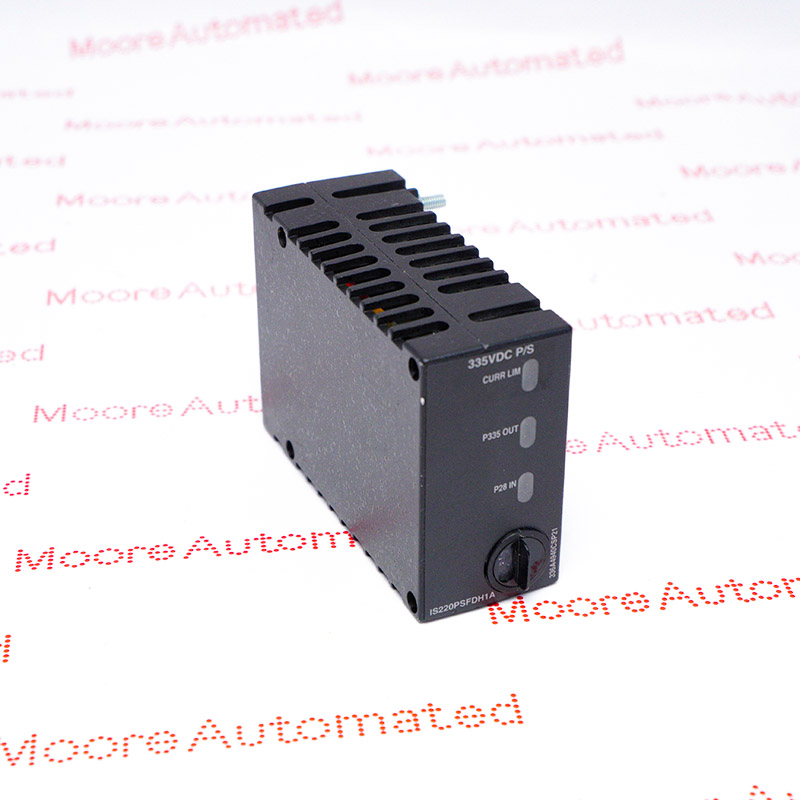
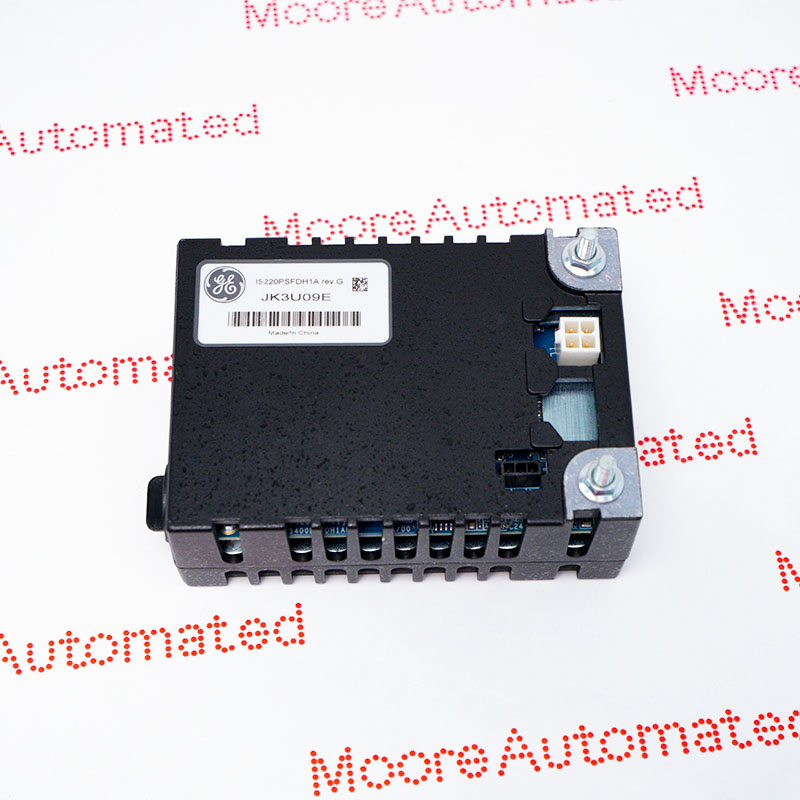
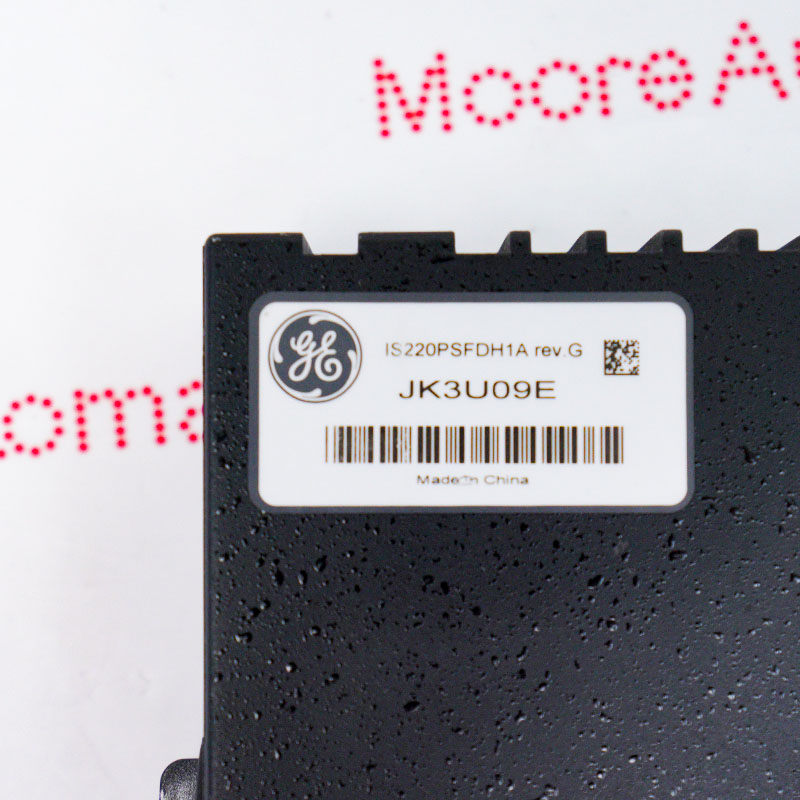
The IS220PSFDH1A GENERAL ELECTRIC Flame Detector Power Supply may still be available for purchase and support from Moore Automated Company beyond End-Of-Life (EOL) by the manufacturer (OEM).
GENERAL ELECTRIC IS220PSFDH1A Flame Detector Power Supply INFO(manual), Link
Important Notice: Other accessories, manuals, cables, calibration data, software, etc. are not included with this equipment unless listed in the above stock item description. All prices are shown in USD.
This module receives analog and/or digital input signals from connected sensors or subsystems, performs signal isolation, filtering, and level conversion via onboard circuitry, and then transmits the processed data to the central controller via a high-speed backplane or internal communication bus. Simultaneously, it parses control commands from the main processor and distributes corresponding output signals to relevant field devices or subordinate modules. All of this is achieved through coordinated data exchange, electrical isolation, and embedded firmware logic.
1. TMR Configuration: In a typical configuration, the three PSFD units are connected with three-module redundancy (TMR) diodes or gates. This ensures that even if two power supplies fail, the remaining units can independently power all eight flame detectors.
2. Installation: Typically mounted on a metal platform directly above the TRPG (Main Gas Turbine Trip Protection) terminal block.
3. Diagnostic LEDs: The front panel features three status LEDs: P28 Input (green), P335 Output (green), and Current Limit (red).
4. Local Monitoring: Includes a pair of differential test points (attenuation ratio 100:1) for safe local measurement of high-voltage outputs.