

Get Repair Quote
Name
Company *
Phone *
Email *
Address
City
State / Province / Region
Zipcode
Country
Quantity *
Part Number *
Manufacturer
Preferred Condition
Additional Information
Cancel
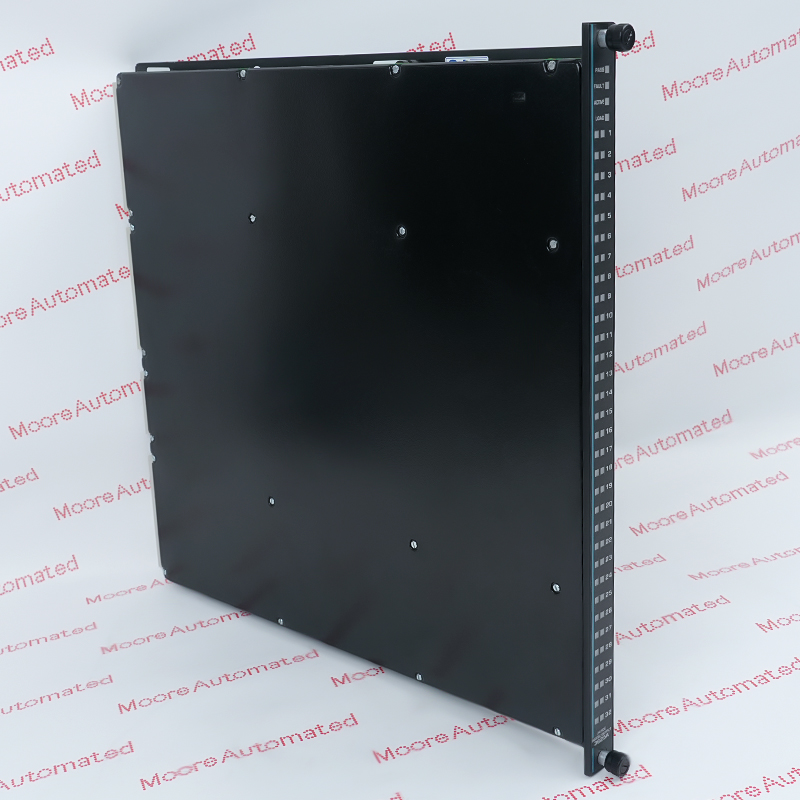
Invensys 2700 2700-2
· Product image is representative; revision or series may vary. Contact us to request a specific version.

2700 2700-2

Input control module
In Stock
Ships by Saturday, July 25
Fast Shipping Available

Product Information:

The TRICONEX 2700 (including the 2700-2 model) is a low-density rack-mount interface/input control module in Schneider Electric's (formerly Invensys) Triconex Emergency Stop and Safety Instrumented Systems (SIS).

Designed for critical control environments, the TRICONEX 2700-2 provides low-level hardware connectivity and data conversion support for industrial automation and safety paths by processing basic analog and digital signals from the field. Its core architecture integrates 8 analog inputs and 16 digital inputs, offering 12-bit high-precision resolution and electrical isolation protection up to 1500V AC.

The TRICONEX 2700-2 operates on a 24V DC power supply and integrates highly redundant fault-tolerant technology and real-time self-diagnostic mechanisms, ensuring deterministic signal processing even under severe electrical interference or single-channel failures, thereby minimizing system downtime.

Expand All
Collapse all

Technical specifications for 2700 2700-2

  • Manufacturer:
    Invensys
  • Product Category:
    DCS System
  • Estimated shipping dimensions:
    15 x 12 x 24 cm
  • Weight:
    1.2 kg
  • Tariff Code:
    8537101190
  • Country of origin:
    USA
  • Place of shipment:
    Xiamen, Fujian, China
  • Product Type:
    Input module
  • Input Voltage:
    24 V DC
  • Output Power:
    5V DC
  • Communication ports:
    RS-485
  • Main Type:
    TMR architecture
  • Operating temperature:
    -40°C to +70°C
  • Relative humidity:
    95% RH (no condensation)
  • IP degree of protection:
    IP20
  • Stock:
    10

Alternative Names

2700 27002 2700 2700 2 27OO 27OO-2 2700-2 27002 2700 2 27OO-2 2700 27OO

Information

Overview Manuals Safety Instrumented System (SIS) Context How It Works

Features:

  • Tricon Low Density Chassis Internal Interface Module
  • Triconex Tricon Safety Instrumented System (SIS)
  • Specifically serves as an Analog Input Module configured for current inputs (converting to 0-5 V signal levels)
The TRICONEX 2700 / 2700-2 is a high-performance input/interface control module designed for hazardous industrial environments. It is a core component of Schneider Electric's (formerly Invensys) Tricon Safety Instrumented System (SIS). This module features robust signal acquisition and high-level isolation capabilities, integrating multiple analog inputs (e.g., 0-5V/0-10V) and digital channels. It accurately acquires and monitors critical process parameters such as current and voltage from field sensors, while providing up to 1500V of electrical isolation protection to prevent damage to the main control system from external electromagnetic interference or high-voltage surges.

Furthermore, this module boasts excellent fault tolerance and real-time diagnostic capabilities, meeting international Safety Integrity Level (SIL) 3 certification standards. It not only provides uninterrupted safety assurance for critical systems such as gas turbine control, emergency shutdown (ESD), and fire and gas monitoring (F&G), but also supports highly demanding online hot-swappable functionality.

The 2700 2700-2 Invensys Triconex Input control module may still be available for purchase and support from Moore Automated Company beyond End-Of-Life (EOL) by the manufacturer (OEM).
Invensys Triconex 2700 2700-2 Input control module INFO, Link Important Notice: Other accessories, manuals, cables, calibration data, software, etc. are not included with this equipment unless listed in the above stock item description. All prices are shown in USD.
1.System Integration: Designed for direct mounting into dedicated Tricon chassis, featuring an isolated, enhanced fault-tolerant architecture.
2.Target Applications: Suitable for highly automated process environments such as refineries, petrochemical plants, and nuclear power plants.
3.Lifecycle Status: This low-density hardware family belongs to an earlier Tricon topology (dating back to the 1990s and beyond) and is currently primarily used as certified legacy spare parts for maintaining operating plants.
1. Parallel Acquisition: When physical signals from field sensors enter the module, three completely independent internal channels (Channels A, B, and C) simultaneously and independently sample and digitize these signals in parallel.
2. Hardware Voting: Processed data is sent to the main processor via a dedicated control bus. At this stage, the system employs a proprietary hardware/software 2002 (3:2) voting mechanism. For digital signals, majority voting is used; for analog signals, an intermediate value selection algorithm is used to eliminate abnormal deviations caused by aging or interference from individual channel components.
3. Isolation and Interlocking: Because the three channels are completely electrically and logically isolated, any single hardware failure will not propagate to the other channels. If the data from one channel is inconsistent with the voting results of the other two channels, the system immediately identifies it as a fault and triggers a logic alarm. Simultaneously, it continues to execute correct output control based on the voting results of the remaining two normal channels, thus achieving "fault-tolerant operation" and seamless fault tolerance without interrupting any industrial production processes.

Technical notes

Schneider Electric's Invensys Triconex 2700 and 2700-2 belong to the early Tricon low-density rack-mount internal interface modules. This series of modules are high-safety analog input components designed specifically for industrial safety instrumented systems (SIS). The 2700-2 is specifically designed to handle 4-20mA current input signals and convert them to an internal voltage signal of 0-5V (in contrast, the 2700-1 is suitable for pure voltage input signals). The datasheet strictly prohibits the 2700-2 from being used for pure voltage inputs because its internal loop resistance can cause serious measurement errors if an incorrect voltage signal is connected. Furthermore, the datasheet details how the module seamlessly integrates with Tricon's signature Triple Modular Redundancy (TMR) fault-tolerant architecture through built-in 1500V electrical isolation, 12-bit resolution, and RS485-based communication, automatically activating safety protections and accurately locating field faults under abnormal operating conditions.
  • Product Lifecycle Stage

    Obsolete/Discontinued by OEM

    Although the TRICONEX 2700 / 2700-2 is discontinued, Moore Automated still offers high-quality Invensys Triconex replacement modules and spare parts. Our reliable and cost-effective solutions help reduce customer downtime, extend system life, and ensure continuity of industrial operations.

Ask our team:

  • How does the TRICONEX 2700/2700-2 achieve deterministic communication and fault-tolerant architecture in a Triple Modular Redundancy (TMR) safety instrumented system?
    The TRICONEX 2700/2700-2 is an industrial communication module designed specifically for Tricon™ TMR safety systems, providing deterministic data exchange between safety controllers and distributed field devices. The 2700/2700-2 supports high-integrity communication paths, meeting the needs of continuous process availability and safety-critical applications.
  • Why is the TRICONEX 2700/2700-2 considered a critical communication module for SIL-certified process safety systems?
    The TRICONEX 2700/2700-2 enables deterministic communication within a Safety Instrumented System (SIS) by supporting fault-tolerant information exchange between redundant controllers, minimizing single points of failure while maintaining system integrity.
  • How does the TRICONEX 2700/2700-2 maintain communication reliability under severe electromagnetic interference, vibration, and continuous process operation conditions?
    The TRICONEX 2700/2700-2 employs industrial-grade electronics, a redundant communication architecture, and advanced diagnostic and monitoring capabilities to ensure stable operation in harsh industrial environments.
  • How does the TRICONEX 2700/2700-2 enhance predictive maintenance strategies through integrated communication diagnostics and continuous system health monitoring?
    The TRICONEX 2700/2700-2 continuously monitors communication integrity and module operational status, enabling maintenance personnel to identify potential failures before they impact process safety.
  • Why is the TRICONEX 2700/2700-2 particularly suitable for high-availability process industries requiring continuous operational integrity?
    The TRICONEX 2700/2700-2 features an industrial-grade hardware design specifically built for continuous operation, fault tolerance, and long-term reliability in mission-critical facilities.
Quantity
Upload
(gif, jpg, jpeg, png, bmp, doc, docx, xls, xlsx, ppt, pdf, csv)
For more information on how your data is processed and stored by Moore automated please read our privacy policy.
Trusted by 5,000+ plants worldwide | Backed by our vast inventory of top-tier control parts, drives and servo motors, fast shipments are dispatched to cover your urgent needs. ABOUT US >>
Moore Disclaimer: Moore Automated's sales automation equipment and related solutions are intended for industrial automation and business operational efficiency improvement purposes only. Product information, technical parameters, and application cases are for reference only and do not constitute an absolute guarantee of performance for any specific industry, scenario, or final application. Actual equipment performance may vary depending on factors such as the usage environment, system integration method, and maintenance conditions. Users should confirm compatibility and safety based on professional technical assessments. Moore Automated assumes no liability for any direct or indirect losses caused by improper use, modification, or failure to operate according to specifications, to the extent permitted by law.