Overview
Manuals
Key Architectural Features
Certifications
Features:
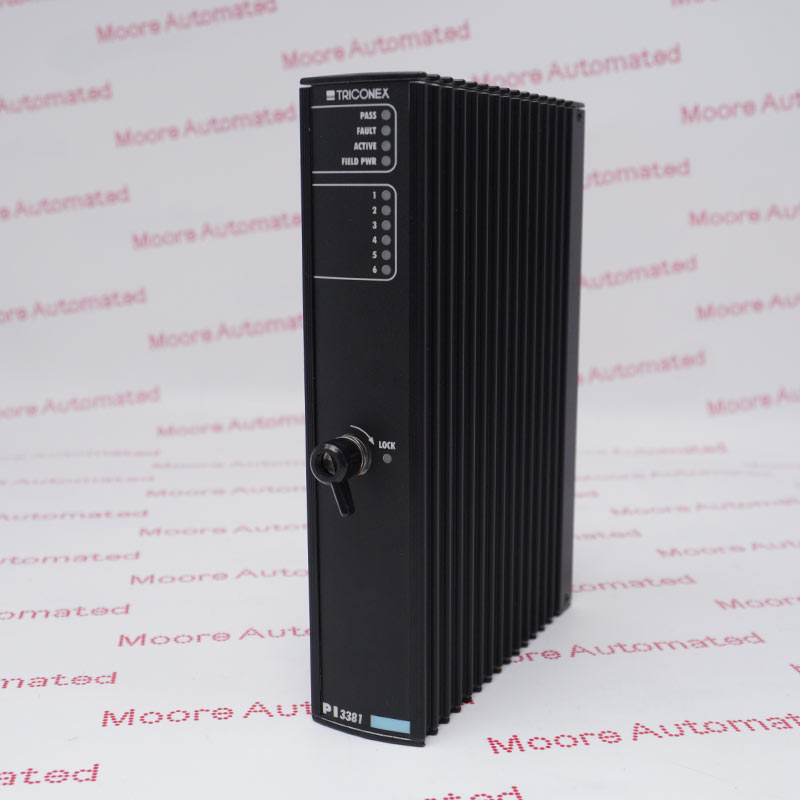
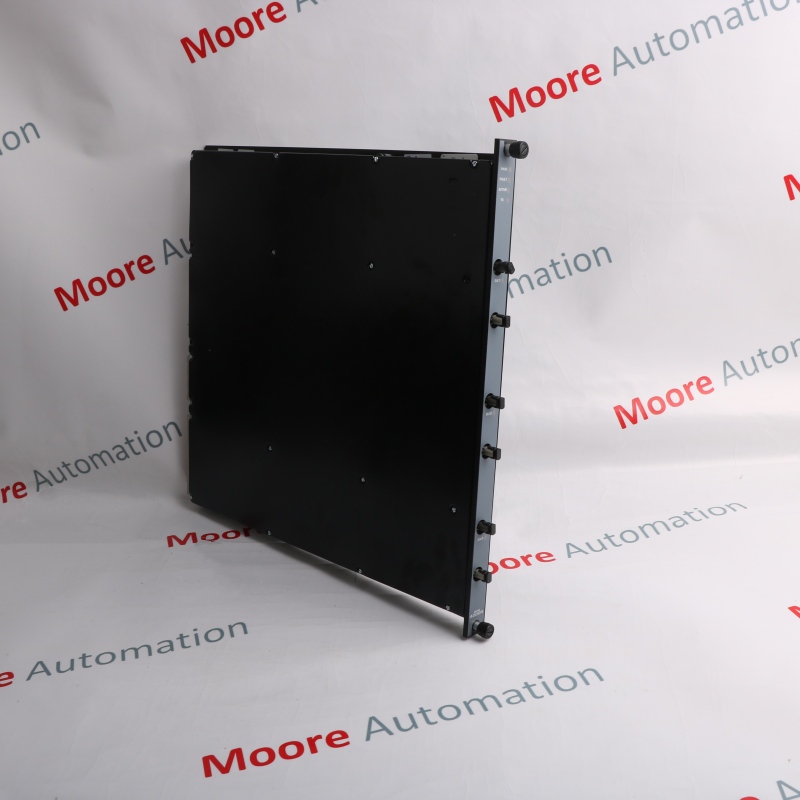
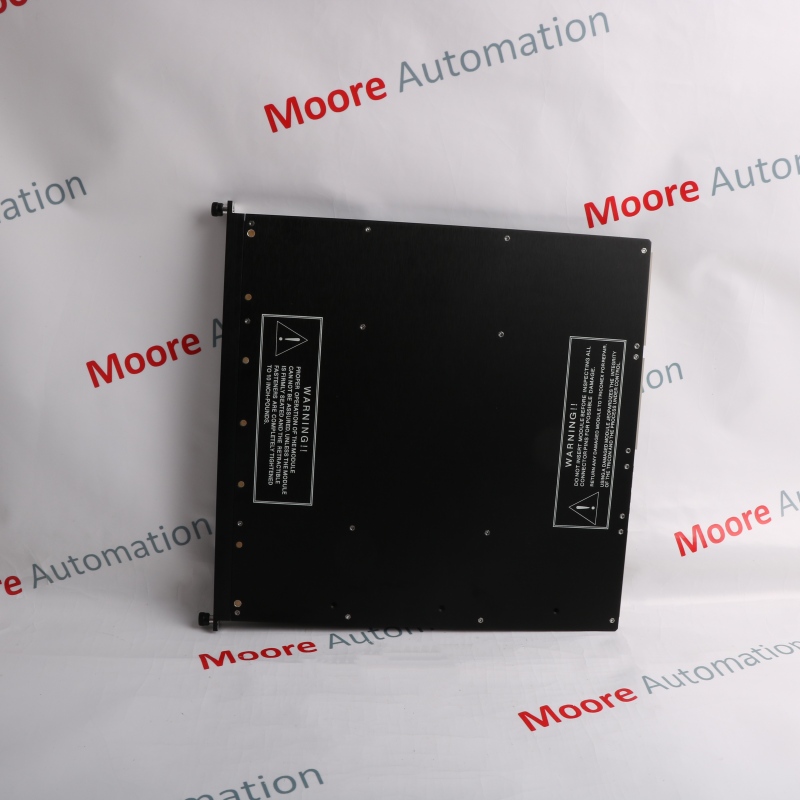
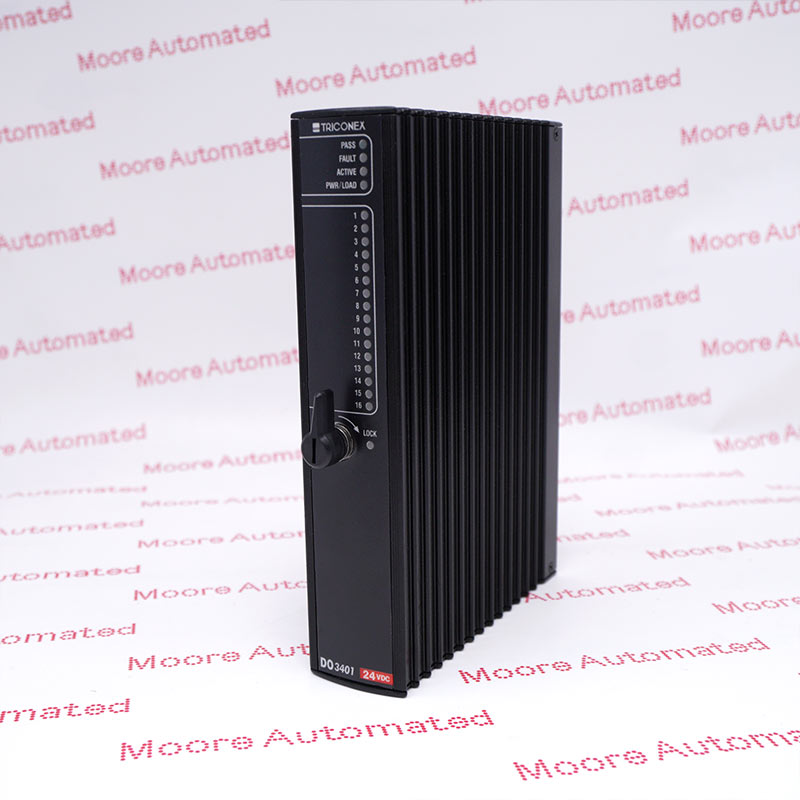
- Model 3401 Digital Output Module
- 24 VDC (Operational range: 15–30 VDC)
- Triple Modular Redundancy (TMR) digital output module
The Digital Output (DO) Module contains the circuitry for three identical, isolated channels. Each channel includes a proprietary ASIC which receives its output table from the I/O communication processor on its corresponding main processor. DO Modules use special quad output circuitry to vote on the individual output signals just before they are applied to the load. This voter circuitry is based on parallelseries paths which pass power if the drivers for channels A and B, or channels B and C, or channels A and C command them to close; in other words, two out of three drivers are voted on.
The quad output circuitry provides multiple redundancy for all critical signal paths, guaranteeing safety and maximum availability. The DO Module periodically executes an output voter diagnostic (OVD) routine on each point. This safety feature allows unrestricted operation under a variety of multiple-fault scenarios.
The DO3401 Triconex Digital Output Module may still be available for purchase and support from Moore Automated Company beyond End-Of-Life (EOL) by the manufacturer (OEM).
Triconex DO3401 Digital Output Module datasheet, Link
Important Notice: Other accessories, manuals, cables, calibration data, software, etc. are not included with this equipment unless listed in the above stock item description. All prices are shown in USD.
Four-Channel Voting Fault Tolerance: This module features three independent electronic channels. Each channel independently processes data from the main processor using a patented four-channel voting circuit. Even if a single channel fails, the series-parallel voting paths ensure safe signal output.
Output Voting Diagnostics (OVD): The system continuously monitors the integrity of the solid-state switches. The OVD program automatically identifies stuck loop faults (on or off) within 500 milliseconds without interrupting field loads.
Hot Standby Function: Supports online deployment of active hot standby modules. If the primary channel fails, field operation smoothly switches to the standby module, avoiding emergency shutdown.
Physical Keying Protection: The housing features independent mechanical keying slots. This safety feature prevents engineers from accidentally inserting digital output cards into incompatible backplane slots.
1.TÜV Rheinland Certification (SIL 3): Compliant with IEC 61508 (Parts 1-7) and IEC 61511 standards. This allows the product to be deployed in safety-critical loops with a Safety Integrity Level (SIL) of up to SIL 3, suitable for Emergency Shutdown (ESD), Fire and Gas (F&G), and Burner Management System (BMS).
2.ISA 84: Strictly compliant with the ISA 84/IEC 61511 framework, which specifies the design, operation, and maintenance of Safety Instrumented Systems (SIS) in process manufacturing plants.
3.EPRI TR-107330: Commercial-grade dedicated certification for nuclear power plant 1E applications. This certification verifies that the module architecture meets the stringent seismic, environmental, and radiation requirements of nuclear power plant control rooms.
4.ATEX/IECEx: Certified for safe installation in Zone 2, Group IIC hazardous locations. The module's engineering design reduces the risk of thermal or spark ignition in the presence of flammable gases.
5.FM (Factory Mutual) Class I Zone 2 Certification: Approved for use in Class A, B, C, and D explosive atmospheres. CSA (Canadian Standards Association) Certification: Evaluated to meet Canada's stringent electrical safety requirements for industrial equipment in hazardous areas.
6.CE Mark: Fully compliant with the EU Electromagnetic Compatibility (EMC) Directive and Low Voltage Directive.
7.IEC 61131-2 Certification: Tested for programmable controllers and can withstand extreme industrial vibration (up to 500G), electrostatic discharge (ESD), mechanical shock, and voltage spikes.
8.Conformal Coating: Meets industrial atmospheric standards, protecting internal delicate tetrode circuitry from moisture, dust, and corrosive airborne contaminants.