
Registered Address: 32D Floor Guomao Building, No.388, Hubin South Road, Siming District, Xiamen,Fujian, China
ISO 9001:2015 Certified
Our quality management system covers sourcing,testing and dispatch

Honeywell's Series 8 specification identifies 8C-PAIN01 as a coated, non-HART analog-input module with sixteen single-ended 4–20 mA channels, 16-bit conversion and 50 ms input scanning. The coated IOTAs are 8C-TAIX51 non-redundant and 8C-TAIX61 redundant. Verify the site's additional 51454356-175 marking and installed hardware; the reviewed 2011 OEM PDF does not map that suffix.
The Honeywell-authored PC03-490-100 Series 8 I/O specification section 2.2 names exact 8C-PAIN01 as coated Analog Input. Its table specifies sixteen single-ended channels, current inputs for two-wire or self-powered transmitters, 4–20 mA through a 200-ohm input path, 16-bit conversion, 19 dB normal-mode rejection at 60 Hz and 50 ms scanning. It lists 8C-TAIX51 as the coated non-redundant IOTA and 8C-TAIX61 as the coated redundant IOTA. The separate function matrix marks PAIN01 for analog current input but not HART; 8C-PAIH51 is the distinct HART variant.
This PDF is an October 2011 Honeywell technical document preserved by a third-party host, so its content should be treated as dated manufacturer evidence rather than proof of every current firmware or lifecycle condition. It does not map the website's 51454356-175 suffix, even though sellers commonly pair it with 8C-PAIN01. Before supply or service, reconcile the actual nameplate, IOTA, coating, redundancy, channel wiring and approved Experion release. Capture baseline process values and scaling, then verify each affected loop and diagnostics after authorized work. Do not claim that PAIN01 has HART or that another Series C PAIN01 variant is interchangeable merely because the names resemble each other.
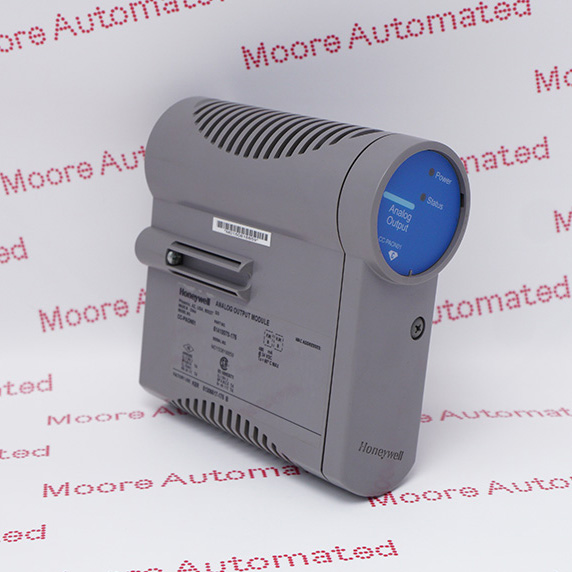
Honeywell's exact table names 8C-PAIN01 as a coated Series 8 Analog Input module with sixteen single-ended channels. It is not the Series C CC-PAIN01 nor the 8C-PAIH51 HART variant. The manufacturer function matrix marks PAIN01 as current input without HART. Match the complete unit marking and coated IOTA arrangement before selecting a spare. The extra 51454356-175 number is not mapped in the reviewed OEM PDF.
The 2011 Honeywell table specifies two-wire or self-powered transmitter current input, 4–20 mA through 200 ohms, 16-bit conversion and 50 ms input scanning. It also lists 19 dB normal-mode rejection at 60 Hz. These are manufacturer specifications for the dated Series 8 design, not proof that an arbitrary field sensor or newer release is compatible. Check loop power, termination, scaling and permitted system revision against approved engineering records.
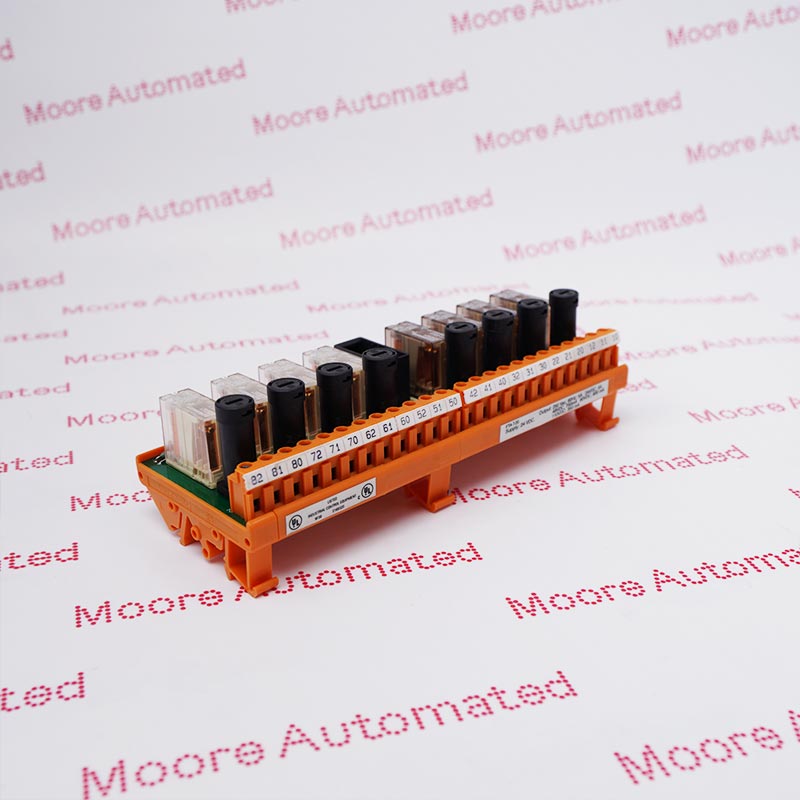
The coated 8C-TAIX51 is the six-inch non-redundant IOTA; coated 8C-TAIX61 is the twelve-inch redundant alternative. Verify the installed arrangement rather than assuming redundancy from the electronic module alone. Record the physical label, IOTA, sixteen channel assignments and representative values before work. After authorized replacement, test every affected loop and diagnostics. Confirm present-day lifecycle and the additional 51454356-175 marking with Honeywell before interchange or procurement decisions.
Confirm 8C-PAIN01 on the coated electronic module and separately verify site suffix 51454356-175 in a Honeywell parts record. Match the 8C-TAIX51 non-redundant or 8C-TAIX61 redundant coated IOTA, sixteen single-ended current loops, field supply and approved Experion release. The OEM table lists 4–20 mA through 200 ohms and 50 ms scan, but HART belongs to the different 8C-PAIH51. Do not substitute a Series C or HART module without explicit manufacturer compatibility evidence.
Record the complete module and IOTA labels, coating condition, loop assignments, scaling, baseline measurements, diagnostics and redundant partner before authorized maintenance. Follow site isolation, ESD and Honeywell procedures. After fitting the verified module, prove each affected analog measurement against a controlled source or known process value, then confirm alarms and redundancy where installed. The referenced PDF is dated 2011 and hosted as a mirror; check current firmware, lifecycle and electrical compatibility with Honeywell before promising interchangeability or release-specific performance.

Registered Address: 32D Floor Guomao Building, No.388, Hubin South Road, Siming District, Xiamen,Fujian, China
MooreAutomated.com is the official website and primary online platform operated by Moore Automation Limited. The website provides information about the company’s industrial automation parts sourcing services, product coverage and customer support. Moore Automation Limited operates as an independent supplier and is not an authorized distributor or representative of the manufacturers displayed on this website unless expressly stated.