


Registered Address: 32D Floor Guomao Building, No.388, Hubin South Road, Siming District, Xiamen,Fujian, China
ISO 9001:2015 Certified
Our quality management system covers sourcing,testing and dispatch

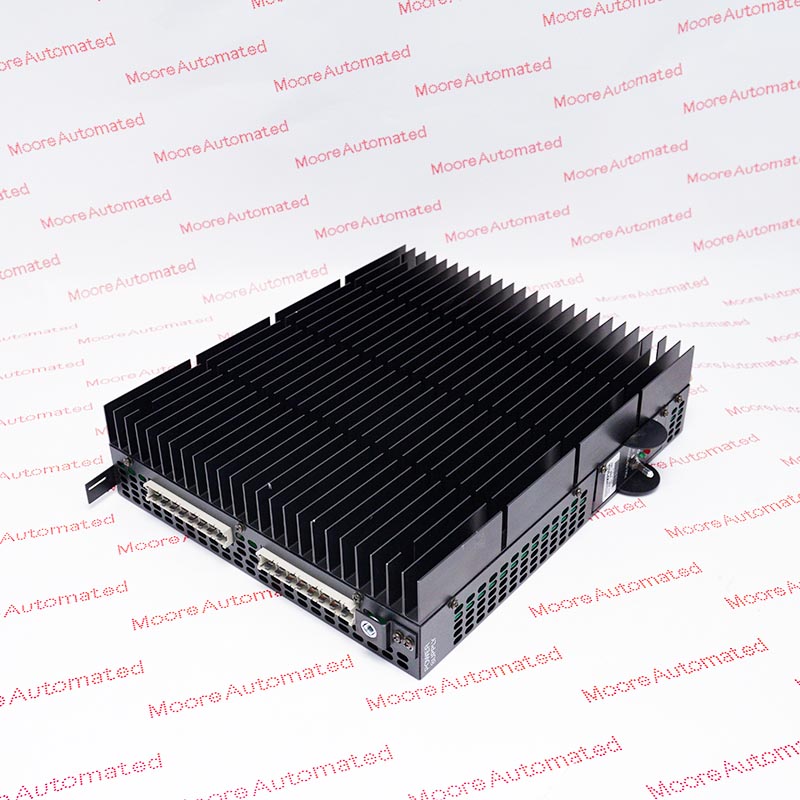
Honeywell lists DC-TAIX11 as an I/O Termination Assembly (IOTA) option for the CC-PAIH01 high-level analog input with HART module in its Universal Marshalling Solution specification. It is the termination assembly, not the analog-to-digital electronics module. Check the actual I/O module, field wiring, revision and installed marshalling design before replacement.
In Honeywell's November 2020 Universal Marshalling Solution Specification, DC-TAIX11 appears under IOTA for the CC-PAIH01 I/O module. That row calls the I/O type AI-HART and describes high-level analog input with HART. The table's separate columns matter: CC-PAIH01 is the electronics module, while DC-TAIX11 is an I/O Termination Assembly. It does not assign the electronics module's sampling, channel-count or converter figures to the IOTA. The document presents this pairing in a particular universal-marshalling context, so it should not be interpreted as proof of every possible installation arrangement or revision.
For a replacement, obtain a readable physical label and verify the full DC-TAIX11 model, mechanical/terminal configuration and revision. Record the companion CC-PAIH01 module, channel assignments, HART device wiring, barrier or isolator selection, and site drawings. The existing website's 16-channel, common-mode, A/D-resolution and filter specifications should not be retained as standalone DC-TAIX11 facts without exact manufacturer support. The same Honeywell PDF contains compliance and entity figures for associated universal-marshalling barriers; those must not be copied onto this IOTA. Follow the applicable manufacturer and site procedure, then verify all affected field signals and communications after authorized work.
Honeywell explicitly places DC-TAIX11 in the IOTA column of its universal-marshalling compatibility table. The associated electronics model is CC-PAIH01, described as high-level analog input with HART. Treating DC-TAIX11 as the converter or a complete 16-channel measurement module would blur two distinct components. Confirm the actual IOTA label, terminal hardware and installed module before specifying a spare.
The reviewed Honeywell table documents DC-TAIX11 with CC-PAIH01 in the cited universal-marshalling context. It does not automatically establish compatibility with every similarly named CC or DC terminal assembly, every revision or every site configuration. Check the installed I/O module, marshalling barrier, wiring drawings and release-specific manufacturer guidance. Preserve the original channel and terminal assignments during any approved exchange.
The PDF includes specifications for associated barriers and separate I/O modules, but the exact DC-TAIX11 row is an IOTA compatibility entry. It does not give an independent A/D resolution, input channel count, common-mode limit or filter response for this termination assembly. Those figures should not be copied from an analog module or adjacent product. Verify the complete assembled signal path before using any electrical limit in design or procurement.
Match the DC-TAIX11 label and revision to the installed IOTA position, then identify the companion CC-PAIH01 electronics module and the approved marshalling design. Honeywell's 2020 compatibility table places those models in separate IOTA and I/O-module columns. Check terminal layout, field wires, HART devices, barrier or isolator and cabinet drawings before accepting an exact replacement. Do not use the analog electronics module's A/D, channel or filter values as intrinsic DC-TAIX11 ratings.
Record terminal numbering, connected instruments, polarity and channel mapping before a controlled replacement. Determine the correct isolation and site safety procedure from the installed system documentation rather than assuming the IOTA can be exchanged live. Refit only the verified hardware revision and restore the approved wiring and companion module configuration. After authorized work, verify every affected analog measurement, HART communication where used, diagnostics and controller status against the baseline; investigate any mismatch before releasing the loop to service.

Registered Address: 32D Floor Guomao Building, No.388, Hubin South Road, Siming District, Xiamen,Fujian, China
MooreAutomated.com is the official website and primary online platform operated by Moore Automation Limited. The website provides information about the company’s industrial automation parts sourcing services, product coverage and customer support. Moore Automation Limited operates as an independent supplier and is not an authorized distributor or representative of the manufacturers displayed on this website unless expressly stated.