Photograph the front label, side label, carrier position and termination board.




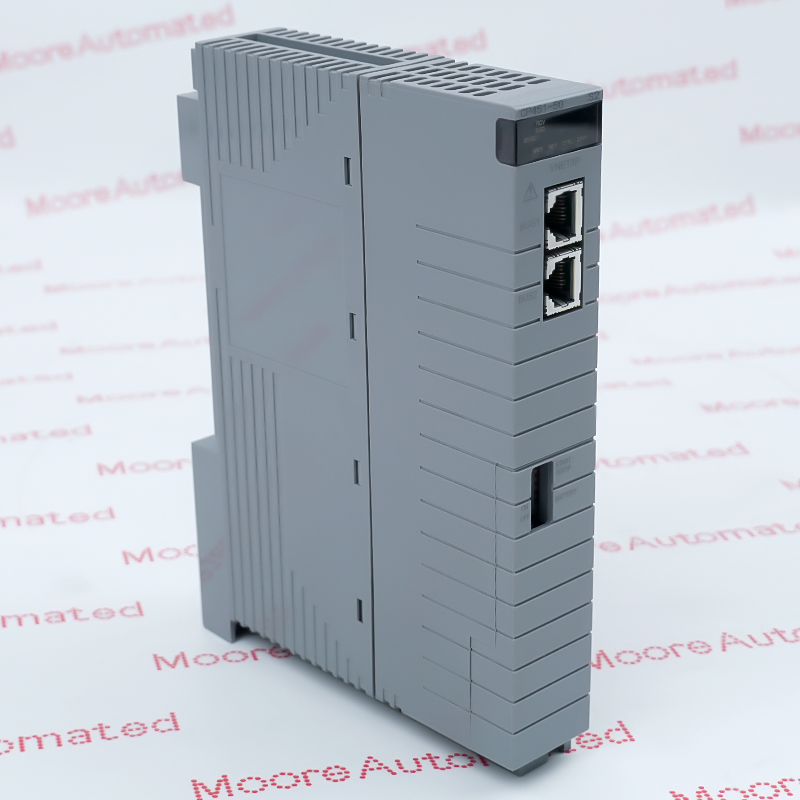
CP451-50 S2
Get A Quote



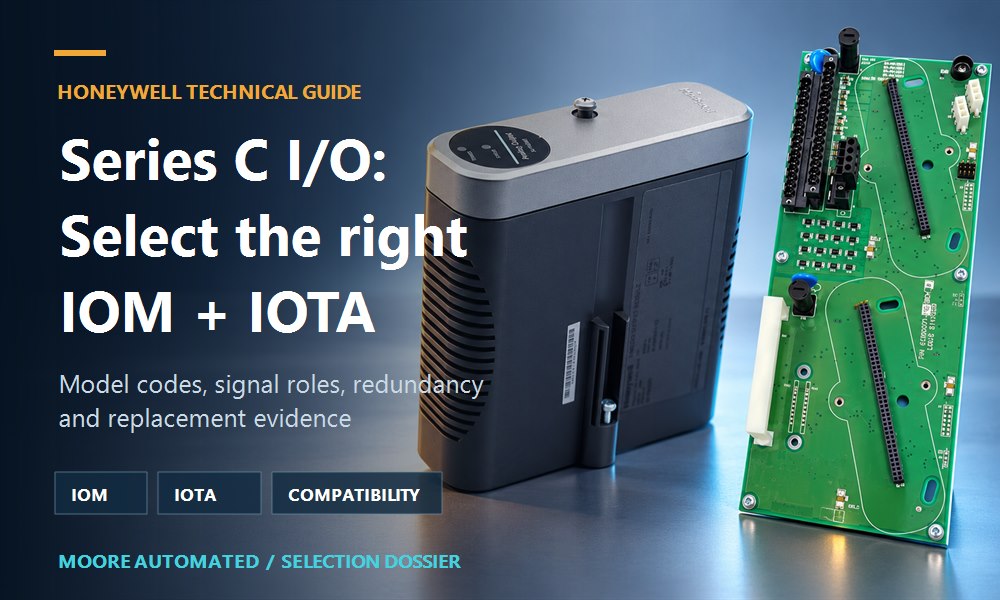
A Honeywell Experion PKS Series C I/O replacement is not selected by enclosure colour or an “8C” prefix alone. The reliable route is to verify the complete IOM identity, its matching IOTA, signal role, channel configuration and redundancy requirements before purchase.
Series C is Honeywell’s high-density I/O family for Experion PKS architectures. A field replacement normally involves two distinct hardware identities: the I/O Module (IOM), which performs the channel processing, and the I/O Termination Assembly (IOTA), which provides field termination and the physical interface beneath the module.
Photograph the front label, side label, carrier position and termination board.
Confirm the module function, receiving IOTA and required redundancy arrangement.
Check revision, channel role, condition and site constraints before dispatch.
The I/O Module converts and processes the field signal, reports channel status and supports the diagnostic behaviour defined for that module type.
The I/O Termination Assembly receives the IOM and connects the field wiring. Terminal layout and supported module relationship are selection-critical.
A compatibility review should move from identity to function, then from function to installation. This prevents a visually similar component from being treated as an automatic substitute.
| Checkpoint | Evidence to collect | Why it matters |
|---|---|---|
| Complete part number | Clear label photo and typed model code, including every prefix, suffix and hyphen. | Confirms the exact marketed hardware identity and avoids shorthand-based selection. |
| Signal role | Analog/digital; input/output; signal range; HART or special function if applicable. | Modules with similar housings can execute different field functions. |
| IOM–IOTA pairing | Part numbers and photos of both the module and termination assembly. | The processing module must be supported by the installed termination hardware. |
| Redundancy | Single or redundant arrangement, paired position and carrier layout. | A redundant design can require a specific hardware and installation relationship. |
| Revision and condition | Revision marks, connector condition, seal status and traceable inspection record. | Supports a controlled installation decision and reduces return risk. |
| System context | Experion release, controller architecture, configured slot and maintenance window. | Final suitability depends on the customer’s approved system design and configuration. |
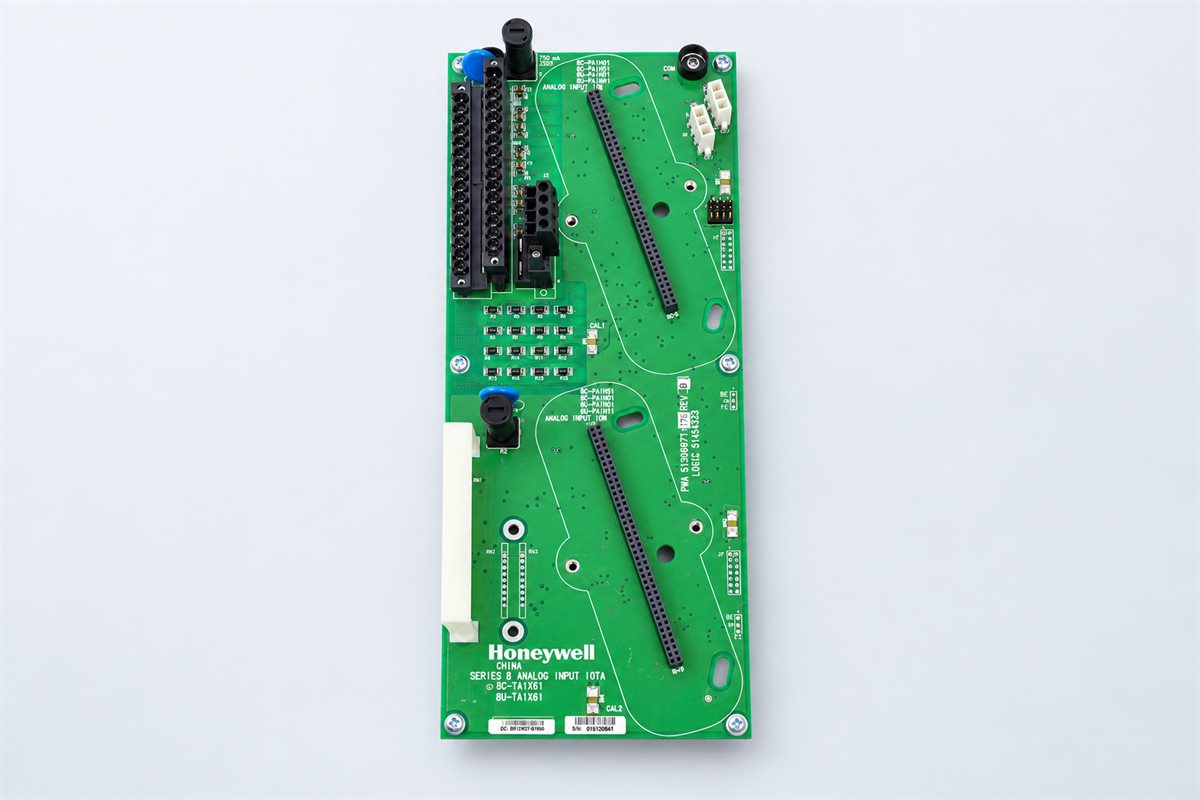
A useful sourcing image shows the full assembly, readable identity, revision marking, terminal area and any condition issue. Where possible, add a second photograph showing the installed position and wiring relationship.
This product video provides an additional visual reference for a Honeywell 8C-TAIXB1 IOTA. Use video and photography as identification evidence; final compatibility still requires verification against the installed system and approved documentation.
Series C digital input hardware. Retain the complete model and installed function during review.
View product → HART analog input8C-PAIHA1Analog input IOM. Confirm channel role, receiving IOTA and redundancy requirements.
View product → HART analog output8C-PAOHA1Analog output IOM. Match the exact code to the approved system configuration.
View product → Analog input IOTA8C-TAIXB1Termination hardware for analog input applications. Verify field wiring and module pairing.
View product →No. The prefix identifies a broader hardware family, not a complete functional identity. Use the entire Honeywell part number, including suffix and revision information, together with the installed IOM/IOTA relationship.
The IOM processes the field signal and provides channel functions and diagnostics. The IOTA is the termination assembly that receives the module and connects field wiring. Both identities are relevant to a compatibility decision.
No. Similar appearance does not confirm signal role, channel behaviour, HART support, redundancy requirements, termination arrangement or system approval.
Send the complete part number, clear front and side label photographs, IOTA or carrier identity, quantity, product condition, installed position and required-on-site date. If the replacement is urgent, include the fault symptoms and maintenance window.
No. A video can help confirm physical identity and condition, but compatibility must be reviewed against the installed system, configuration and applicable Honeywell documentation.
Technical note: This guide supports identification and procurement review. The customer’s authorised engineering team must approve the final configuration, firmware, safety and installation decision.
Send the complete label photos, paired hardware identity, quantity and required-on-site date. Miya’s team will organise the evidence and return a practical sourcing route.



Registered Address: 32D Floor Guomao Building, No.388, Hubin South Road, Siming District, Xiamen,Fujian, China
MooreAutomated.com is the official website and primary online platform operated by Moore Automation Limited. The website provides information about the company’s industrial automation parts sourcing services, product coverage and customer support. Moore Automation Limited operates as an independent supplier and is not an authorized distributor or representative of the manufacturers displayed on this website unless expressly stated.


Leave Your Comment