Overview
Manuals
Principle
Application Scenarios
Features:
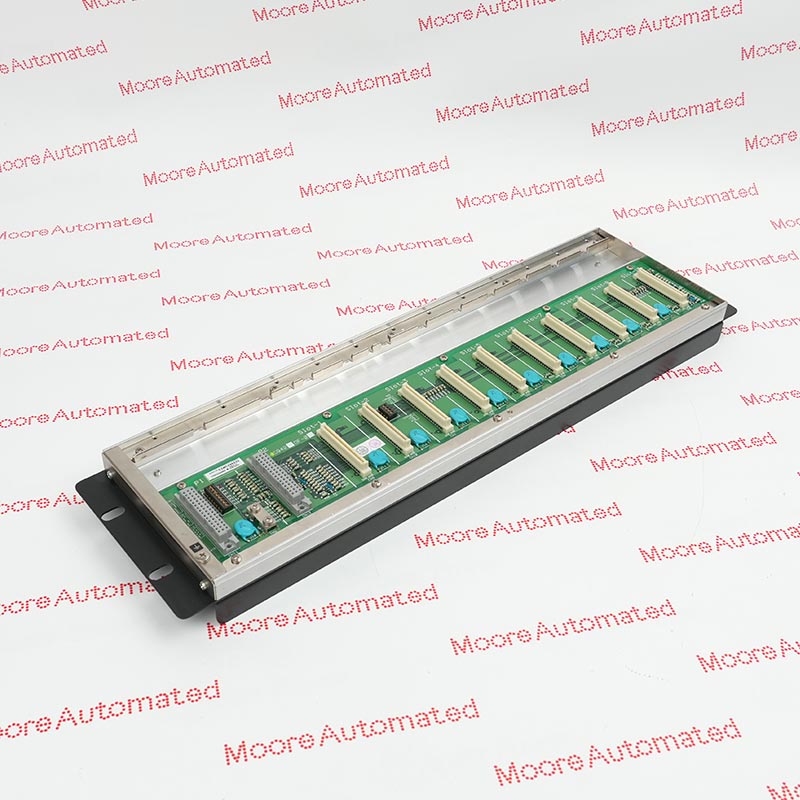
- Digital input/output expansion card
- The IDC32 series typically provides 32 digital signal interfaces
- It can acquire switch signals from the production field and output control commands to external actuators
It primarily provides up to 32 digital signal interfaces for complex industrial production lines, enabling real-time acquisition of the on/off status of buttons, limit switches, or proximity sensors from the field, and sending control commands to solenoid valves, contactors, or indicator lights. As a key expansion unit in modular systems, it significantly enhances the controller's ability to handle multi-node logic interlocks and complex action sequences.
In terms of system integration, the IDC32-1.1 features excellent industrial anti-interference performance and remote diagnostic capabilities. All its input/output channels are opto-isolated, effectively preventing interference from the complex electromagnetic environment of the factory to the central processing board (e.g., SPCC1). Furthermore, this board supports use with dedicated IDC32_Tools debugging software, allowing maintenance personnel to remotely monitor the real-time status of all 32 channels via computer, perform parameter backups, or force output signals.
The IDC32-1.1 EMG Digital input/output expansion card may still be available for purchase and support from Moore Automated Company beyond End-Of-Life (EOL) by the manufacturer (OEM).
EMG IDC32-1.1 Digital input/output expansion card info(manual), Link
Important Notice: Other accessories, manuals, cables, calibration data, software, etc. are not included with this equipment unless listed in the above stock item description. All prices are shown in USD.
It is an indispensable logic control center in automated production lines in industries such as metal processing and papermaking. Its working principle is based on distributed scanning and optocoupler technology: the scanning logic circuit inside the circuit board cyclically reads the external 24V signal at millisecond intervals, converts it to an internal low-voltage logic level via an optocoupler, and uploads it to the backplane bus. Simultaneously, it receives digital instructions from the central processing unit and controls the on/off state of the output transistors through a power drive circuit, thereby achieving precise control of the external load.
Strip Guiding Logic Control: Manages the complex interlocking logic for guiding the strip's edges and center. It acquires signals from hardware limit switches (preventing excessive movement of the guide frame) and sends commands to the hydraulic pump starter or motor driver.
Automotive and Metalworking Production Lines: Widely used in pickling, galvanizing, and cold rolling mills. It handles the 24V DC discrete signals required to coordinate strip movement at different tension levels and guide sections.
Winding/Unwinding Machine Sequence Control: Manages the digital handshake between distributed I/O stations and the main PLC during the winding process, including detecting "strip presence" sensors and controlling locking solenoid valves.
System Diagnostics and Maintenance: Enables remote monitoring in conjunction with IDC32_Tools software. Maintenance teams use this software to trace faults in 32 independent channels without manually probing wiring in electrical cabinets.