Overview
Manuals
Principle
Features:
- ANALOG TEMP I/P ADAPTER MODULE
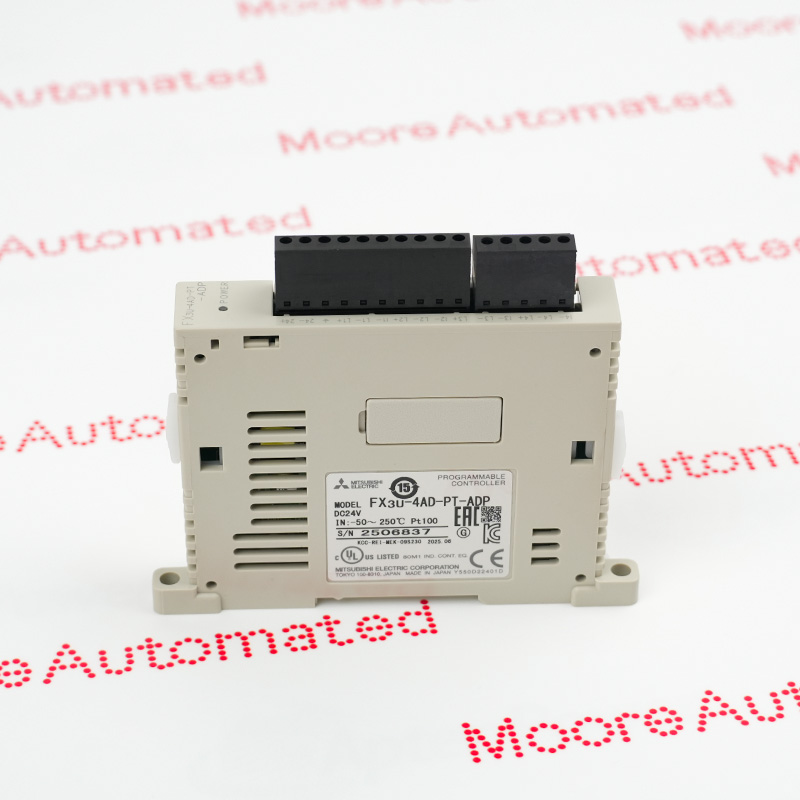
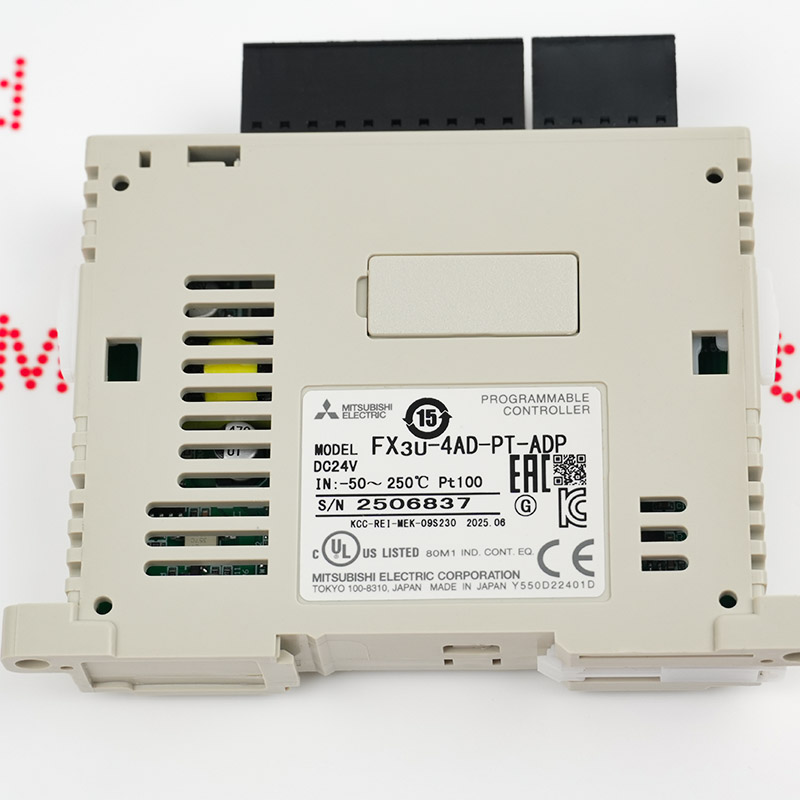
- Four-channel temperature input adapter supporting direct connection of platinum resistance temperature detectors (Pt100)
- High-resolution analog-to-digital conversion with built-in linearization and temperature compensation
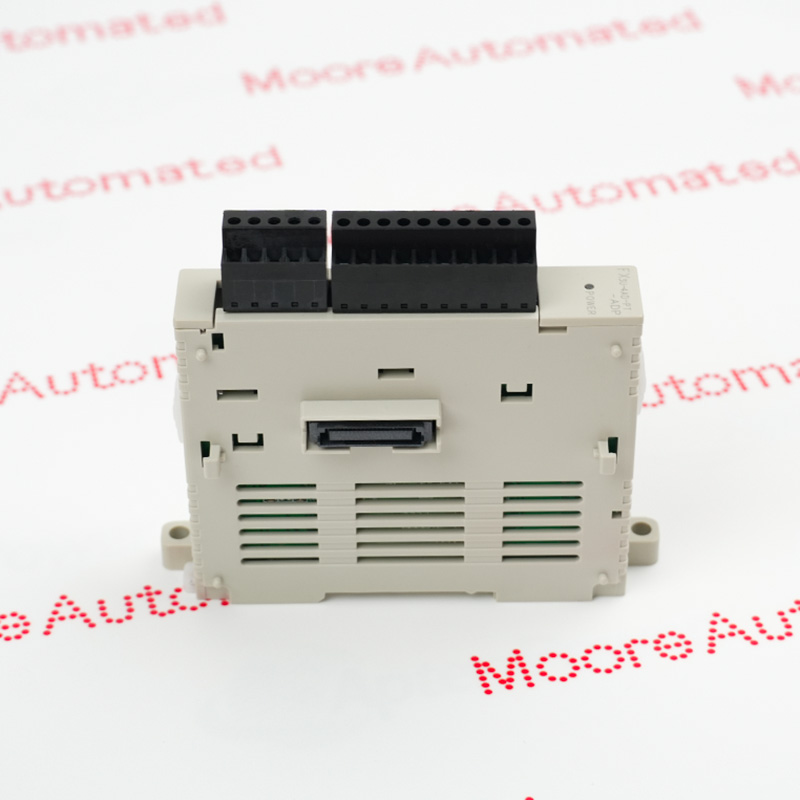
The FX3U-4AD-PT-ADP is a temperature input expansion adapter designed specifically for the FX3U series PLC platform. Its main function is to acquire temperature signals from Pt100 RTDs and convert them into digital values that can be processed by the PLC CPU. This module supports accurate multi-channel temperature measurement and is suitable for applications such as thermal process control, environmental monitoring, and machinery temperature monitoring.
In real-world industrial environments, the FX3U-4AD-PT-ADP can simultaneously monitor up to four independent temperature points, thereby enhancing system performance. It integrates seamlessly with the PLC through an expansion interface, simplifying wiring and increasing system modularity. This module maintains accurate temperature calibration and stable measurement performance even in environments with high electrical noise, making it suitable for applications such as production lines, HVAC systems, and process automation.
The FX3U-4AD-PT-ADP Mitsubishi ANALOG TEMP I/P ADAPTER MODULE may still be available for purchase and support from Moore Automated Company beyond End-Of-Life (EOL) by the manufacturer (OEM).
Mitsubishi FX3U-4AD-PT-ADP ANALOG TEMP I/P ADAPTER MODULE datasheet(manual), Link
Important Notice: Other accessories, manuals, cables, calibration data, software, etc. are not included with this equipment unless listed in the above stock item description. All prices are shown in USD.
The FX3U-4AD-PT-ADP operates based on resistance measurement and analog-to-digital conversion. The resistance value of each connected Pt100 sensor changes proportionally with temperature. The module applies a precise excitation current to the RTD, measures the resulting voltage drop, and converts the analog signal into a high-resolution digital value via an internal analog-to-digital converter. The built-in linearization algorithm converts the resistance value into temperature data, which is then transmitted to the PLC for monitoring and control.