


Registered Address: 32D Floor Guomao Building, No.388, Hubin South Road, Siming District, Xiamen,Fujian, China
ISO 9001:2015 Certified
Our quality management system covers sourcing,testing and dispatch
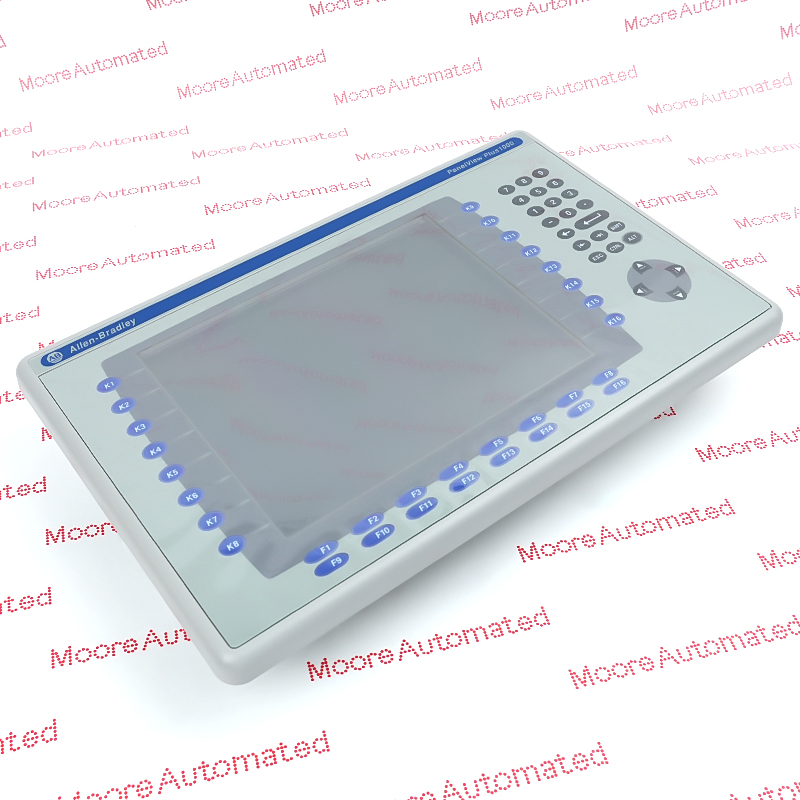
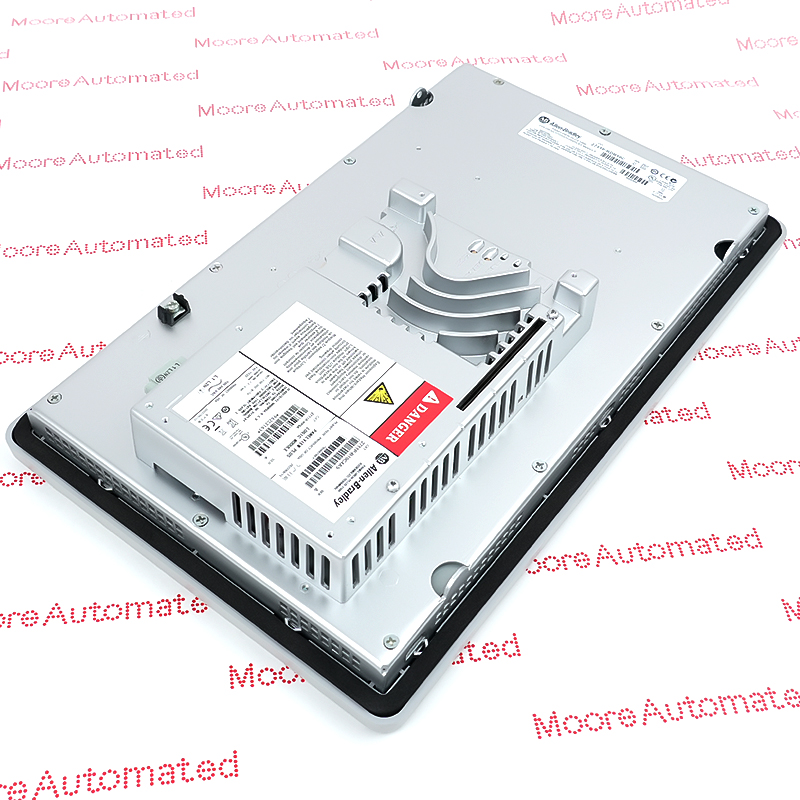
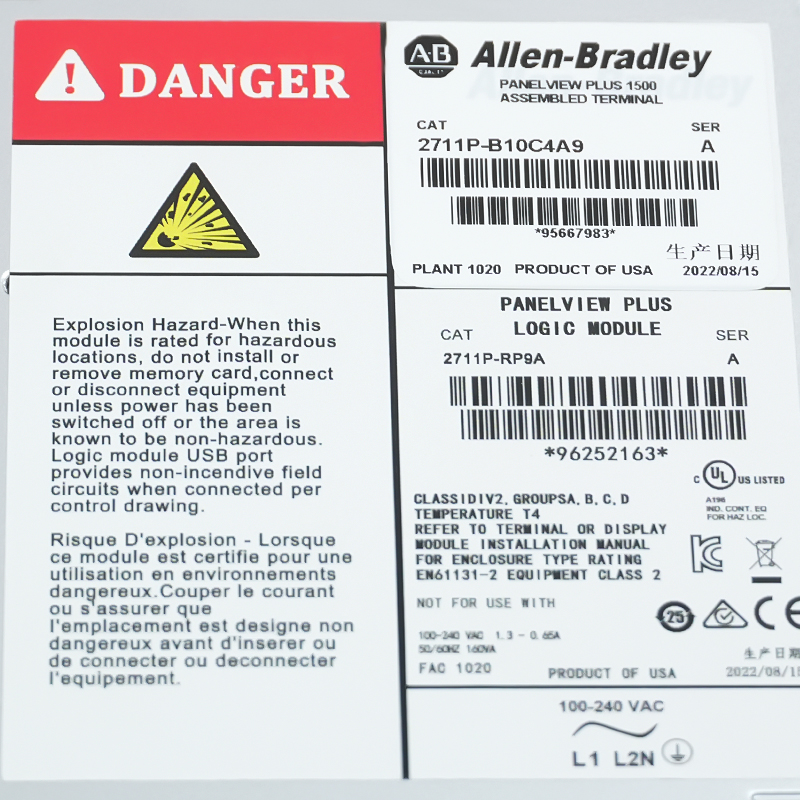
2711P-B10C4A9 is an Allen-Bradley PanelView Plus 6 1000 industrial operator terminal with combined keypad and resistive-touch input. Rockwell Automation identifies it as a 10.4-inch color active-matrix TFT terminal with 640 x 480 resolution and 18-bit color graphics.
The terminal uses 100...240V AC input at 50...60 Hz, provides 512 MB RAM and 512 MB nonvolatile memory, and runs Windows CE 6.0 with FactoryTalk View Machine Edition software version 6.0 or later.
Built-in communications include 10/100 Mbps Ethernet, one RS-232 port and two USB host ports. An interface is also provided for optional Ethernet, DH+, DH-485 or ControlNet communication modules. Rockwell Automation lists this catalog number as discontinued as of September 30, 2022.
Rockwell Automation specifies FactoryTalk View Machine Edition software version 6.0 or later and Windows CE 6.0 for this terminal. The front is rated NEMA 4X and IP65; the installed enclosure and cutout must be checked against the official dimensions before migration.
The 2711P-B10C4A9 provides local visualization and operator interaction for industrial machine and process control applications created with FactoryTalk View Machine Edition. Its keypad-and-touch interface supports operation where both physical function keys and direct screen input are required.
For an existing installation, confirm the application file, firmware, communications option, panel cutout, power input and connected controller before replacement or migration.
Rockwell Automation lists the 2711P-B10C4A9 as discontinued effective September 30, 2022.
Replacement category: Engineering Replacement
Replacement product: 2711P-B10C22A9P
An engineering replacement must not be assumed to be a direct drop-in replacement. Verify the FactoryTalk View ME application, firmware, communication interfaces, panel cutout, power and accessory requirements before conversion.

Registered Address: 32D Floor Guomao Building, No.388, Hubin South Road, Siming District, Xiamen,Fujian, China
MooreAutomated.com is the official website and primary online platform operated by Moore Automation Limited. The website provides information about the company’s industrial automation parts sourcing services, product coverage and customer support. Moore Automation Limited operates as an independent supplier and is not an authorized distributor or representative of the manufacturers displayed on this website unless expressly stated.