Overview
Manuals
Primary Applications
Features:
- Status indication by 3-colour LED on front panel
- 6 configurable alarms per processed output with hysteresis deadbands
- Live insertion / removal of cards with automatic configuration
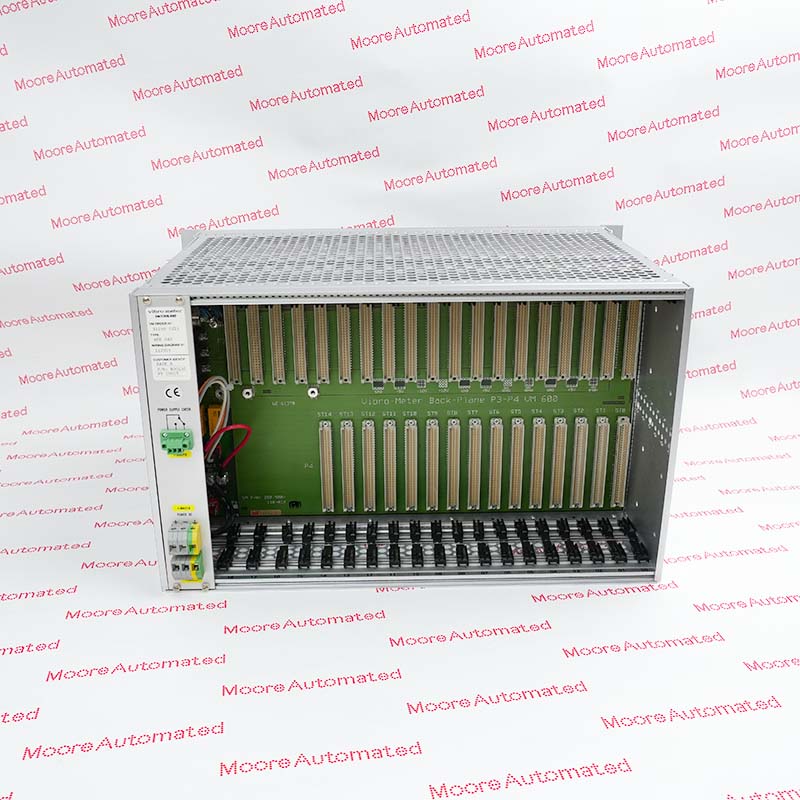
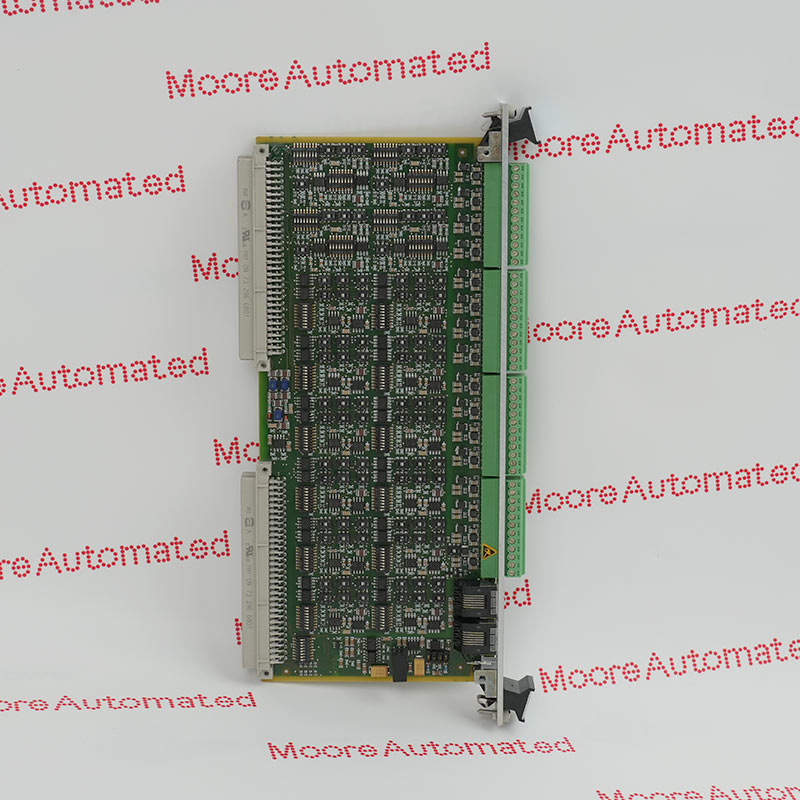
The CMC 16 Condition Monitoring Card is the central element in Vibro-Meter’s VM600 series Condition Monitoring System (CMS). This intelligent front-end Data Acquisition Unit (DAU) is used in conjunction with the VM600 CMS software to acquire, analyse and transmit results to a host computer via the VM600 series CPU M module with Ethernet controller or directly via serial links.
The CMC 16 acquires and processes high-resolution data captured at scheduled intervals or on alarm detection (waveforms, spectra and orbits). Spectral resolution, frequency span or order span, window type, averaging mode and number of averages are fully configurable. The capacity also exists to trigger extended capture of time-based data over several minutes using an ‘Oscilloscope Mode’ as this can provide valuable data, particularly during machine start-up.1.
The VM600 CMC16 200-530-025-014 Vibro-Meter Condition Monitoring Card may still be available for purchase and support from Moore Automated Company beyond End-Of-Life (EOL) by the manufacturer (OEM).
Vibro-Meter VM600 CMC16 200-530-025-014 Condition Monitoring Card manual(Datasheets), Link
Important Notice: Other accessories, manuals, cables, calibration data, software, etc. are not included with this equipment unless listed in the above stock item description. All prices are shown in USD.
Predictive Asset Condition Monitoring: Tracks health parameters such as absolute/relative vibration, casing expansion, eccentricity, and sensor target clearance, and continuously performs trend analysis.
Advanced Turbomachinery Diagnostics: Serves as a central data solver for power generation steam/gas turbines, large process compressors, and hydroelectric generators.
Transient Machine Condition Capture: Automatically records high-density data during dynamic startup, coasting, or overspeed operation to accurately pinpoint resonance peaks.
Adaptive Alarm Setpoint Modeling: Utilizes integrated mathematical tracking technology to dynamically adjust alarm or danger thresholds based on changes in shaft speed and operating load.