



Sales Director, Moore Automated
Product Verification Team
The route is part of the spare
A correct industrial automation part only solves the problem when its identity, condition, documents and delivery route are aligned with the required-on-site date.
Supply disruption is rarely one isolated event. A discontinued module, an uncertain revision, an incomplete commercial invoice or a missed import requirement can each delay the same maintenance plan. Effective industrial automation parts logistics therefore begins before dispatch: confirm the exact item, establish what evidence is available, choose a suitable transport plan and make each handoff visible.
This guide explains the control points Moore Automated uses to help customers turn a spare-parts requirement into a traceable international delivery plan. Actual availability, dispatch timing, transit time and customs requirements remain specific to the item, destination and written quotation.
Five points where a critical-parts shipment can lose time
A shortened code can hide a different suffix, revision, firmware level or hardware option. Confirm the complete manufacturer part number and nameplate evidence.
A website listing is not a live dispatch promise. Confirm quantity, condition, location and inspection status for the specific enquiry.
Incomplete descriptions, values or consignee details can create questions before export or at destination customs.
Urgency must be balanced against weight, dimensions, value, packaging, routing restrictions and the service available to the destination.
The consignee, importer or broker must be ready to provide local information, pay applicable charges and receive the shipment.
Plan backwards from the required-on-site date
Start with the date the maintenance team needs the part at the plant—not only the preferred dispatch date. Then assign time and ownership to each control point. A short route can still fail when one responsibility is undefined.
Choose the route around the requirement, not a default service
Urgency
Define the required-on-site date, the production consequence of delay and whether the receiving site can accept delivery outside normal hours.
Size and handling
Use packed dimensions and weight—not an estimate from the bare part—to compare parcel, air-freight and other viable services.
Value and risk
Consider suitable protective packaging, declared value, insurance options, tracking and the number of carrier handoffs.
Destination
Check consignee details, importer arrangements, local restrictions, documentation and any broker information before dispatch.

Make the shipment evidence match the quotation
Before release, compare the supplied item and agreed condition with the order record. Where available and agreed, photographs, nameplate details, test evidence, packing information and tracking can give the receiving team a clearer reference for the incoming shipment.
For urgent or difficult-to-source parts, this record also helps engineering, procurement and logistics teams discuss the same item without relying on assumptions.
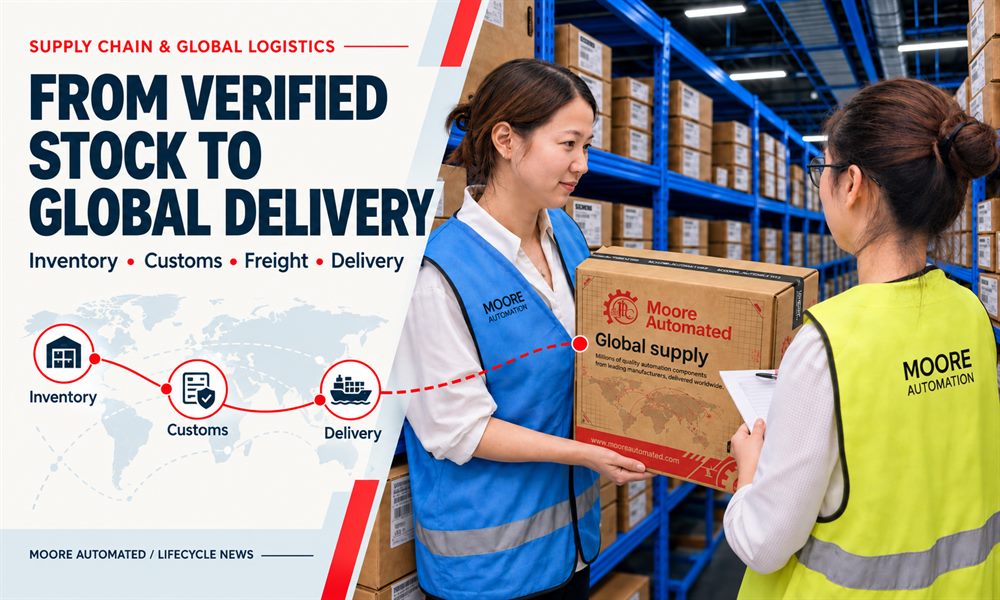
Moore Automated operational material. The image illustrates handling and dispatch context; it does not represent live stock, a specific destination or a guaranteed service level.
Customs clearance starts before dispatch
Build one consistent data set
Product descriptions, quantities, values and parties should agree across the commercial documents and carrier information. Requirements vary by country, product and transaction.
This section is general operational information, not legal or customs advice. Classification, licensing, import eligibility, taxes and duties must be confirmed for the shipment by qualified parties and the relevant authorities.
Build resilience before the next emergency order
Identify components whose failure can stop production, create a safety exposure or require a long technical recovery. Record complete part numbers and approved alternatives.
Keep primary and backup transport choices for key sites, with current consignee, importer and broker details. Recheck them when regulations or plant arrangements change.
Tell the plant who will track the shipment, answer clearance questions, inspect the package and escalate discrepancies when it arrives.
Watch: Moore Automated warehouse operations
This short video from the Moore Automated YouTube channel provides a visual overview of the warehouse environment that supports parts handling and order preparation. It is operational context—not proof of live stock, a specific inspection result or a guaranteed dispatch time.
Primary guidance used for this article
These sources explain widely used trade terms, customs classification concepts, cargo processes and international shipping documentation. Shipment-specific decisions still require current advice from the responsible parties.
- International Chamber of Commerce — Incoterms® rulesGeneral reference for allocating delivery obligations, costs and risk between seller and buyer.
- World Customs Organization — HS classification guidanceGeneral reference supporting Harmonized System classification work.
- International Air Transport Association — cargo operations guidanceGeneral standards and operating references for air-cargo handling.
- United Nations trade facilitation recommendationsGeneral recommendations for simplifying and harmonising trade procedures and information flows.
- International shipping documentation guidanceGeneral carrier practices for commercial invoices and consistent customs information.
Industrial automation parts logistics FAQ
What information is needed for an international spare-parts quotation?
Provide the manufacturer, complete part number including suffixes, revision or firmware where relevant, quantity, required condition, destination country and postcode, required-on-site date and any known importer or broker requirements. A clear nameplate photograph can help when identity is uncertain.
Can Moore Automated guarantee same-day dispatch?
Dispatch timing can only be confirmed in writing for the specific item, condition, quantity, documentation and destination. A website listing does not by itself confirm live stock or same-day dispatch. Ask for the applicable cut-off time and written dispatch commitment before ordering.
Which customs documents are commonly used for international parts shipments?
A commercial invoice and packing list are commonly used. Depending on the product, destination and transaction, customs or the carrier may request origin information, licences, technical descriptions or other supporting documents. Requirements should be checked before dispatch.
Who is responsible for selecting the HS code?
Responsibility depends on the shipment and jurisdiction. The final classification should be confirmed by the legally responsible importer or exporter with a qualified customs broker or the relevant customs authority. Product function and construction normally matter more than an informal product label.
When should air freight be considered for automation spares?
Air freight may be appropriate when the downtime exposure or required-on-site date justifies the additional cost and the item can travel under the applicable cargo rules. Compare the packed size and weight, value, routing, restrictions, customs readiness and delivery handoffs before selecting a service.
How can buyers reduce avoidable customs delays?
Confirm consignee and importer details early, use a clear and consistent goods description, check classification and document requirements with qualified parties, review values and quantities across all records and ensure the receiving contact or broker is ready to respond to clearance questions.
Build a delivery plan around your exact part requirement
Send the complete part number, destination and required-on-site date. Moore Automated can review the available product information, condition options, dispatch assumptions and practical routing inputs for a written quotation.
Include these details
- Manufacturer and complete part number
- Revision, firmware or nameplate photo when relevant
- Quantity and required product condition
- Destination country and postcode
- Required-on-site date and downtime context
- Known importer, broker or document requirements
Moore Automated is an independent supplier and is not an authorised distributor or representative of the manufacturers displayed on this website unless expressly stated. Product availability, evidence, dispatch dates, transit times and customs requirements are item- and destination-specific and require written confirmation. Customers should use qualified customs, legal and compliance advisers for shipment-specific obligations.






Leave Your Comment