




Signal → Decision → Shutdown
Sales Director
Product Verification Team
Choose the maintenance method before the shutdown chooses it for you
Preventive maintenance protects known service intervals. Predictive maintenance uses condition data to support better timing. Most plants need a deliberate mix of both—not a promise that every failure can be predicted.
The practical question is not which method sounds more advanced. It is which method fits each asset’s criticality, failure behaviour, available data, safety requirements and spare-parts risk. A useful strategy connects condition signals to engineering decisions, approved work scopes and materials that can arrive before the shutdown window opens.
Estimate downtime exposure without relying on a generic headline number
A site-specific planning framework—not an accounting rule. Use plant finance, operations and safety data to assign the figures.
Preventive, condition-based and predictive maintenance compared
| Approach | Primary trigger | Best fit | Main limitation to manage |
|---|---|---|---|
| Reactive maintenance | Failure has already occurred | Low-criticality assets where failure creates no unacceptable safety, environmental or production risk | Unplanned timing, secondary damage and emergency sourcing |
| Preventive maintenance | Calendar time, operating hours, cycles or a prescribed interval | Assets with meaningful service intervals, statutory checks or known age-related tasks | Work may be performed too early or may not detect an unrelated developing fault |
| Condition-based maintenance | A measured condition crosses a defined inspection or action threshold | Assets where vibration, temperature, oil, electrical or process measurements reflect deterioration | Poor baselines, sensor placement or alarm governance can create misleading signals |
| Predictive maintenance | Analysed trends or models indicate a developing failure and an estimated intervention window | Critical assets with dependable data, repeatable failure signatures and qualified analysis | Predictions are probabilistic and depend on data quality, context and model maintenance |
Select the strategy asset by asset
How critical is failure?
Rank safety, environmental, production, quality and customer consequences. High criticality justifies stronger controls and earlier spare-parts decisions.
Can deterioration be observed?
Confirm that a measurable parameter changes early enough to support action. Not every failure mode provides a useful warning.
Is the data trustworthy?
Review sensor location, calibration, sample rate, baseline, operating state and ownership of alarm review.
Can the plant act in time?
A warning is valuable only when engineering approval, labour, permits, tools and verified parts can be ready before intervention.
Condition monitoring is a decision system, not only a sensor system
Define the evidence path before collecting more data. Each alert should have an owner, a validation step, an escalation rule and a link to the maintenance and material plan.
Build a shutdown-ready automation spares plan
Video example: verify proximity-system test equipment
This Moore Automated video presents a Bently Nevada TK3-2E Proximity System Test Kit. It provides a practical reference for reviewing the supplied equipment and visible product details before a planned maintenance or shutdown task; it is not site-specific testing or installation instruction.
Condition-monitoring and machinery-protection components
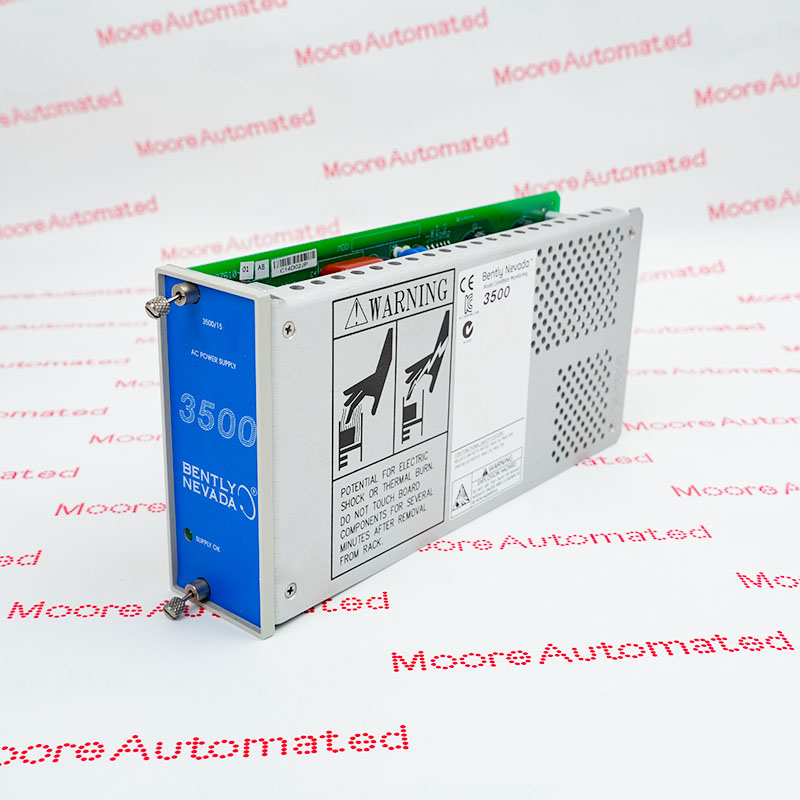
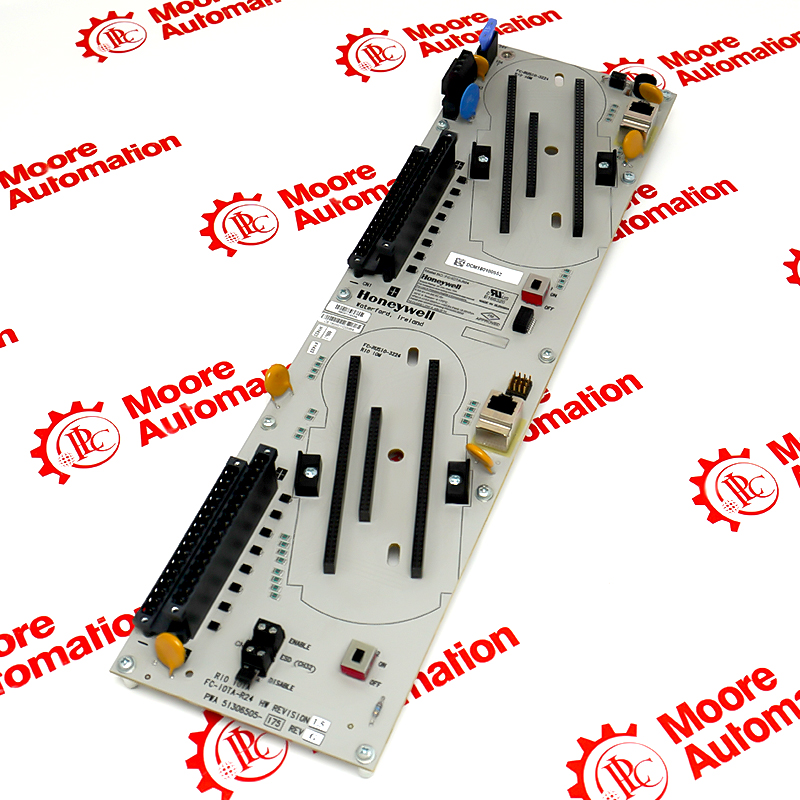
Use the product routes below to review representative components. Send the complete installed part number and revision to Moore Automated before treating any item as an exact replacement.
Related customer success cases
How an Indonesian Partner Verified Bently Nevada 3500 Hardware Before Project Deployment
Read the machinery-protection case ON-SITE VERIFICATIONHow a Middle Eastern Client Verified Siemens Parts On Site in China
Read the inspection case INTERNATIONAL DELIVERYSudan Customer Verifies ABB Hardware On Site Before International Delivery
Read the supply caseInformation sources
These sources support the maintenance definitions, condition-monitoring framework and shutdown-safety context used in this article.
- U.S. Department of Energy — Operations and Maintenance Best PracticesOperations, maintenance and efficiency guidance for facility practitioners.
- ISO 17359:2018 — Condition monitoring and diagnostics of machinesGeneral procedures for establishing a machine condition-monitoring programme.
- OSHA 29 CFR 1910.147 — The control of hazardous energyU.S. regulatory context for controlling hazardous energy during servicing and maintenance. Local requirements may differ.
- IBM — Preventive maintenance vs. predictive maintenanceBackground comparison of preventive, condition-based and predictive approaches.
- Manufacturer documentation for the exact installed equipmentUse current manuals, service instructions, product notices and project records for the specific model and revision.
Frequently asked questions
What is the main difference between preventive and predictive maintenance?
Preventive maintenance is normally triggered by time, use or a prescribed interval. Predictive maintenance analyses condition trends to estimate when intervention may be needed. The correct choice depends on asset criticality, failure behaviour, available data and the plant’s ability to act.
Does predictive maintenance eliminate unplanned downtime?
No. It can improve visibility for failure modes that produce measurable warning signs, but it cannot predict every event. Sensor quality, baselines, operating context, analysis and response discipline all affect the result.
Which condition-monitoring methods are commonly used?
Depending on the asset and failure mode, programmes may use vibration, temperature, oil or lubricant analysis, electrical measurements, ultrasound and process-performance data. Qualified specialists should select and interpret the method.
How should a plant estimate the cost of downtime?
Use site-specific figures for lost production value, idle and recovery labour, scrap or rework, diagnosis and repair, expedited supply, restart losses and customer impact. Safety and compliance consequences require separate qualified review.
When should MRO procurement become involved?
Involve procurement when the asset-criticality review identifies long-lead, scarce, obsolete or revision-sensitive components. Early involvement creates time to verify identity, condition, documentation, inspection scope and logistics before the shutdown.
What information should I send for a shutdown spare-parts review?
Send the manufacturer, complete part number and suffix, hardware revision, firmware, quantity, required condition, installed-system details, clear product-label photographs, destination and required on-site date.
Build a shutdown-ready spare-parts brief
Moore Automated can review availability and sourcing evidence for current, scarce and discontinued industrial automation parts. Share the installed identity and required date so the team can distinguish an exact match from a proposed alternative.
Include these six items
- Manufacturer and complete order code
- Hardware revision and firmware, if known
- Installed system and asset criticality
- Quantity and required condition
- Clear label and connector photographs
- Destination and required on-site date
Technical and safety note: Moore Automated is an independent industrial automation parts supplier. This article provides planning and procurement guidance, not site-specific engineering or safety instructions. Maintenance, compatibility, hazardous-energy control and restart approval remain the responsibility of the customer’s qualified personnel under applicable procedures and regulations. Product names and trademarks belong to their respective owners.










Leave Your Comment