



Plan for obsolete automation parts: verify EOL status, assess replacement compatibility, maintain legacy systems and build a practical critical-spares strategy.
Lifecycle intelligence · Maintenance & procurement
The part may be discontinued.
Your continuity plan should not be.
Obsolete automation parts require a plan, not a guess. Confirm the exact product's lifecycle status, evaluate technically suitable sourcing or replacement options, and prioritise the spares that protect your most critical operations.
A practical guide for PLC, DCS, drive and machinery-monitoring requirements—not a new manufacturer EOL announcement.
Understand what EOL actually means
End of life (EOL), discontinued and obsolete are not universal labels. Their meaning depends on the manufacturer, product range and applicable notice. A production withdrawal does not automatically mean every installed unit must be replaced immediately—or that repair and spare-part options are identical across regions.
Record the notice date, affected order numbers, final order deadline if stated, and the available support route. Do not assign a single lifecycle status to a whole PLC or DCS family because one module has been withdrawn.
Separate three questions: Is it still manufactured? Is this exact unit available to purchase? Is it technically suitable for your installation? A positive answer to one does not establish the other two.
For Siemens-specific checks, see our Siemens product lifecycle and EOL spare-parts guide.
Identify the exact part before sourcing
A familiar model name is only a starting point. Small differences in a suffix, hardware revision, firmware release or connector arrangement can change the suitability of an industrial automation component.

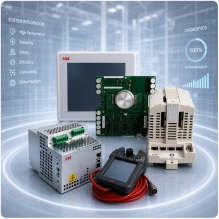
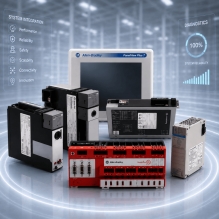
When exploring Allen-Bradley automation components or ABB control-system parts, send the complete number rather than a family name alone. A catalogue listing is a sourcing starting point, not confirmation of present stock or compatibility.
Choose the right replacement route
The best route depends on the fault, operational risk, validated alternatives and the time available for engineering. Compare total recovery requirements, not just the purchase price.
Like-for-like sourcing
Consider the exact part and accepted revision where retaining the existing configuration is appropriate.
Check: condition, provenance, storage history and the evidence available for that unit.
Qualified repair
Assess manufacturer or qualified repair options when the failure is repairable and the service is available.
Check: fault coverage, test scope, turnaround, warranty and configuration retention.
Planned migration
Evaluate a supported replacement platform when ongoing maintenance risk or support limitations justify change.
Check: I/O mapping, software conversion, network changes, testing and commissioning.
A successor is not automatically a drop-in replacement. Have the system owner or qualified engineer confirm compatibility and the installation procedure. For safety-related systems, retain the required approval and validation process; a commercial cross-reference is not engineering approval.

Industry application · Legacy systems
Plan the replacement.
Protect the operation.
In process plants, a replacement decision reaches beyond a single module. Review the installed configuration, interfaces and recovery plan before approving a substitute or scheduling a migration.
Build a critical-spares plan that fits the plant
Start with an installed-base register: asset location, part number, revision, quantity in service, lifecycle status and the operational consequence of failure. Assess equipment condition and criticality when identifying spares. For Schneider-based installations, browse Schneider Electric parts at Moore Automated and confirm the exact requirement before ordering.
The following is a practical prioritisation framework, not a fixed stocking formula. Set quantities using your failure history, redundancy, repair options, supplier lead times and planned operating life.
| Priority | Typical trigger | Planning response |
|---|---|---|
| Critical recovery | Failure stops an essential operation; no validated substitute or effective redundancy. | Assess an approved on-site spare and a tested recovery procedure first. |
| Supply exposure | A maintainable component has uncertain supply, long replenishment or approaching withdrawal. | Review sourcing options and the migration schedule before the shortage becomes urgent. |
| Planned maintenance | Failure can be managed within a scheduled outage and an acceptable supply window. | Coordinate replenishment with maintenance, budget and periodic lifecycle reviews. |
A spare is only useful if it is ready when needed. Track location, condition and ownership; follow manufacturer storage requirements; review batteries and other age-sensitive items where applicable. Keep approved program backups, licences and configuration records accessible to authorised personnel.
Review the plan after a failure, a lifecycle notice, a major system change or a material lead-time change. A stock purchase should support a defined maintenance horizon, not replace a long-term migration decision.
Make every sourcing enquiry decision-ready
For hard-to-find automation parts, incomplete requirements create avoidable back-and-forth. Give the supplier enough information to assess the exact need and make the quotation comparable.
Copy this enquiry checklist
Part: manufacturer + complete order number + revision/firmware
Evidence: clear nameplate and connector photographs
Requirement: quantity + acceptable condition + approved alternatives, if any
Timing: required delivery date + planned outage or recovery deadline
Destination: country + postcode + collection or shipping requirements
Documents: requested inspection information, technical data and shipping paperwork
Clarify the promise before placing the order
- Availability: distinguish a confirmed unit from a sourcing enquiry or unreserved catalogue listing.
- Condition: confirm whether the offered item is unused stock, refurbished or used, and what supporting evidence is available.
- Inspection: distinguish visual inspection, bench testing and application-level validation; request the actual scope.
- Delivery: separate dispatch timing from transit and customs clearance; confirm responsibilities and required documents.
- Commercial terms: check warranty, returns, acceptance criteria and how substitutions will be approved.
A relevant example of reviewing hardware before shipment is our Siemens on-site product verification case study.
Practical answers · No assumptions
Obsolete automation parts: FAQ
The questions maintenance and procurement teams need answered before committing to a spare or replacement.
Can I still buy a discontinued automation part?
Possibly. Remaining stock, independent sourcing, repair or exchange may be available, depending on the exact item. Confirm the unit, condition and delivery terms in a current quotation; a discontinued status does not prove either availability or unavailability.
Does EOL mean my existing system must stop operating?
Not by itself. A lifecycle notice describes the manufacturer's product or support position. Continued operation requires a separate assessment of condition, safety, cybersecurity, maintainability and the applicable support requirements.
Will a recommended replacement work without changes?
Do not assume so. Check electrical ratings, connections, I/O, protocols, firmware, engineering software and configuration. Some replacements need rewiring, program conversion or commissioning. Obtain qualified engineering approval before installation.
Which obsolete PLC or DCS spare parts should I stock?
Prioritise parts whose failure would have the greatest operational consequence and the longest acceptable recovery challenge. Use installed quantities, failure history, redundancy, supply risk and the remaining system life to decide what—and how much—to hold.
Is unused old stock the same as a newly manufactured part?
No. An unused item may have been stored for years. Ask about condition, storage information where available, age-sensitive components, inspection scope and warranty. Unused condition alone does not establish suitability or long-term reliability.
Can Moore Automated confirm stock and delivery immediately?
Send the complete part number, quantity, acceptable condition and destination so the team can assess the requirement. Availability, documentation, price and delivery are subject to the specific quotation; no blanket stock or delivery guarantee applies.
Is Moore Automated the original equipment manufacturer?
No. Moore Automated is an independent industrial automation parts supplier. Manufacturer names identify the relevant equipment; they do not imply manufacturer authorisation or endorsement. Verify lifecycle information with the manufacturer and confirm the offered warranty in the quotation.
Start with the part number
Need a discontinued part or a clearer sourcing plan?
Share your exact requirement with Moore Automated. We can assess sourcing options and clarify the available condition, documentation and delivery terms before you decide.


Leave Your Comment