Overview
Manuals
Principle
Application Functions
Features:
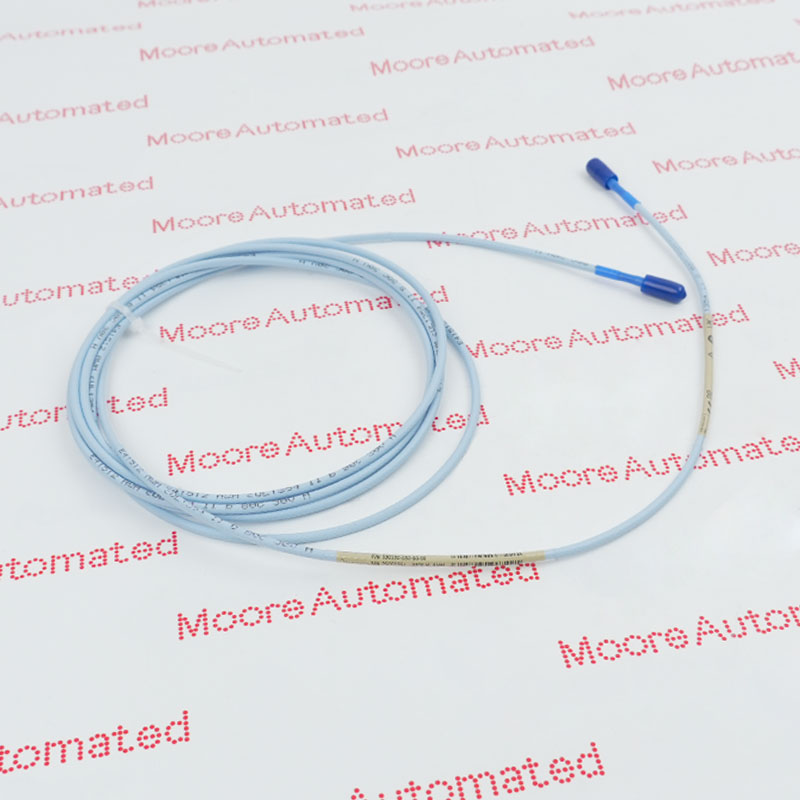
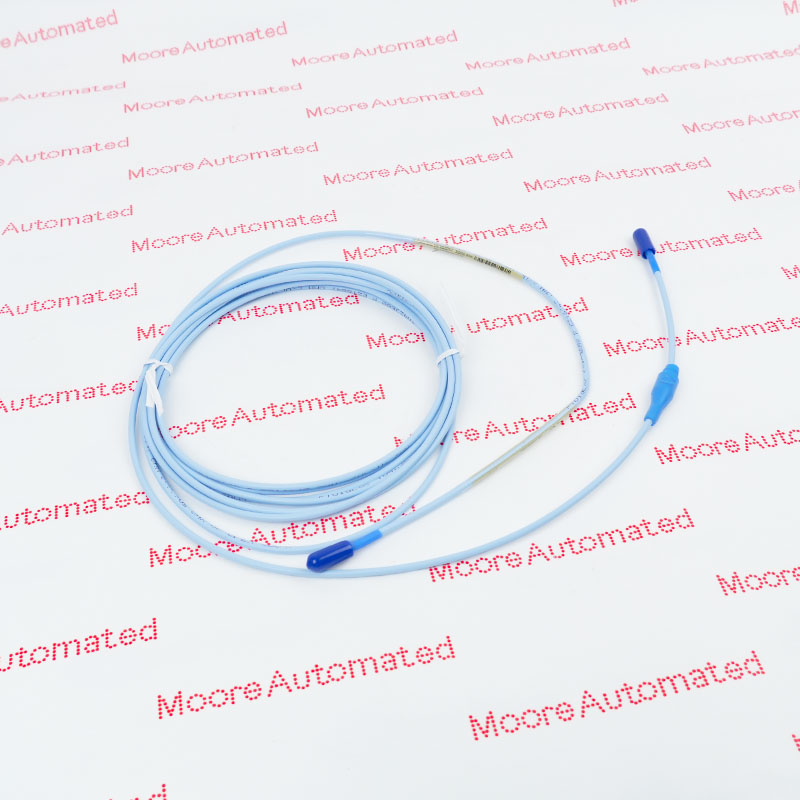
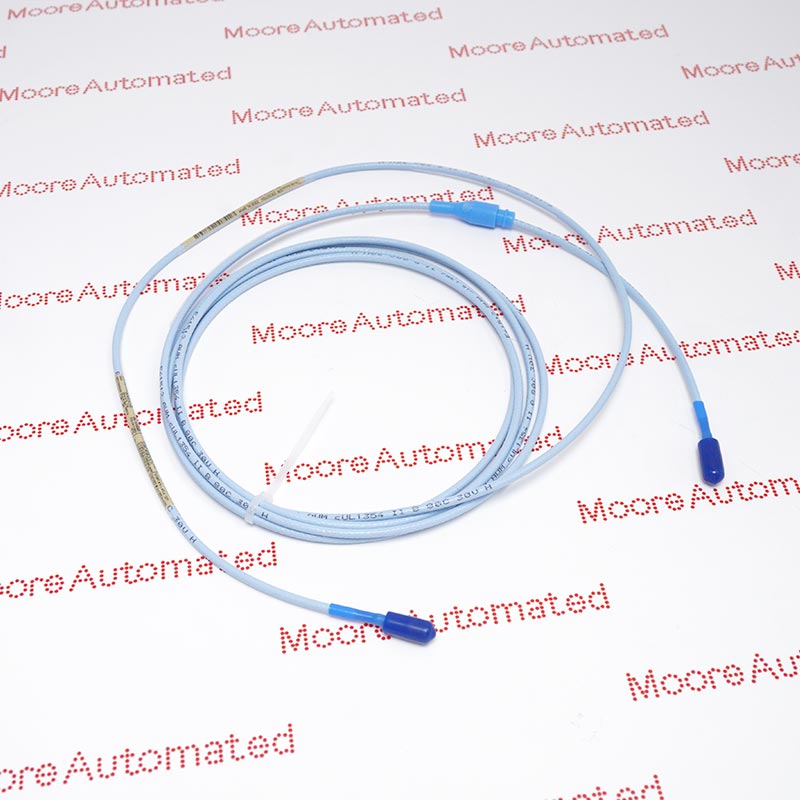
- 3300 XL Proximity Sensor
- 3300 XL 8 mm Proximity Transducer System
- The 3300 XL probe and extension cable also reflect improvements over previous designs
The system provides an output voltage that is directly proportional to the distance between the probe tip and the observed conductive surface and can measure both static (position) and dynamic (vibration) values. The system’s primary applications are vibration and position measurements on fluid-film bearing machines, as well as Keyphasor reference and speed measurements.
Each 3300 XL 8 mm Transducer System component is backward compatible and interchangeable4 with other nonXL 3300 series 5 mm and 8 mm transducer system components5. This compatibility includes the 3300 5 mm probe, for applications in which an 8 mm probe is too large for the available mounting space.
The 102044-00-48-10-05 Bently Nevada Proximity Sensor may still be available for purchase and support from Moore Automated Company beyond End-Of-Life (EOL) by the manufacturer (OEM).
Bently Nevada 102044-00-48-10-05 Proximity Sensor INFO(Datasheets), Link
Important Notice: Other accessories, manuals, cables, calibration data, software, etc. are not included with this equipment unless listed in the above stock item description. All prices are shown in USD.
The 3300 XL 8 mm system delivers the most advanced performance in our eddy current proximity transducer systems. The standard 3300 XL 8 mm 5-meter system also fully complies with the American Petroleum Institute’s (API) 670 Standard for mechanical configuration, linear range, accuracy, and temperature stability. All 3300 XL 8 mm proximity transducer systems provide this level of performance and support complete interchangeability of probes, extension cables, and Proximitor sensors, eliminating the need to match or bench calibrate individual components.
1. Radial Vibration: Measures the distance between the probe tip and the shaft to monitor dynamic "wobbling" or track motion, thus aiding in the detection of imbalances, misalignments, or bearing wear.
2. Axial (Thrust) Position: Tracks the static longitudinal movement of the rotor shaft within its bearings to prevent catastrophic internal contact.
3. Critical Phasor and Rotational Speed: Detects specific markings on the shaft, providing a time reference for vibration analysis and measuring rotational speed (RPM).