



Registered Address: 32D Floor Guomao Building, No.388, Hubin South Road, Siming District, Xiamen,Fujian, China
ISO 9001:2015 Certified
Our quality management system covers sourcing,testing and dispatch
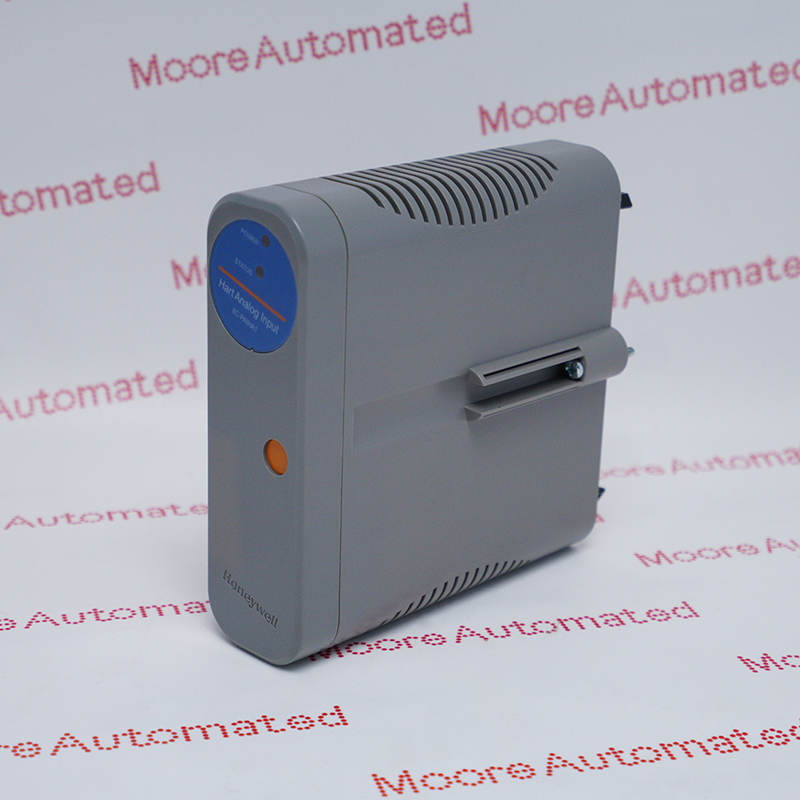
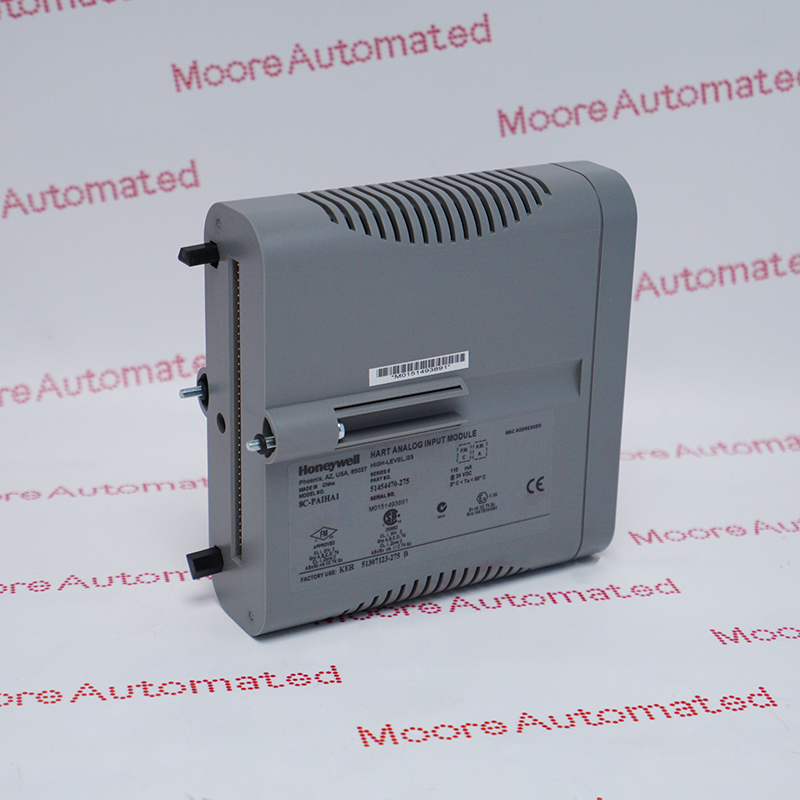
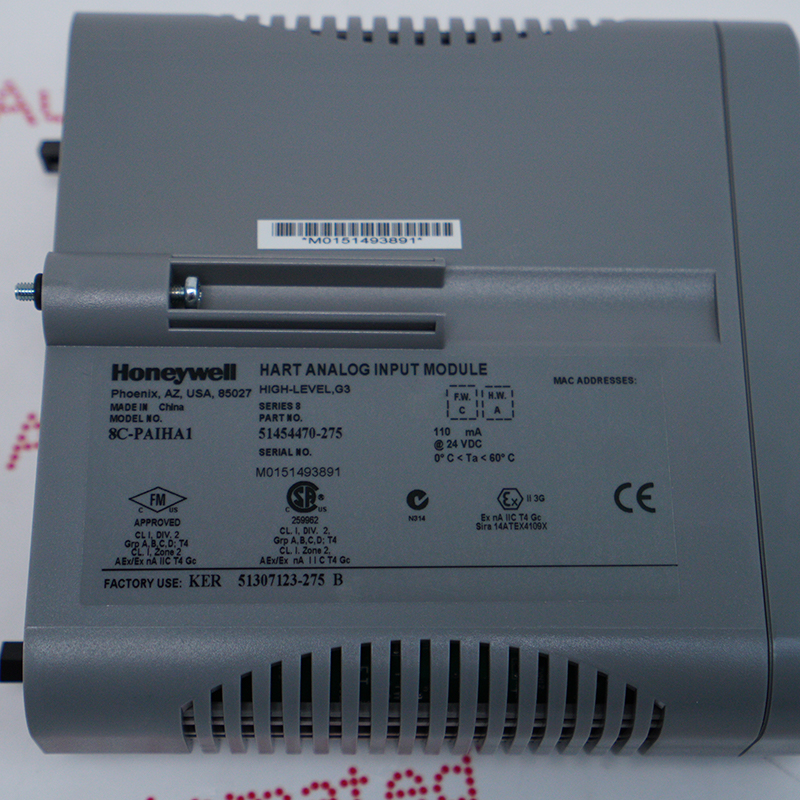
Honeywell identifies 8C-PAIMA1 as a coated Series 8 low-level analog temperature input module for thermocouple and RTD signals. Its March 2022 specification lists 16 isolated inputs, 24 VDC, 120 mA and a fixed one-second scan, paired with non-redundant 8C-TAIMA1 IOTA. Confirm the additional 51454473-275 marking and installed sensor/IOTA configuration before replacement.
Honeywell's Series 8 Controller and I/O Specification section 4.4.4 names 8C-PAIMA1 as a coated low-level analog temperature input module. It accepts up to 16 thermocouple or RTD channels through the 8C-TAIMA1 non-redundant IOTA. The table states 24 VDC, 120 mA, fully isolated channels, a fixed one-second scan and 0 to 4.7 Hz bandwidth. It gives -20 to +100 mV as a thermocouple-only nominal range, so that number should not be presented as an RTD resistance range. The source also details specific supported sensor types and installation limits, which must be matched to each configured channel.
The same Honeywell section describes remote cold-junction compensation capability and configurable open-thermocouple detection. Those functions depend on the configured module and application, not simply a loose spare. Its TC/RTD function matrix shows 8C-TAIMA1 in the non-redundant IOTA column and NA for a redundant IOTA. The reviewed PDF does not associate 51454473-275 with 8C-PAIMA1, so verify the full physical label and parts record. Record each sensor type, lead wiring, cold-junction configuration, channel calibration and baseline diagnostics before authorized work. After replacement, verify temperature readings, open-sensor handling and affected control actions under the site test plan.
Honeywell identifies 8C-PAIMA1 as a coated low-level analog temperature input IOM, not a generic high-level process-current input. The official table pairs it with 8C-TAIMA1, a nine-inch non-redundant IOTA, and the function matrix shows no redundant alternative. Confirm the physical 8C-PAIMA1 marking and the additional 51454473-275 site number before declaring an exact replacement; the reviewed OEM PDF does not map that extra number.
The 2022 manufacturer table lists 16 isolated channels, 24 VDC, 120 mA and a fixed one-second scan. Its -20 to +100 mV nominal range applies to thermocouples only, while RTDs require the documented excitation, sensor type and lead arrangement. Do not treat one sensor's temperature range or accuracy as universal across all thermocouple and RTD selections. Verify each channel's configured element and installation details against the manufacturer table.
Honeywell describes cold-junction compensation and configurable open-thermocouple detection in this section. These features operate within a configured module, IOTA and control application. A replacement should preserve sensor polarity, RTD lead wiring, channel assignment, cold-junction settings and open-sensor behavior. The TC/RTD function matrix identifies only a non-redundant IOTA; do not promise a redundant assembly or automatic hot replacement from this source alone.
Identify 8C-PAIMA1 and the site's additional 51454473-275 marking on the actual unit and verify the latter through a Honeywell parts record. Confirm 8C-TAIMA1 non-redundant IOTA, installed Experion release and every channel's TC or RTD element, polarity or lead arrangement. The manufacturer table lists 16 isolated inputs, 24 VDC, 120 mA and a one-second scan. Apply thermocouple millivolt range only to TC circuits, and use the exact sensor-type table for RTD limits.
Save channel configuration, sensor types, cold-junction and open-sensor settings, calibration records and baseline temperature readings before a controlled change. Follow the applicable manufacturer and site procedure for isolation, module exchange and configuration restoration. Honeywell's function matrix does not show a redundant TC/RTD IOTA, so do not infer automatic failover from this model. After authorized work, verify all affected channel readings against known conditions, sensor-fault detection, diagnostics and any downstream control action before commissioning.

Registered Address: 32D Floor Guomao Building, No.388, Hubin South Road, Siming District, Xiamen,Fujian, China
MooreAutomated.com is the official website and primary online platform operated by Moore Automation Limited. The website provides information about the company’s industrial automation parts sourcing services, product coverage and customer support. Moore Automation Limited operates as an independent supplier and is not an authorized distributor or representative of the manufacturers displayed on this website unless expressly stated.