Overview
Manuals
System Characteristics
Working principle
Features:
- Decentralized Programmable Module with Master communication
- Rated operational range between 20.4 VDC and 28.8 VDC
- 9-pin D-sub port operating at data rates up to 12 Mbit/s
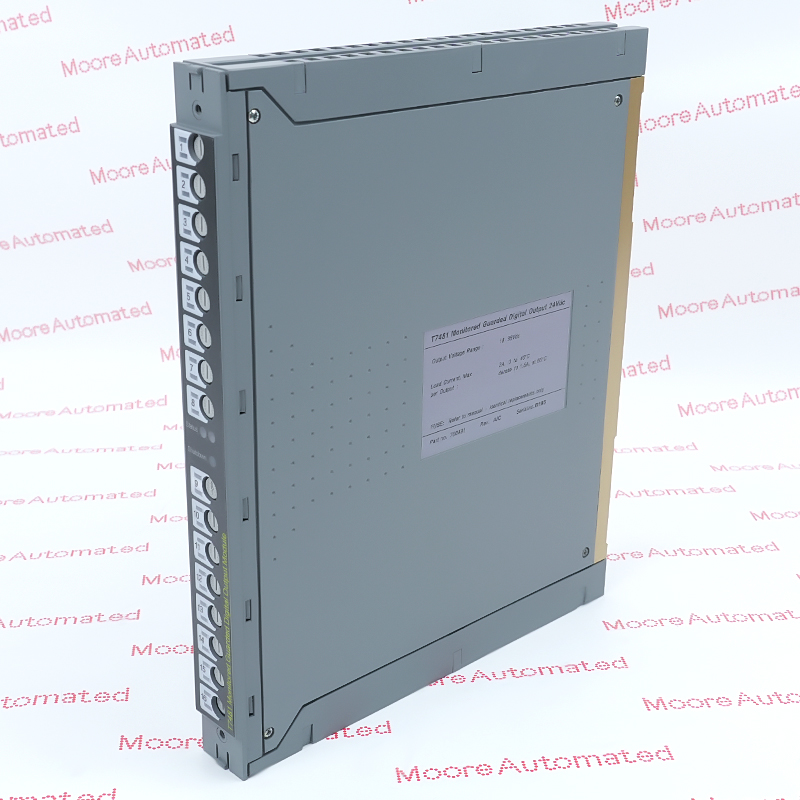
The core function of this module is as a PROFIBUS-DP master controller, capable of efficiently managing and connecting up to 125 slave devices with a transmission rate of up to 12 Mbit/s, making it ideal for small to medium-sized distributed industrial automation networks.
To ensure stable program operation, the module has built-in 48 KB of working memory and 80 KB of loading memory, and is equipped with a slot supporting MMC cards up to 512 MB for data backup and external program expansion. Furthermore, the module includes a built-in hardware real-time clock, providing a precise time reference for complex industrial control.
The 214-2BM02 VIPA 200V Compact PLC CPU Module may still be available for purchase and support from Moore Automated Company beyond End-Of-Life (EOL) by the manufacturer (OEM).
VIPA 214-2BM02 200V Compact PLC CPU Module MANUAL(Datasheets), Link
Important Notice: Other accessories, manuals, cables, calibration data, software, etc. are not included with this equipment unless listed in the above stock item description. All prices are shown in USD.
Siemens Compatibility: Automation engineers can use existing Siemens programming software, such as STEP 7 v5.5 or VIPA's WinPLC7, to program, diagnose, and compile logic directly on this CPU without the need for conversion tools.
Modular Expansion: The System 200V architecture allows up to 32 expansion I/O modules to be directly connected to the right side of the CPU backplane.
Real-Time Clock: Equipped with an integrated accumulator clock, it provides accurate timestamping for industrial process sequences.
The core operating principle of the VIPA 214-2BM02 PLC is based on a periodic cyclic scanning mechanism. After system power-on, the CPU first sends input signal acquisition commands to all local expansion modules and remote slaves via the backplane bus and PROFIBUS-DP bus, reading the status of external sensors, switches, and other hardware into the CPU's internal input mirror register (input sampling stage).
Next, the central processing unit executes the user-written control logic program stored in its working memory line by line through STEP 7, calculating the latest control results in real time (program execution stage).
Finally, the CPU writes the calculated output status into the output mirror register and refreshes it uniformly through the bus network, driving all digital/analog output channels and PROFIBUS slave devices, thereby achieving precise control of actuators such as motors and valves (output refresh stage). This entire process cycles rapidly, ensuring real-time performance and high reliability in industrial control.