Overview
Manuals
Principle
Primary Applications
Features:
- PROXPAC XL Proximity Transducer
- Similar to our 31000/32000 Proximity Probe Housing Assemblies
- Made of Polyphenylene Sulfide (PPS), which is an advanced, molded thermoplastic
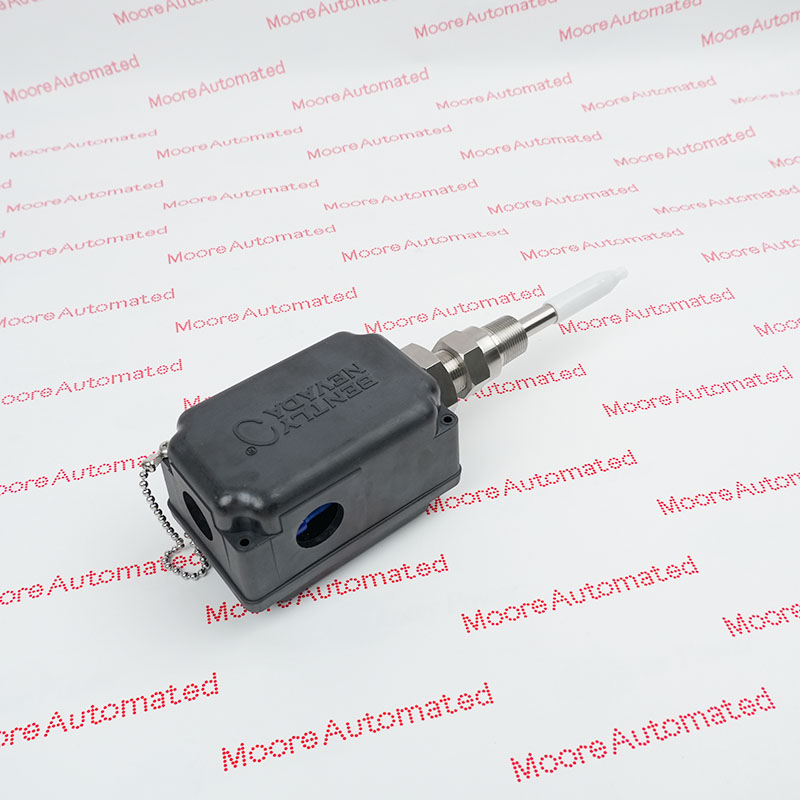
The assembly offers the same advantages and features as the 31000 and 32000 housings for accessing and externally adjusting proximity probes. However, the housing cover of the PROXPAC XL Assembly also contains its own 3300 XL Proximitor sensor.
This design makes the PROXPAC XL Assembly a completely self-contained proximity probe system, and eliminates the need for an extension cable between the probe and its associated Proximitor sensor. It also eliminates the need for a separate Proximitor housing, as the field wiring connects directly between the monitors and PROXPAC XL Assemblies.
The 330880-28-00-035-01-02 Bently Nevada PROXPAC XL Proximity Transducer may still be available for purchase and support from Moore Automated Company beyond End-Of-Life (EOL) by the manufacturer (OEM).
Bently Nevada 330880-28-00-035-01-02 PROXPAC XL Proximity Transducer Manuals(Datasheets), Link
Important Notice: Other accessories, manuals, cables, calibration data, software, etc. are not included with this equipment unless listed in the above stock item description. All prices are shown in USD.
The PROXPAC XL proximity sensor assembly works by integrating a proximity probe and the 3300 XL Proximitor sensor into a single housing, forming a complete eddy current displacement measurement system. When the proximity probe approaches a metallic target, it generates a high-frequency electromagnetic field and eddy currents on the target's surface. Changes in the distance between the target and the probe cause changes in the eddy current intensity, thereby altering the impedance of the probe coil. The built-in Proximitor sensor processes and converts this impedance change, outputting a voltage signal proportional to the distance or vibration. This signal is then transmitted directly to the monitoring system via field wiring.
Condition Monitoring: Measures non-contact shaft vibration and axial position in critical rotating machinery such as turbines, compressors, and pumps.
Direct Field Wiring: Its design eliminates the need for extension cables between the probe and sensor, allowing direct field wiring from the PROXPAC unit to the monitor.
Extreme Environments: The polyphenylene sulfide (PPS) housing meets Type 4X and IP66 protection standards, protecting internal electronics from moisture, corrosion, and static electricity.