

Registered Address: 32D Floor Guomao Building, No.388, Hubin South Road, Siming District, Xiamen,Fujian, China
ISO 9001:2015 Certified
Our quality management system covers sourcing,testing and dispatch
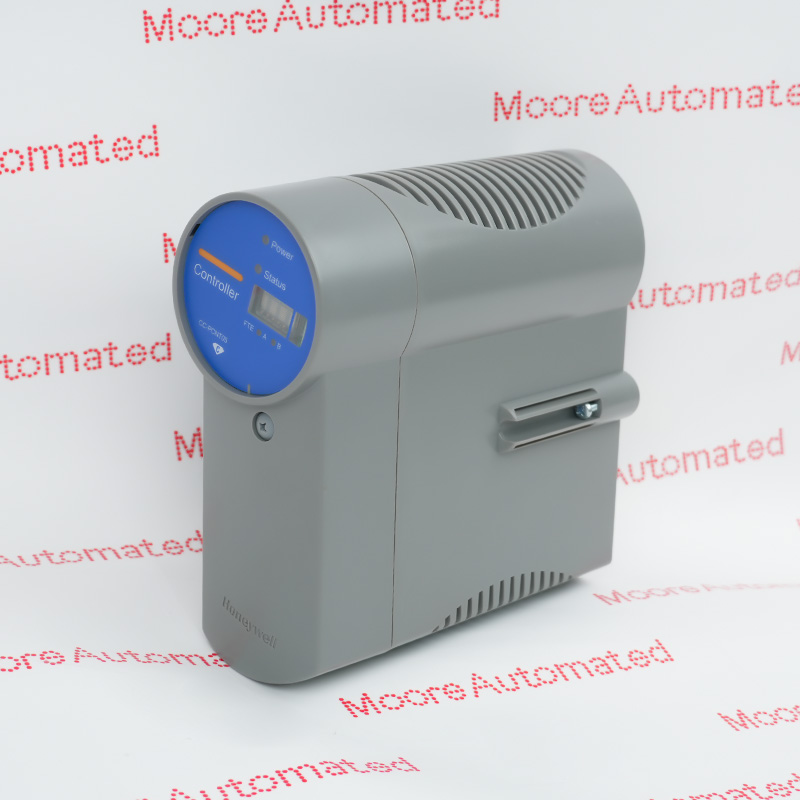
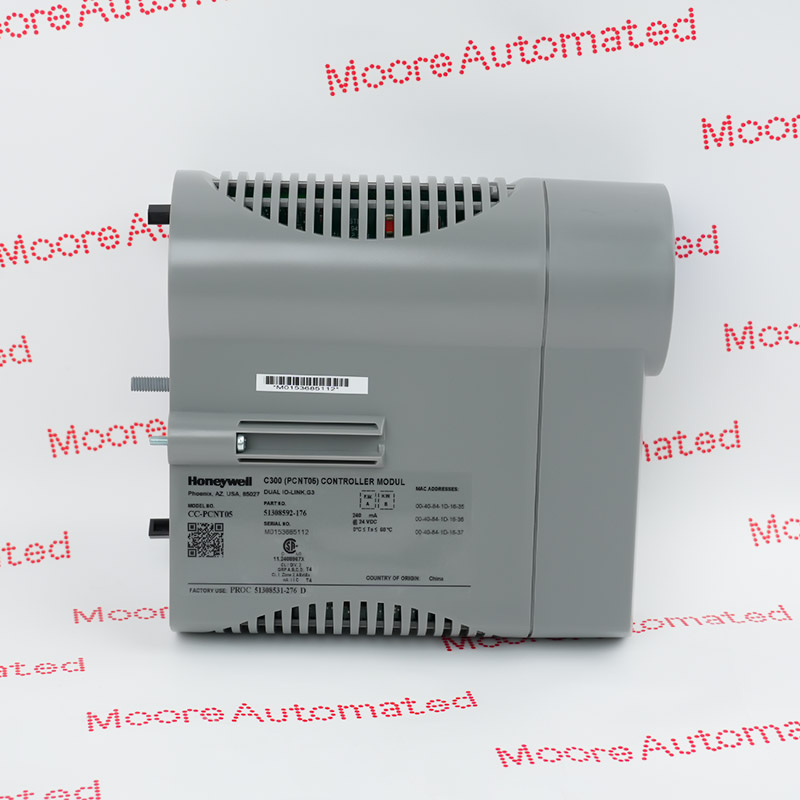
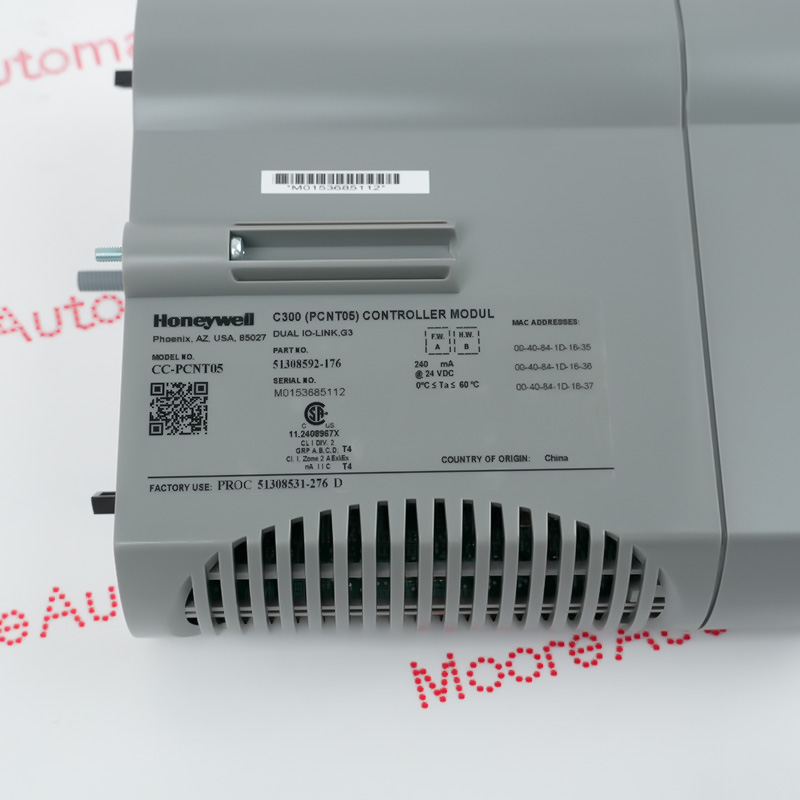
Honeywell identifies CC-PCNT05 as the Series C Experion PKS C300v5 controller with an embedded control firewall. The C300v5 supports the Control Execution Environment, 1:1 redundancy and Control HIVE deployment. The existing cable description and Series 8 controller specifications are not applicable to this model. Verify the additional 51308592-176 marking and installed IOTA with Honeywell before replacement.
Honeywell's C300 product page calls C300v5 (PCNT05) the latest controller in the family and identifies its Series C form factor. The page specifies 9000 execution units, the Control Execution Environment, 32,768 Memory Units and a maximum of 4095 tagged blocks. It states 50 ms as the standard execution period and explicitly says 20 ms is not supported for PCNT05. Other published capabilities include 1:1 redundancy with a dedicated IOTA and redundancy cable, Control HIVE deployment, 1500 I/O HIVE parameter references and up to 15 CN100 connections. These are controller-level specifications, not a guarantee that a particular system configuration can use every limit simultaneously; verify release and design constraints with Honeywell.
Honeywell's 2022 Control Network Module presentation identifies CC-PCNT05 and contrasts it with CC-PCNT02. It attributes an embedded control firewall to CC-PCNT05 and says an external CF9 is not required in the shown arrangement; the old CF9 aggregation function is not retained, so network integration may require additional network devices. This does not turn CC-PCNT05 into a cable or justify copying Series 8 electrical, processor or I/O-link specifications. Before selecting a spare, reconcile the website's extra 51308592-176 part marking against the actual unit and manufacturer parts record, then check the IOTA, redundancy cable, firmware, CEE strategy, network architecture and approved migration procedure.
Honeywell identifies CC-PCNT05 as a C300v5 Series C controller. It is not an interconnection cable or the similarly named 8C-PCNT05 Series 8 controller. Distinguish the complete physical marking, IOTA and installed Experion release before selection. The reviewed manufacturer sources do not explicitly associate the site's extra 51308592-176 number with CC-PCNT05, so this association needs a label or parts-record check.
The C300 product page specifies 9000 execution units, 32,768 Memory Units and up to 4095 tagged blocks for PCNT05. Standard execution is 50 ms, while 20 ms execution is expressly unsupported. Do not copy the 32 MB memory and Series 8 I/O-link data from 8C-PCNT05. Controller capacity still depends on project configuration and release, so confirm the approved CEE resource loading and timing before replacement.
Honeywell describes an embedded control firewall and 1:1 redundancy using a dedicated IOTA and redundancy cable. Its 2022 network presentation notes that an external CF9 is not required in the illustrated CC-PCNT05 arrangement and warns that the old CF9 aggregation role is lost. Validate the actual network architecture, I/O HIVE links, security configuration, redundancy partner and permitted maintenance procedure for the installed plant before changing hardware.
Check the full CC-PCNT05 physical label and reconcile the site's additional 51308592-176 number using a Honeywell parts record. Confirm the installed Series C IOTA, Experion release, firmware, CEE load, I/O HIVE architecture, network topology and dedicated redundancy cable where used. The current Honeywell product page lists 9000 XUs, 50 ms standard execution and no 20 ms support; do not infer electrical current, processor-core count or Series 8 I/O capacity from 8C-PCNT05.
Record the controller index, redundant partner, CEE strategy, communication paths, firewall settings, diagnostics and baseline process state before authorized work. Follow the site's change-control, safety and Honeywell procedures for switchover or replacement. Restore the approved application and verify controller health, supported execution period, I/O communications, network security and redundancy behavior after commissioning. The public Honeywell documents reviewed do not validate 51308592-176 or an exact replacement interchangeability claim, so confirm those details before shipment.

Registered Address: 32D Floor Guomao Building, No.388, Hubin South Road, Siming District, Xiamen,Fujian, China
MooreAutomated.com is the official website and primary online platform operated by Moore Automation Limited. The website provides information about the company’s industrial automation parts sourcing services, product coverage and customer support. Moore Automation Limited operates as an independent supplier and is not an authorized distributor or representative of the manufacturers displayed on this website unless expressly stated.