Overview
Manuals
How It Works
Core Data Processing Functions
Features:
- 16 individually configurable dynamic channels
- 16 parallel programmable anti-aliasing filters and ADCs
- 6 configurable alarms per processed output with hysteresis deadbands
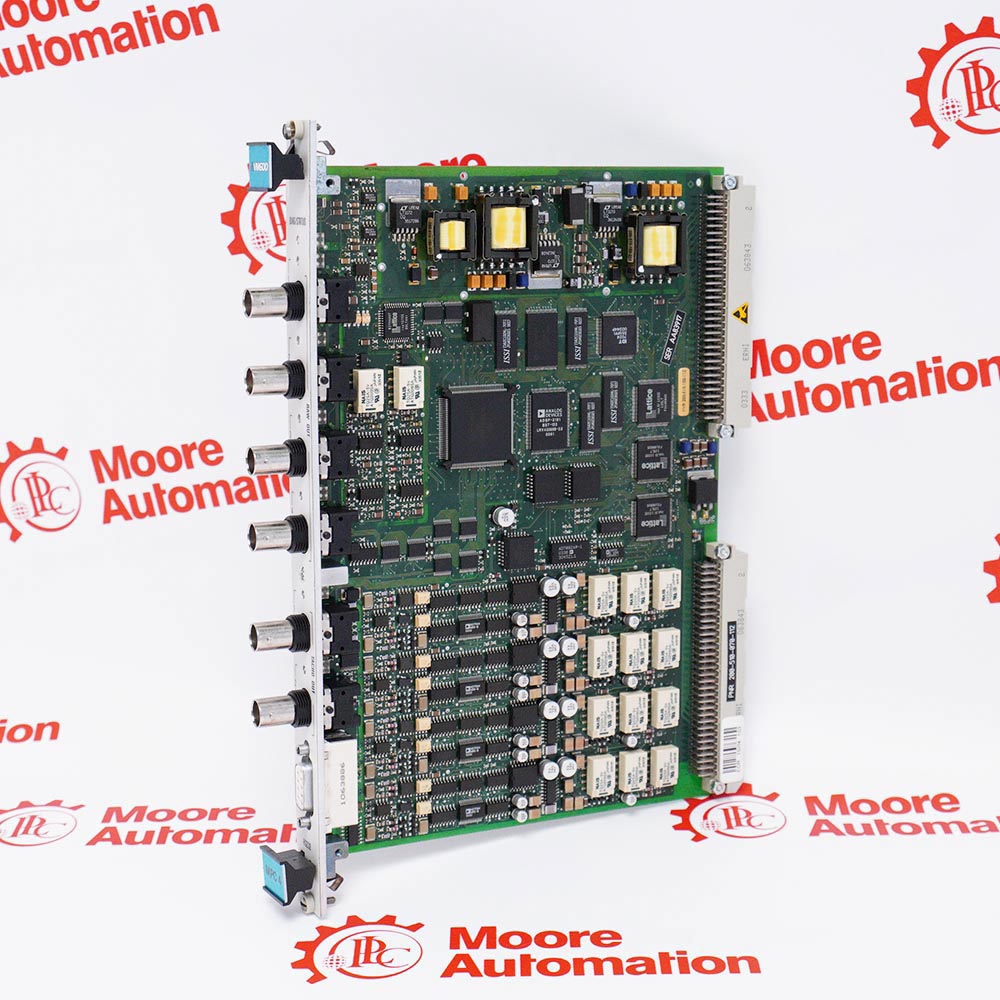
The CMC 16 Condition Monitoring Card is the central element in Vibro-Meter’s VM600 series Condition Monitoring System (CMS). This intelligent front-end Data Acquisition Unit (DAU) is used in conjunction with the VM600 CMS software to acquire, analyse and transmit results to a host computer via the VM600 series CPU M module with Ethernet controller or directly via serial links.
The CMC 16 acquires and processes high-resolution data captured at scheduled intervals or on alarm detection (waveforms, spectra and orbits). Spectral resolution, frequency span or order span, window type, averaging mode and number of averages are fully configurable. The capacity also exists to trigger extended capture of time-based data over several minutes using an ‘Oscilloscope Mode’ as this can provide valuable data, particularly during machine start-up.1.
The VM600 CMC16 200-530-022-014 Vibro-Meter Condition Monitoring Card may still be available for purchase and support from Moore Automated Company beyond End-Of-Life (EOL) by the manufacturer (OEM).
Vibro-Meter VM600 CMC16 200-530-022-014 Condition Monitoring Card manual(Datasheets), Link
Important Notice: Other accessories, manuals, cables, calibration data, software, etc. are not included with this equipment unless listed in the above stock item description. All prices are shown in USD.
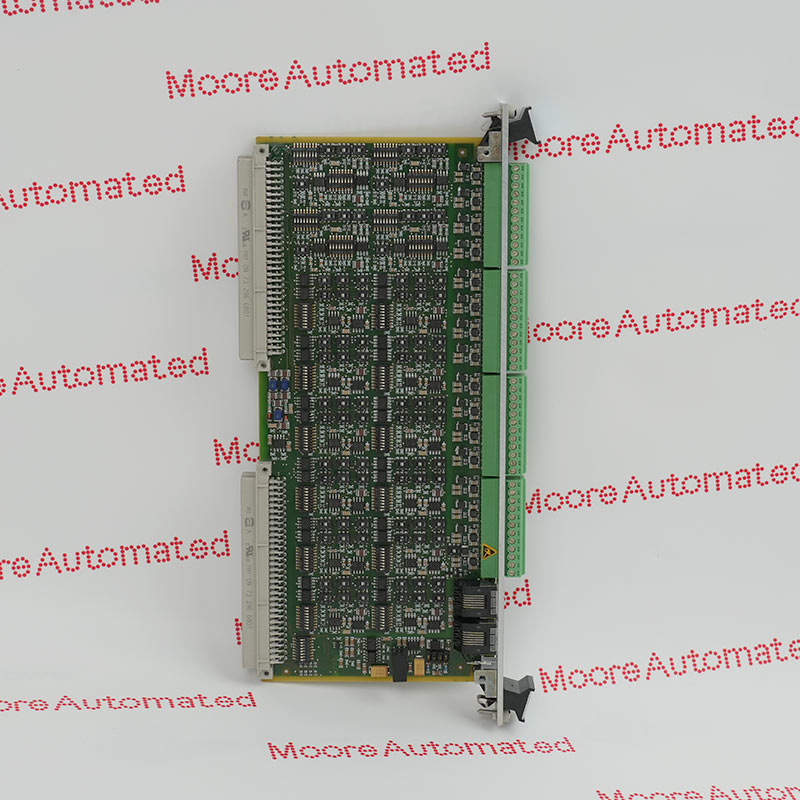
The VM600 CMC16 200-530-022-014 is based on a hardware parallel synchronous sampling and all-digital signal processing (DSP) architecture. The raw, weak physical signals acquired by sensors are first input to the module via the VM600 raw bus on the chassis backplane or the screw terminals of the IOC 16T input/output module.
The module's internal hardware conditioning circuitry employs 16 programmable tracking anti-aliasing filters to remove high-frequency noise and converts the analog signals into high-precision digital signals via independent high-resolution analog-to-digital converters (ADCs).
Subsequently, the built-in embedded microprocessor and DSP chip perform high-speed mathematical operations (such as integration, windowing, and FFT transform) on the digital sequence to separate the vibration amplitude, phase, and phase transition rate of the mechanical equipment at different frequency bands.
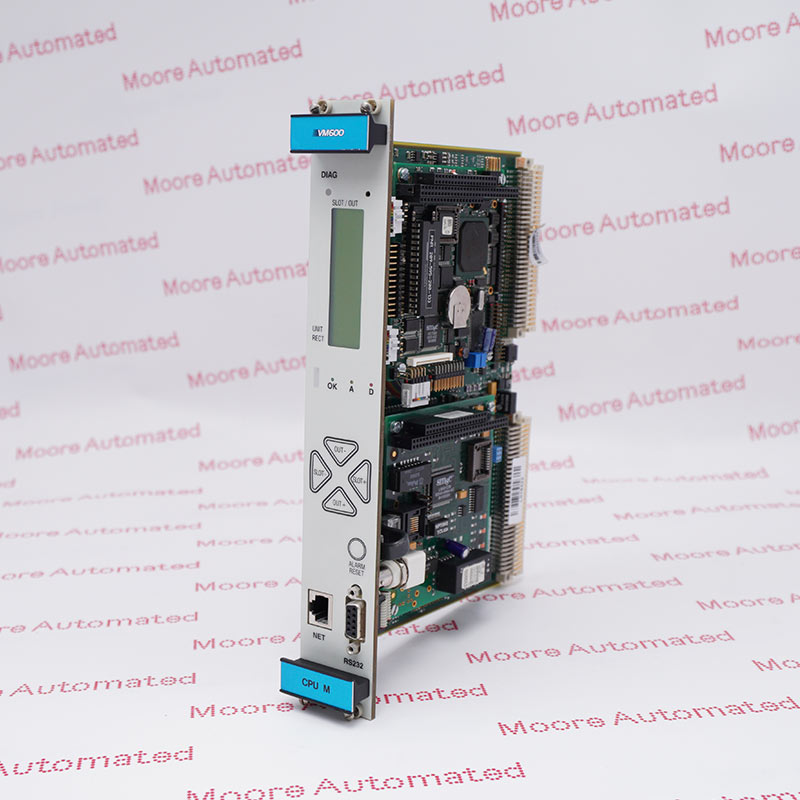
Finally, this real-time, deeply processed diagnostic data and status indicators are transmitted in real-time to the industrial main network via the CPU M communication card on the base, thus achieving synchronous diagnostics of the equipment status.
Advanced Filtering: Employs 16 parallel programmable anti-aliasing filters paired with independent analog-to-digital converters (ADCs) to eliminate signal distortion in variable speed systems.
DSP and FFT Spectrum Analysis: Utilizes onboard digital signal processing (DSP) to compute high-resolution 3200-line Fast Fourier Transform (FFT) for in-depth frequency domain analysis.
Alarms: Each channel supports 10 configurable frequency bands and features 6 programmable alarm thresholds (alarm/hazard limits), including hysteresis blind zones.
System Integration: Compatible with IOC16T rear input/output terminals, it can receive raw signals and transmit data to the factory PLC or host system via Ethernet or Modbus protocols.