Overview
Manuals
Principle
Primary Industrial Applications
Features:
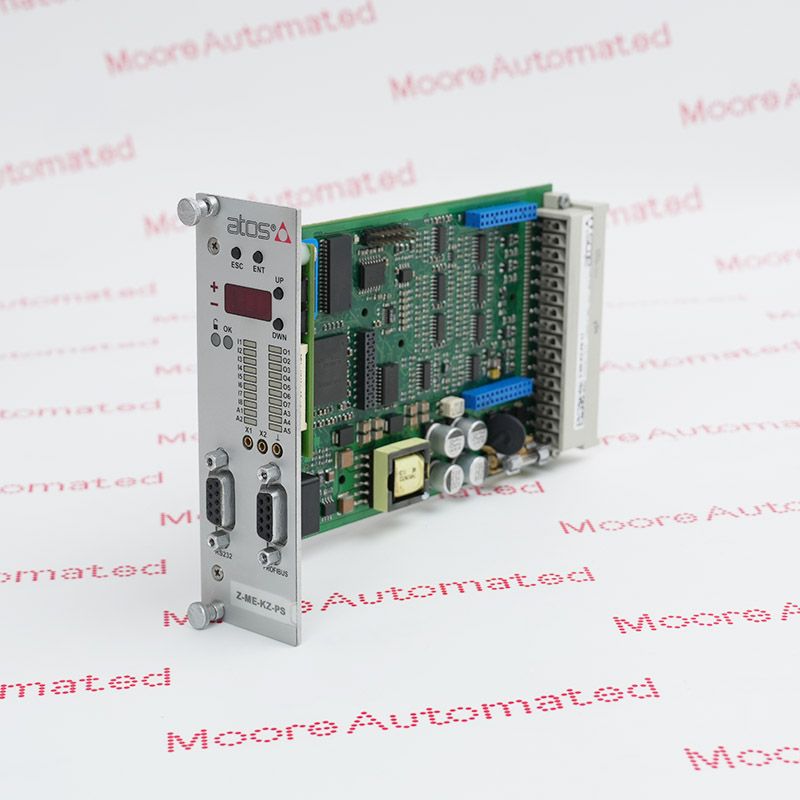
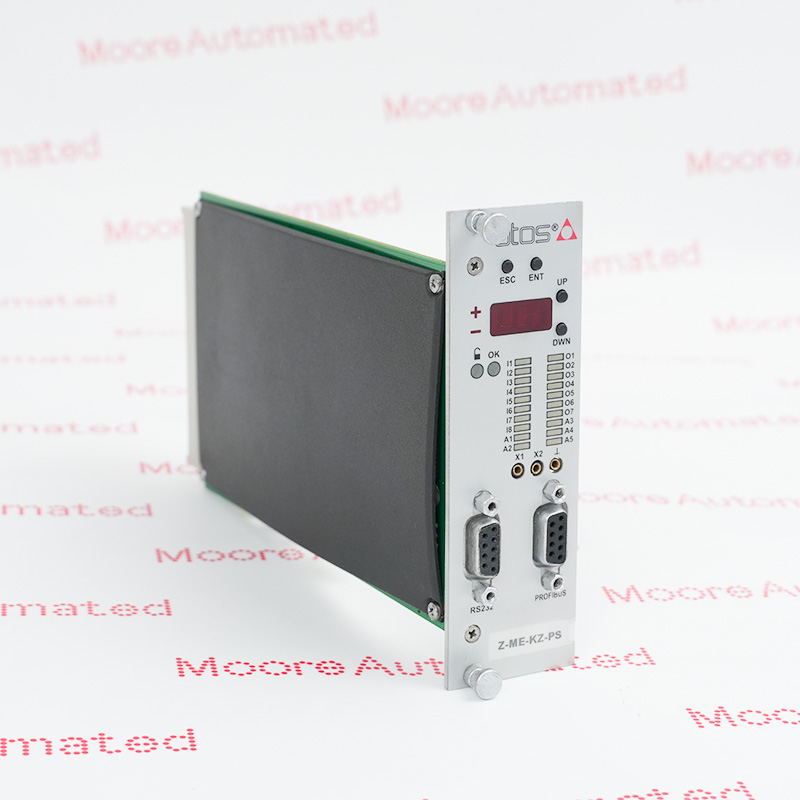
- Digital axis controllers module
- Front panel DB9 connector for serial pro gramming interface
- 4 digits front panel display to check and change parameters as well as for diagnostics
The controller receives position/pressure feedback and generates a reference signal to the proportional valve, which regulates the hydraulic flow to the injection actuator. The position feedback signal can be selected via software: SS11, incremental encoder, potentiometer, or analog signal (voltage or current).
A remote pressure sensor must be remotely mounted near the injection actuator and connected to the controller. The machine's electronic control unit manages the injection molding process via dedicated digital commands or fieldbus communication. A serial port and a Profibus port (BP option only) are provided on the front panel for controller configuration and diagnostics.
The Z-ME-KZ-PS ATOS Digital axis controllers may still be available for purchase and support from Moore Automated Company beyond End-Of-Life (EOL) by the manufacturer (OEM).
ATOS Z-ME-KZ-PS Digital axis controllers datasheet(manual), Link
Important Notice: Other accessories, manuals, cables, calibration data, software, etc. are not included with this equipment unless listed in the above stock item description. All prices are shown in USD.
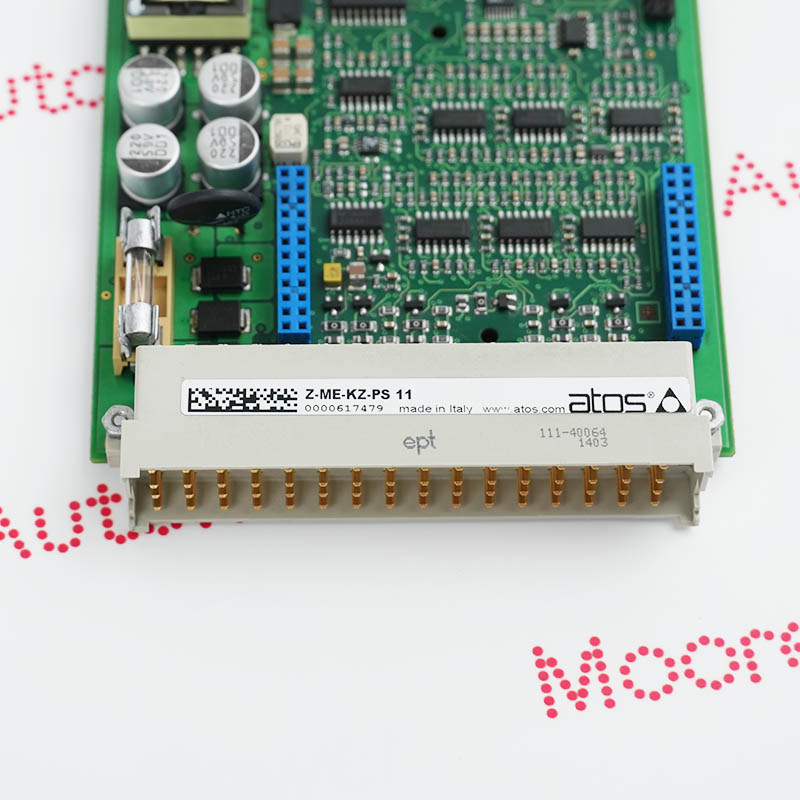
The Z-ME-KZ-PS module operates based on power regulation and signal isolation technology. It first converts the input power supply into a stable, low-noise DC excitation voltage, providing reliable power to field sensors or transmitters. Simultaneously, internal filtering, voltage regulation, and protection circuitry eliminate power fluctuations and electromagnetic interference.
This controller is a standard solution for the following industries:
Injection Molding: Manages the entire injection molding process, including high-speed control during injection and the critical "holding pressure" phase.
Die Casting Machinery: Controls the fast and slow motion cycles of the fixture, providing precise and repeatable alternating position and force control to ensure mold safety.
Wind Turbines: Maximizes energy output by adjusting the rotor blade pitch according to different wind conditions using position PID parameters.
Marine Engineering: Provides rudder control for motorboats and sailboats, ensuring smooth and reliable steering.
Bending and Woodworking Machinery: Supports configurable repetitive motion curves, typically synchronized with other machine functions via auxiliary digital I/O.