Overview
Manuals
Principle
Features:
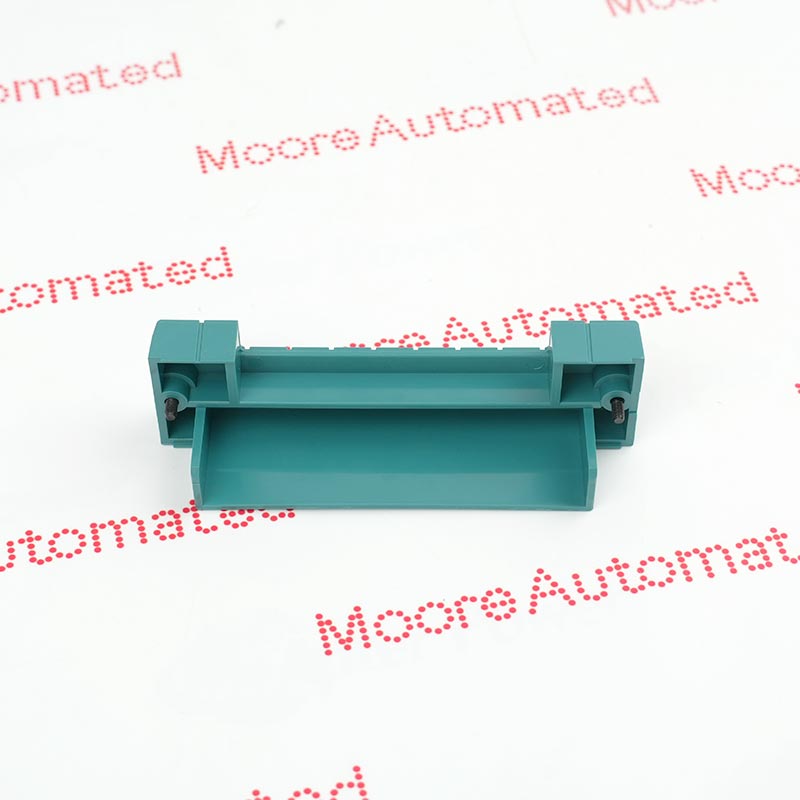
- EPC 50 OP Front Module
- EPC 50 control system
- Compact industrial design with integrated signal conditioning and overpressure protection mechanisms
The EPC-50 3183045463 is an electro-pneumatic control module designed to provide precise pressure regulation for industrial automation and process systems. Its primary function is to convert electrical control signals into proportional pneumatic outputs, thereby enabling precise regulation of air or gas pressure in actuators, control valves, and motion systems. This module is suitable for applications requiring fine pressure regulation and repeatable control under dynamic operating conditions.
In real-world industrial environments, the EPC-50 3183045463, based on analog input commands, provides responsive and linear pressure control, enhancing process stability. It supports integration into automated production lines, pneumatic positioning systems, and process control devices, where stable pressure output directly impacts system accuracy. Its robust construction ensures reliable operation under conditions of vibration, electrical noise, and temperature fluctuations.
The EPC-50 3183045463 Alfa Laval EPC 50 OP Front Module may still be available for purchase and support from Moore Automated Company beyond End-Of-Life (EOL) by the manufacturer (OEM).
Alfa Laval EPC-50 3183045463 EPC 50 OP Front Module INFO(manual), Link
Important Notice: Other accessories, manuals, cables, calibration data, software, etc. are not included with this equipment unless listed in the above stock item description. All prices are shown in USD.
The EPC-50 3183045463 employs electro-pneumatic proportional regulation technology with feedback control. The input electrical signal (e.g., 0–10 V or 4–20 mA) is processed by the internal control circuit and converted into a corresponding electromagnetic force to regulate the internal pressure regulating valve. A built-in pressure sensor continuously monitors the output pressure and transmits feedback information to the control circuit, thereby achieving real-time regulation to maintain the required setpoint with high accuracy and stability.