



Get Repair Quote
Name
Company *
Phone *
Email *
Address
City
State / Province / Region
Zipcode
Country
Quantity *
Part Number *
Manufacturer
Preferred Condition
Additional Information
Cancel

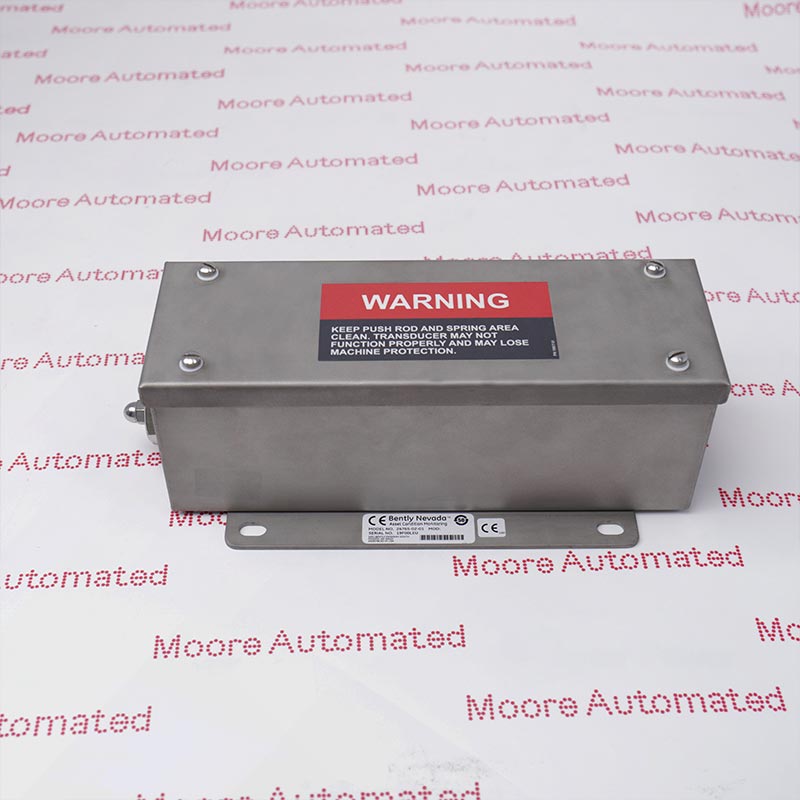
130539-72

Interconnect Cables
In Stock

Product Information:

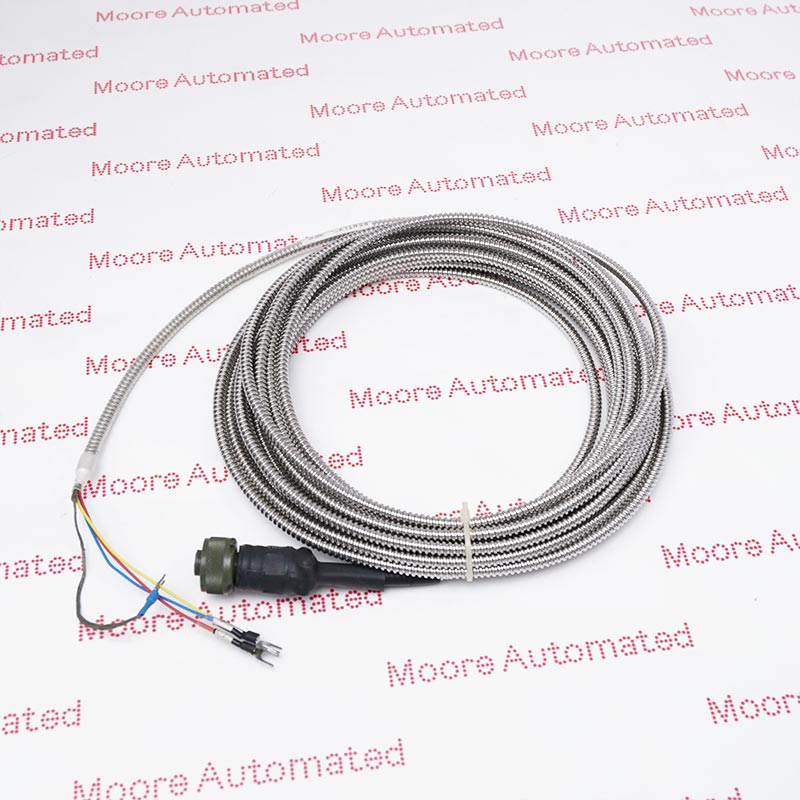
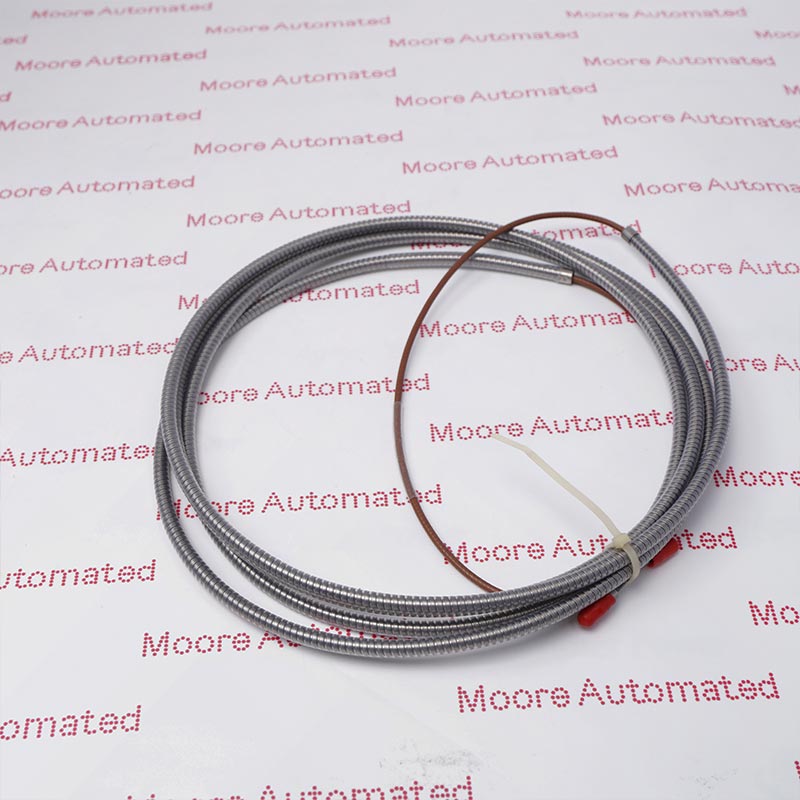
3-conductor shielded 18

AWG (1.0 mm2) cable with

3-socket plug and

fluorosilicone elastomer

boot at one end, terminal

lugs at the other end.

Minimum length of 2.0 ft

(0.6 m), maximum length of

99 ft (30 m).

Expand All
Collapse all

Technical specifications for 130539-72

  • Manufacturer:
    Bently Nevada
  • Product Category:
    TSI System
  • Estimated shipping dimensions:
    19 x 18 x 1.5 cm
  • Weight:
    0.3 kg
  • Tariff Code:
    8537101190
  • Country of origin:
    USA
  • Place of shipment:
    Xiamen, Fujian, China
  • Cable Length:
    72 ft (21.94 Metres)
  • Category Series:
    330425 series
  • Product Type:
    Interconnect Cables
  • Frequency Response:
    10 Hz to 15 kHz
  • Temperature Sensitivity:
    -11% to +3% typical over the operating temperature range
  • Transverse Sensitivity:
    Less than 5% of axial
  • Mounted Resonant Frequency:
    Greater than 30 kHz
  • Stock:
    30

Ask our team:

  • What is the engineered functional role of 130539-72 within the mechanical integration architecture of the 330400 and 330425 accelerometer systems?
    The 130539-72 functions as a precision mechanical mounting interface designed to establish rigid and repeatable coupling between the 330400/330425 acceleration transducers and the monitored machine structure. Within the installation topology, the 130539-72 ensures optimal mechanical impedance transfer, minimizing energy dissipation at the mounting boundary and preserving the calibrated frequency response of the accelerometer system.
  • How does the structural rigidity design of 130539-72 influence acceleration signal fidelity across the specified frequency bandwidth?
    The 130539-72 is engineered to maximize contact stiffness and reduce interfacial compliance between the transducer and the mounting surface. Enhanced structural rigidity prevents micro-movement and mechanical phase distortion, thereby maintaining amplitude accuracy and high-frequency response integrity for the 330400 and 330425 transducers operating under dynamic vibration conditions.
  • Why is preload optimization critical when securing the 130539-72 to ensure measurement stability?
    Proper fastening preload applied to the 130539-72 guarantees stable mechanical coupling and prevents loosening under cyclic vibrational stress. Insufficient preload reduces transmissibility, whereas excessive torque may introduce structural deformation. Controlled preload ensures long-term mechanical stability and repeatable measurement conditions for the associated accelerometer system.
  • How does the mounting geometry of 130539-72 optimize vibration transmissibility from machine structure to sensor element?
    The geometric design of the 130539-72 minimizes mechanical discontinuities at the interface and enhances planar contact uniformity. By reducing uneven load distribution and interface gaps, the 130539-72 improves mechanical energy transmission efficiency, thereby preserving the true vibrational signature detected by the 330400 or 330425 accelerometer.
  • How does the vibration endurance capability of 130539-72 support long-term reliability under high-amplitude mechanical loading?
    The 130539-72 is engineered to withstand sustained cyclic loading without mechanical fatigue degradation. Its structural integrity resists loosening and deformation under continuous vibration exposure, ensuring that the 330400 and 330425 accelerometers maintain stable positional alignment and consistent signal transmission over extended operational periods.
  • Why is alignment precision between the 130539-72 and the accelerometer axis critical for measurement accuracy?
    Accurate axial alignment of the 130539-72 relative to the sensing axis of the 330400 or 330425 accelerometer ensures that measured acceleration corresponds precisely to the intended vibration vector. Misalignment introduces cross-axis sensitivity effects and measurement distortion, reducing diagnostic accuracy in condition monitoring applications.
  • How does integration of 130539-72 contribute to predictive maintenance reliability in vibration monitoring systems?
    By providing a stable, rigid, and repeatable mounting platform, the 130539-72 enhances signal consistency for the 330400 and 330425 accelerometers. This stability improves spectral trend analysis, fault detection precision, and long-term data comparability—critical factors for advanced predictive maintenance strategies and asset health management.
Quantity
Upload
(gif, jpg, jpeg, png, bmp, doc, docx, xls, xlsx, ppt, pdf, csv)
For more information on how your data is processed and stored by Moore automated please read our privacy policy.
Trusted by 5,000+ plants worldwide | Backed by our vast inventory of top-tier control parts, drives and servo motors, fast shipments are dispatched to cover your urgent needs. ABOUT US >>
Moore Disclaimer: Moore Automated's sales automation equipment and related solutions are intended for industrial automation and business operational efficiency improvement purposes only. Product information, technical parameters, and application cases are for reference only and do not constitute an absolute guarantee of performance for any specific industry, scenario, or final application. Actual equipment performance may vary depending on factors such as the usage environment, system integration method, and maintenance conditions. Users should confirm compatibility and safety based on professional technical assessments. Moore Automated assumes no liability for any direct or indirect losses caused by improper use, modification, or failure to operate according to specifications, to the extent permitted by law.