Overview
Manuals
In terms of operation
Main Applications
Features:
- Discrete I/O Terminal Board
- Mark VIe series GE Energy IS200 Normal Assembly
- Mark VI IS200 Series produced by General Electric
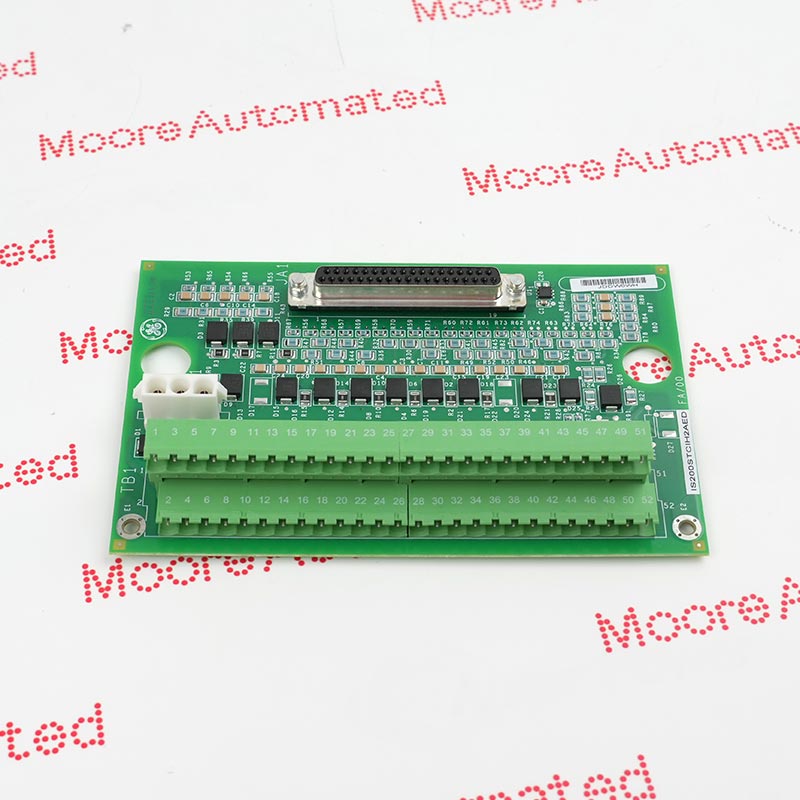
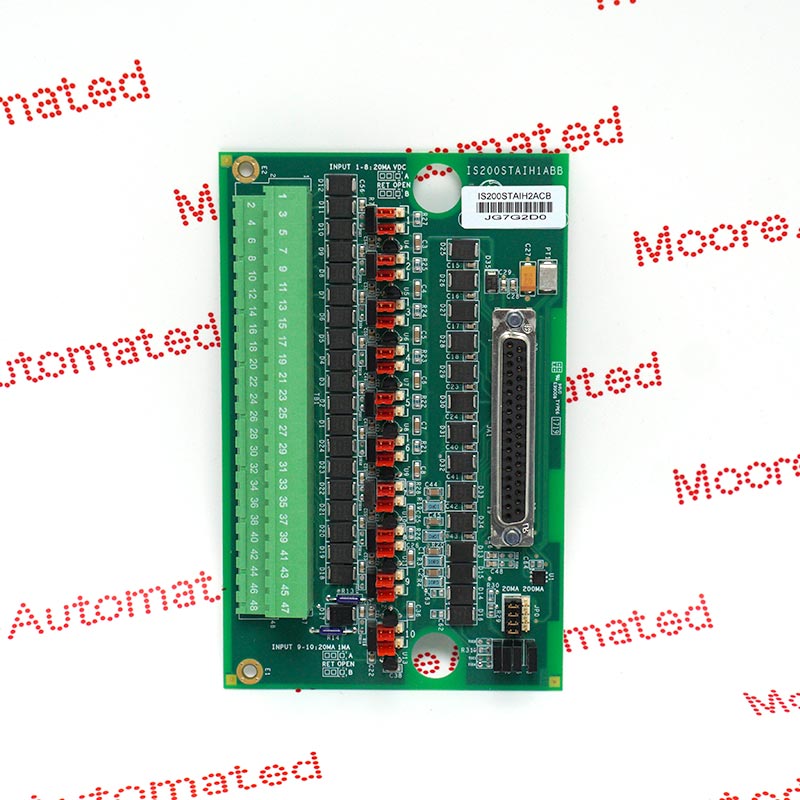
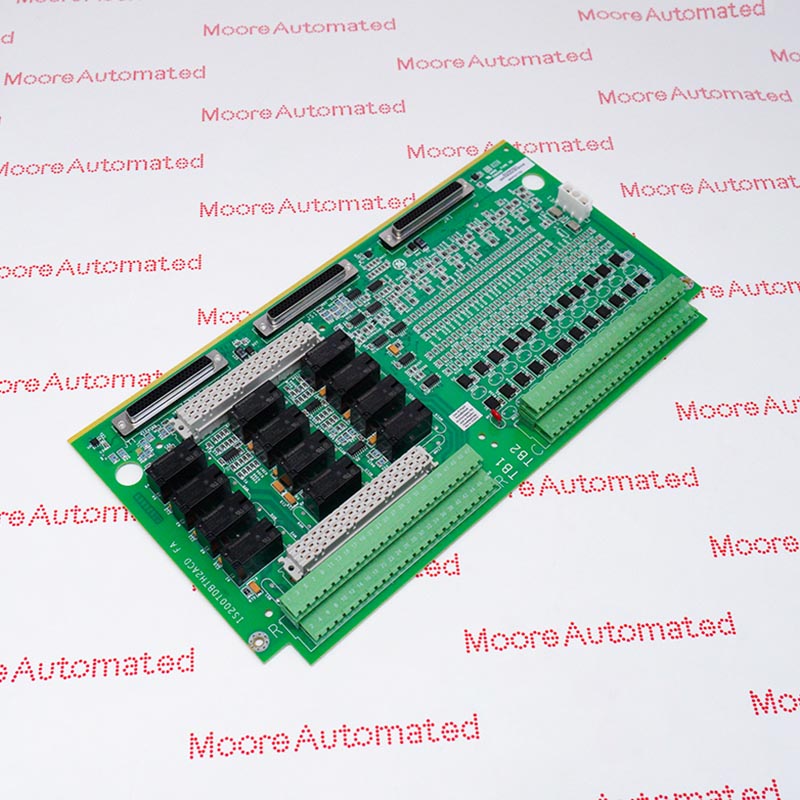
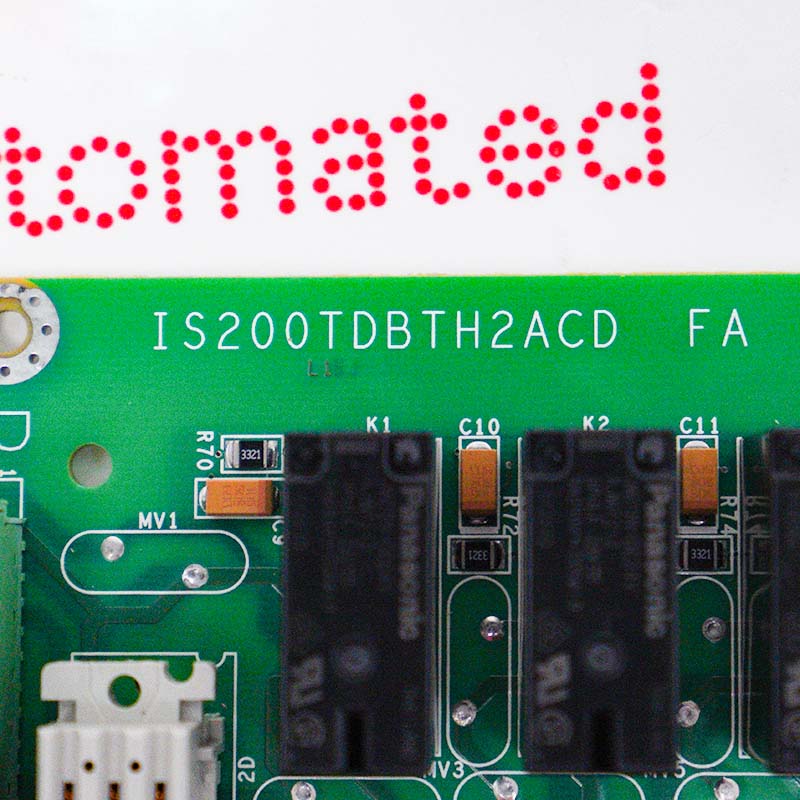
The IS200TDBTH2A is primarily used to receive and process dry contact switching signals from industrial fields, such as limit switches, relay contacts, or push-button operations. This board features 24 discrete input channels, capable of summarizing complex field wiring and converting it into logic levels recognizable by the control system.
The IS200TDBTH2A supports single-unit, dual, or triple redundancy (TMR) configurations, distributing signals to multiple control processors via special cable interfaces to ensure safe system operation even in the event of a single processor failure. Furthermore, the board integrates surge protection and noise filtering circuitry and can monitor the integrity of the input loop in real time.
The IS200TDBTH2A GENERAL ELECTRIC Discrete I/O Terminal Board may still be available for purchase and support from Moore Automated Company beyond End-Of-Life (EOL) by the manufacturer (OEM).
GENERAL ELECTRIC IS200TDBTH2A Discrete I/O Terminal Board INFO (manual), Link
Important Notice: Other accessories, manuals, cables, calibration data, software, etc. are not included with this equipment unless listed in the above stock item description. All prices are shown in USD.
The IS200TDBTH2A receives the closed or open status of field contacts via its input terminals, and its internal circuitry provides isolated interrogation voltages for each channel. When an external contact closes to form a loop, the resulting current is converted into a logic signal via an optocoupler or electronic switching assembly. These signals are then transmitted to the VME processor rack via a D-type connector and a dedicated logic operation cable, enabling real-time monitoring of the field device status.
- Steam Turbine Control: Manages discrete signals (on/off) to automate the operation of gas turbines and steam turbines.
- TMR Architecture: Designed specifically for TMR systems, it connects three I/O interfaces (typically PDIO) to provide redundant monitoring and control, ensuring high system reliability.
- Discrete Signal Management: Connects field contact inputs (e.g., switches, sensors) and relay outputs to the control system.