Overview
Manuals
Principle
Features:
- 4 fold analog input module, safety relate
- For transmitters in two-wire technique 4...20 mA
- Safety-related 4-Fold Analog input Module
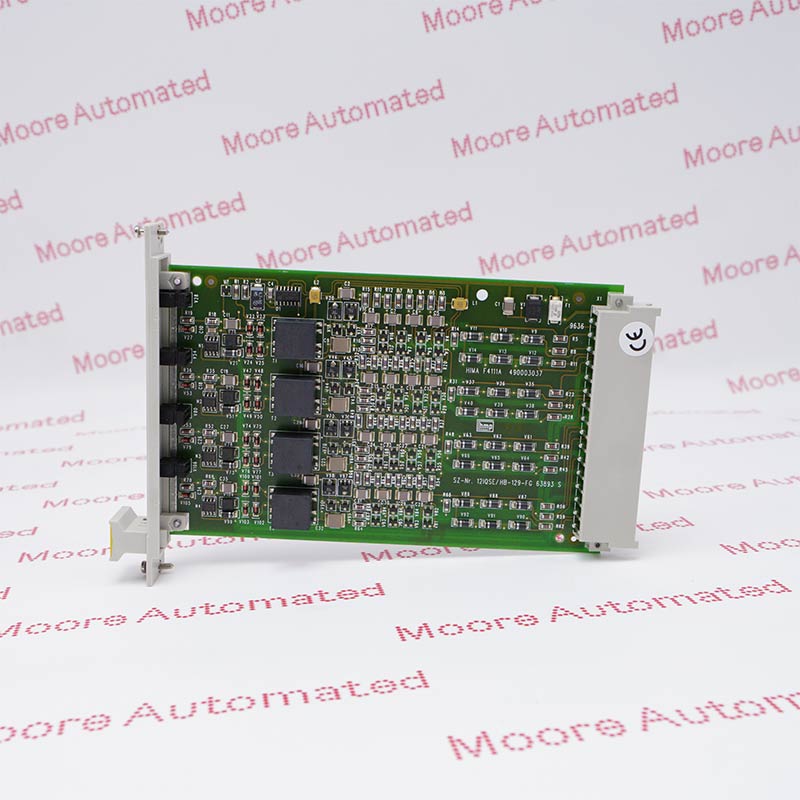
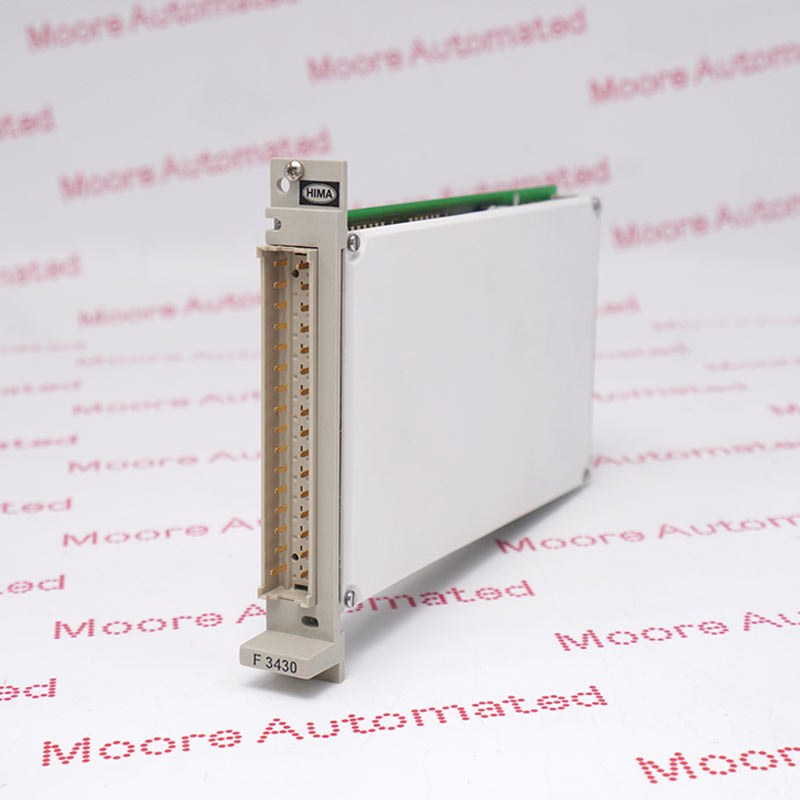
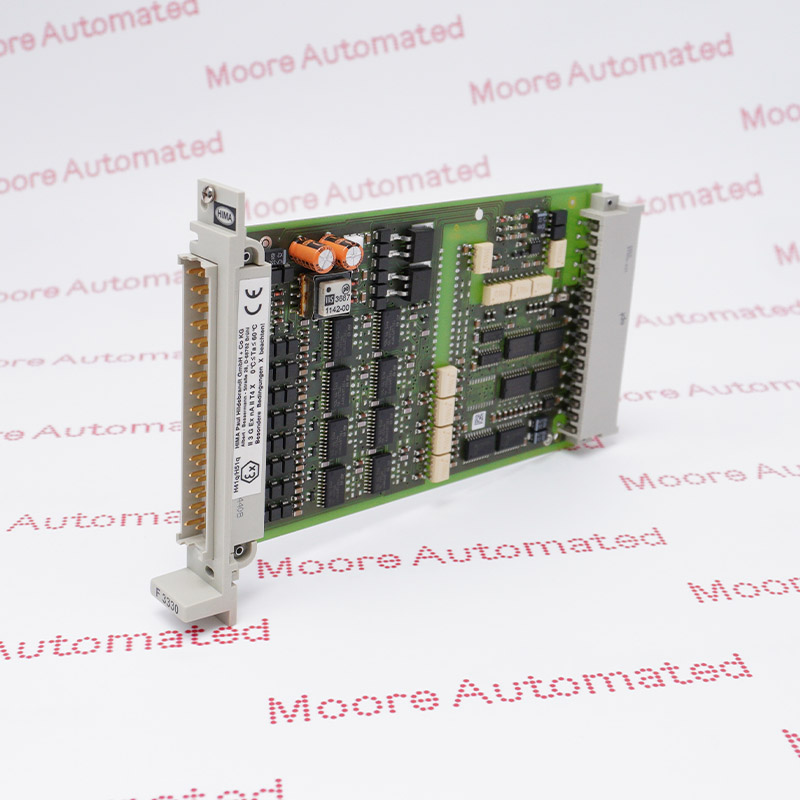
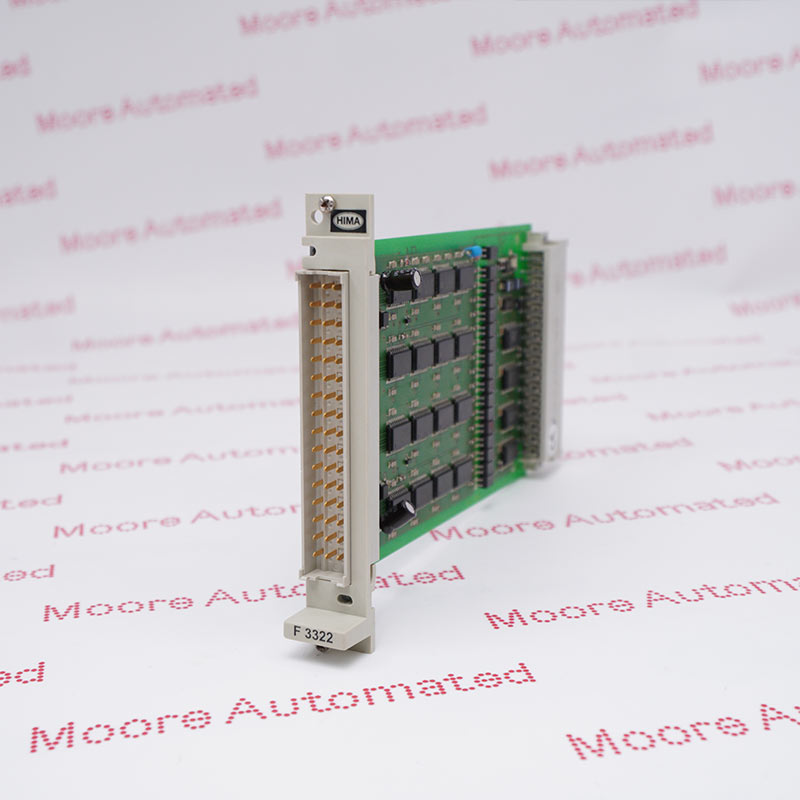
The HIMA F6214 is a safety-related digital input module designed for integration into HIMA's HIMax or HIMatrix safety control systems. The HIMA F6214 primarily acquires and processes digital field signals from safety-related devices such as emergency stop buttons, limit switches, pressure switches, and other binary transmitters. It reliably detects the on/off status of these devices and transmits verified input data to a central safety controller, supporting High Integrity Safety Instrumented Functions (SIF) that meet functional safety standards.
From an architectural perspective, the HIMA F6214 is designed to meet stringent safety and availability requirements, including those for SIL-level applications. The module provides channel-level diagnostics, line monitoring, and fault detection mechanisms to ensure early detection of line faults, such as short circuits or open circuits. Its robust design ensures stable operation under industrial environmental conditions, including electromagnetic interference and temperature variations, making the HIMA F6214 suitable for deployment in critical industries such as oil and gas, chemical, and power generation.
The F6214 HIMA Analog Input Module may still be available for purchase and support from Moore Automated Company beyond End-Of-Life (EOL) by the manufacturer (OEM).
HIMA F6214 Analog Input Module Manuals(Datasheets), Link
Important Notice: Other accessories, manuals, cables, calibration data, software, etc. are not included with this equipment unless listed in the above stock item description. All prices are shown in USD.
The HIMA F6214 operates based on secure digital signal acquisition technology, combined with internal redundancy and diagnostic monitoring functions. Input field signals are electrically isolated and continuously monitored by the module's internal circuitry. Signal status is processed through a security-certified logic structure to verify its validity and detect anomalies. Verified input data is then transmitted to the safety controller via the system bus. Simultaneously, any detected faults are immediately reported to maintain the integrity and reliability of the entire safety system.