

Get Repair Quote
Name
Company *
Phone *
Email *
Address
City
State / Province / Region
Zipcode
Country
Quantity *
Part Number *
Manufacturer
Preferred Condition
Additional Information
Cancel

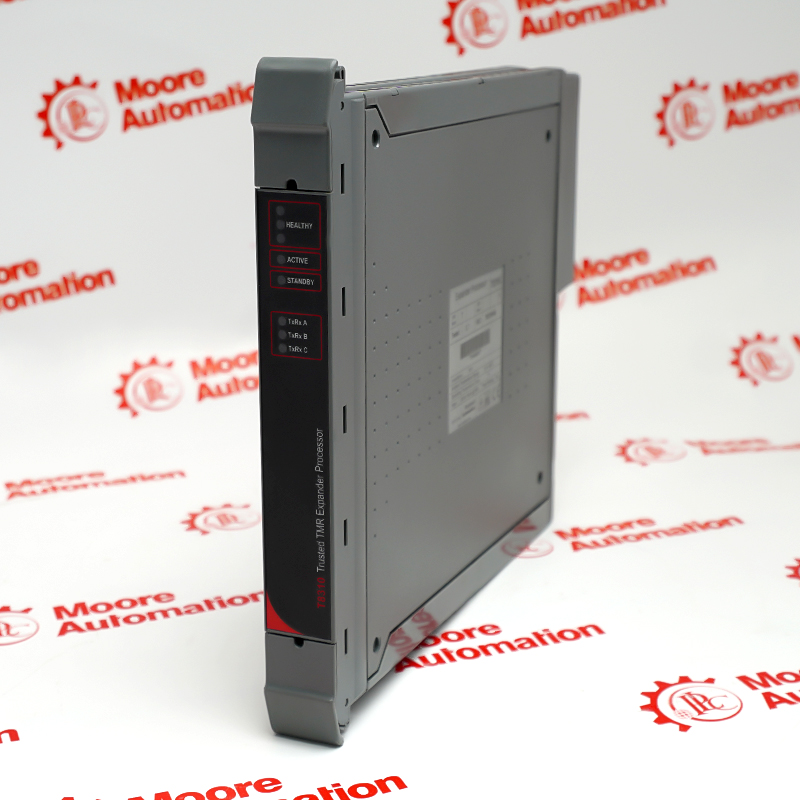
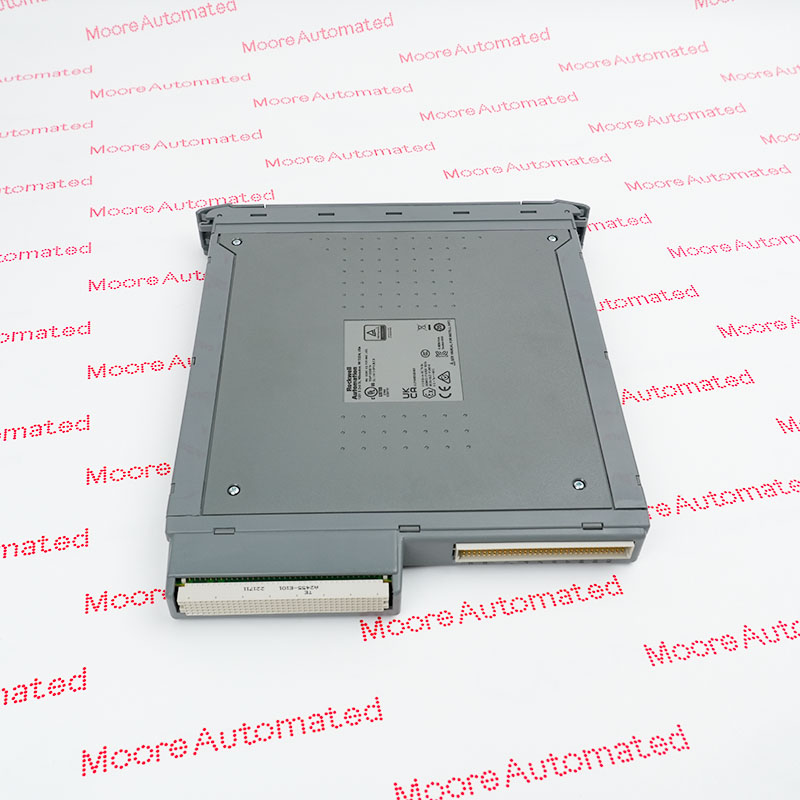
T8312-7C

Expander Interface Adaptor Module
In Stock
Ships by Thursday, June 11
Fast Shipping Available

Product Information:

Expander Interface Adaptor Module – 7 Way. The T8312-7C is a 7-channel Trusted TMR Extender Interface Adapter unit manufactured by ICS Triplex. It serves as a critical backbone hardware connector, connecting the main Trusted Controller chassis to downstream extender chassis, thereby establishing a fault-tolerant communication link in a Triple Modular Redundancy (TMR) system.

Expand All
Collapse all

Technical specifications for T8312-7C

  • Manufacturer:
    ICS Triplex
  • Product Category:
    PLC System
  • Estimated shipping dimensions:
    3.2 × 17 × 15 cm
  • Weight:
    0.6 kg
  • Tariff Code:
    8537101190
  • Country of origin:
    USA
  • Place of shipment:
    Xiamen, Fujian, China
  • Number of channels:
    7 channels
  • Operating Voltage:
    24V DC
  • Power Consumption:
    6 W
  • Product Type:
    Trusted Expander Interface Adaptor
  • Operating temperature:
    -40°C to +70°C
  • Ambient Air Temperature for Storage:
    -40°C to +85°C
  • Relative humidity:
    5% - 95% RH (no condensation)
  • Category Series:
    Trusted TMR System
  • Stock:
    110

Alternative Names

T8312

Information

Overview Manuals Mechanical Installation Note Downstream Interconnection Cables

Features:

  • Expander Interface Adaptor Module – 7 Way
  • Features seven 12-pin ODU locking connectors
  • Equipped with a heavy-duty 96-way C type male connector
The expander interface adapter provides the connection between the expander interface modules in the controller chassis and processor interface modules in expander chassis.

With the controller chassis dip switches set to ID#1, the first seven expander chassis would have their dip switch ID #s set from 2 to 8. Another interface adapter would be used to connect to the next seven chassis. Those chassis also need their dip switch ID #s set from 2 to 8, although they would be designated 9 to 15 in the software configuration (.ini file) described in Section 8.

The T8312-7C ICS Triplex Expander Interface Adaptor Module may still be available for purchase and support from Moore Automated Company beyond End-Of-Life (EOL) by the manufacturer (OEM).
ICS Triplex T8312-7C Expander Interface Adaptor Module manual(Datasheets), Link Important Notice: Other accessories, manuals, cables, calibration data, software, etc. are not included with this equipment unless listed in the above stock item description. All prices are shown in USD.
The T8312-7C features a fully shielded metal housing that meets stringent electromagnetic compatibility (EMC) standards. It mechanically snaps into the rear connector pins of the controller chassis. To safely disconnect or service the device, you must press the integrated mechanical release button located on the housing to avoid bending the backplane pins.
To route communication from the T8312-7C to the extender chassis hardware, dedicated TC-302 series communication cables are required. These cables feature matching 12-pin connectors at the adapter end, allowing branch connections to multiplexers or T8314 fiber optic TX/RX media converters for long-distance topology isolation.

Ask our team:

  • What key system expansion and interface adaptation capabilities does the T8312-7C provide in fault-tolerant industrial automation architectures?
    The T8312-7C is a Trusted TMR Extender interface adapter designed to facilitate deterministic interconnection, redundant communication allocation, and scalable system expansion in safety-critical control environments.
  • Why is the T8312-7C considered an indispensable component of scalable safety instrumented systems and distributed automation infrastructures?
    The T8312-7C enables reliable connectivity between trusted TMR processors, I/O modules, communication components, and distributed safety control subsystems in SIL-oriented architectures.
  • How does the T8312-7C maintain signal fidelity in industrial environments with severe electromagnetic interference?
    The T8312-7C employs ruggedized industrial electronics, advanced shielding technology, and noise-resistant circuitry to mitigate electromagnetic interference and maintain communication integrity.
  • Which types of industrial applications most commonly integrate the T8312-7C module?
    The T8312-7C is widely used in oil and gas facilities, petrochemical plants, offshore production systems, and power generation infrastructure, applications requiring fault-tolerant automation and high-integrity communication expansion.
  • Why is the T8312-7C particularly suitable for continuous operation and mission-critical industrial applications?
    The T8312-7C uses rugged, industrial-grade components that can withstand thermal stress, vibration, voltage fluctuations, and prolonged operating loads.
Quantity
Upload
(gif, jpg, jpeg, png, bmp, doc, docx, xls, xlsx, ppt, pdf, csv)
For more information on how your data is processed and stored by Moore automated please read our privacy policy.
Trusted by 5,000+ plants worldwide | Backed by our vast inventory of top-tier control parts, drives and servo motors, fast shipments are dispatched to cover your urgent needs. ABOUT US >>
Moore Disclaimer: Moore Automated's sales automation equipment and related solutions are intended for industrial automation and business operational efficiency improvement purposes only. Product information, technical parameters, and application cases are for reference only and do not constitute an absolute guarantee of performance for any specific industry, scenario, or final application. Actual equipment performance may vary depending on factors such as the usage environment, system integration method, and maintenance conditions. Users should confirm compatibility and safety based on professional technical assessments. Moore Automated assumes no liability for any direct or indirect losses caused by improper use, modification, or failure to operate according to specifications, to the extent permitted by law.