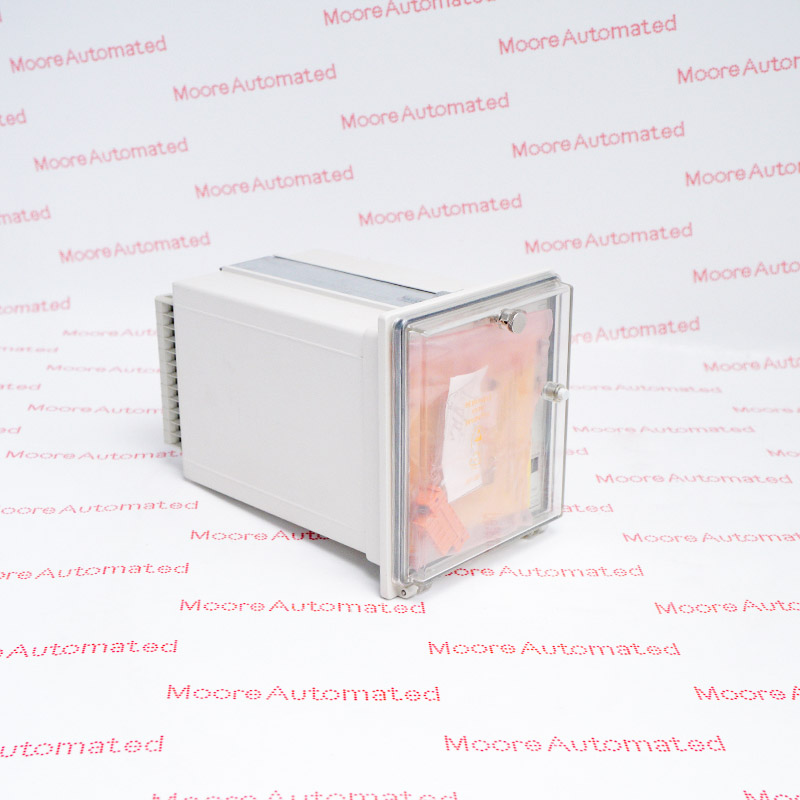
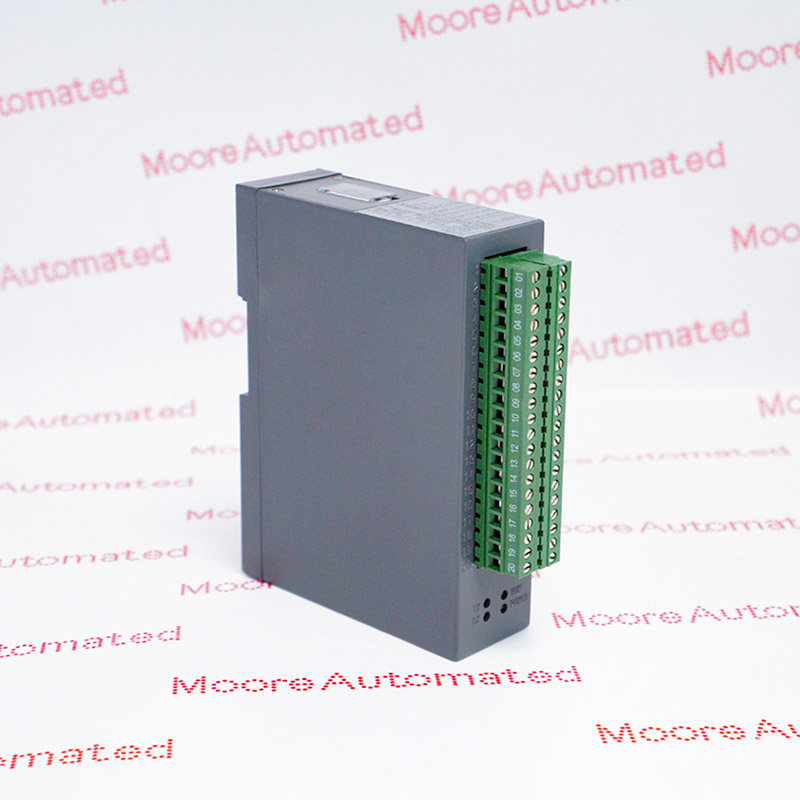
Overview
Manuals
Unique "Clockout" Feature
How It Works
Application Details
Features:
- Hybrid (HB) or permanent magnet (PM) 2-phase stepper motor (specified configuration with 4 or 6 leads)
- 18 to 40V DC (fully compatible with standard 24V or 36V industrial control loops)
- It provides smooth, low-vibration control with high-resolution microstep control capability of up to 400 microsteps/step (offering 22 selectable split settings)
The core function of the RD-323MS is to independently achieve precise speed and position control of a motor without the need for an external pulse source. Unlike traditional drivers that only receive pulses, it integrates a highly efficient built-in pulse oscillator, allowing seamless connection with PLCs, microcomputers, or various simple controllers without pulse shaft outputs. This module also employs a trapezoidal acceleration/deceleration control algorithm, allowing users to directly and smoothly adjust the motor speed simply by inputting a simple analog voltage signal (speed input) to the control terminal, thus greatly simplifying the design of motion control components in mechanical systems.
In addition to independent speed control, this driver features superior microstepping capabilities, supporting high-resolution subdivision and automatic intelligent power optimization. It supports up to 80 subdivisions per step (22 subdivisions optional in some modes) and the desired step angle can be easily adjusted via DIP switches, significantly reducing physical vibration and mechanical noise generated by the two-phase stepper motor at low speeds. Furthermore, the module integrates an automatic current decay circuit.
The RD-323MS Rorze 2-PH Microstepping Motor Driver may still be available for purchase and support from Moore Automated Company beyond End-Of-Life (EOL) by the manufacturer (OEM).
Rorze RD-323MS 2-PH Microstepping Motor Driver MANUAL(Datasheets), Link
Important Notice: Other accessories, manuals, cables, calibration data, software, etc. are not included with this equipment unless listed in the above stock item description. All prices are shown in USD.
A notable feature of the RORZE RD-323MS firmware logic is its user-configurable clock output, allowing users to set the number of pulses per step from 1 to 80 via onboard DIP switches (D1 to D5). This enables automation engineers to precisely set the step ratio, thereby synchronizing multiple microstepping axes, or to configure precise mechanical gear ratios directly at the hardware level.
The RD-323MS employs unipolar constant current chopping technology and an internally controllable self-excited oscillation mechanism. Upon system startup, the internal pulse oscillator generates a high-frequency pulse sequence in real time based on the amplitude of the external analog voltage obtained from the SPEED terminal. This pulse signal is then converted into a precise stepped current phase distribution controlled by microstepping logic circuitry, driving the two-phase coils of the motor.
During motor operation, the internal power transistors operate in high-frequency chopping mode, continuously feeding back the actual coil current through a sensing resistor and comparing it with a set value to maintain constant current output, thus ensuring smooth torque output over a wide speed range. When the motor stops, the internal logic circuitry automatically cuts off or reduces the chopping frequency and the duty cycle of the bridge inverter circuit, achieving stepped power reduction protection.
1.Semiconductor and Wafer Processing: Powering wafer transfer robotic arms, precision vacuum pick-and-place systems, and alignment platforms where smooth micro-positioning is crucial to avoid damaging silicon wafers.
2.Medical and Laboratory Automation: Controlling liquid handling pumps, automated pipetting stations, tube sorters, and microscope scanning platforms requiring quiet, low-vibration operation.
3.Optics and Laser Systems: Adjusting lens positioning, mirror mounting, laser cutting head height, and industrial camera focus tracking arrays.
4.SMT (Surface Mount Technology): Driving feed mechanisms, component alignment cameras, and compact transport systems on surface mount technology assembly lines.