



Registered Address: 32D Floor Guomao Building, No.388, Hubin South Road, Siming District, Xiamen,Fujian, China
ISO 9001:2015 Certified
Our quality management system covers sourcing,testing and dispatch
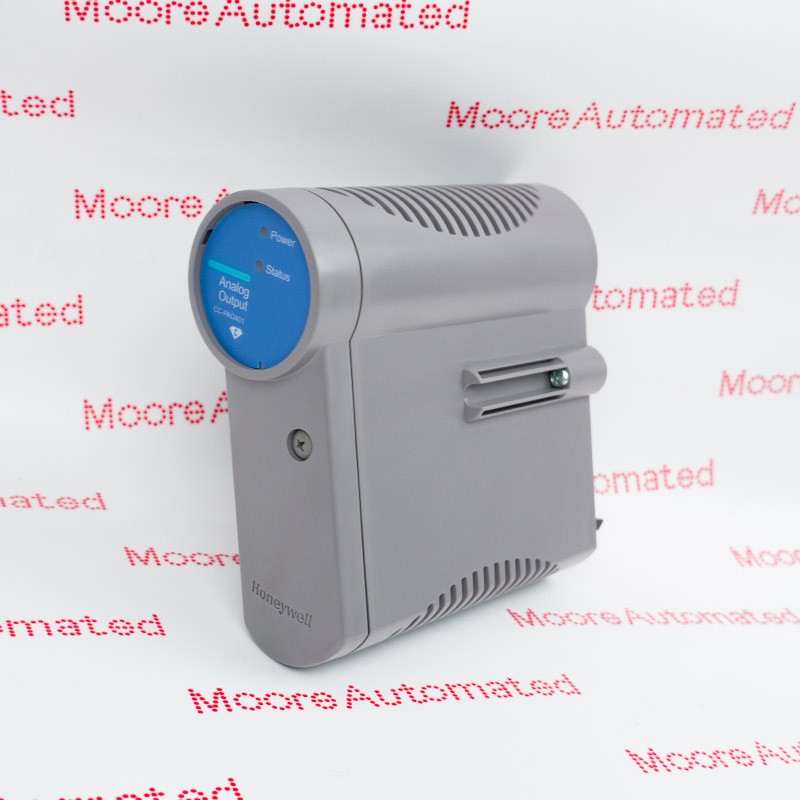
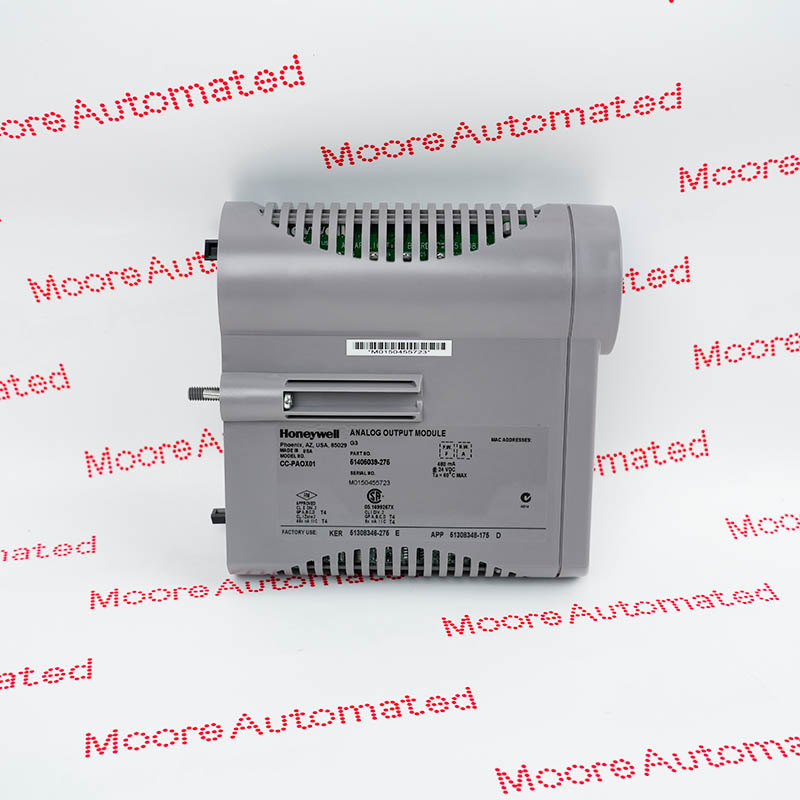
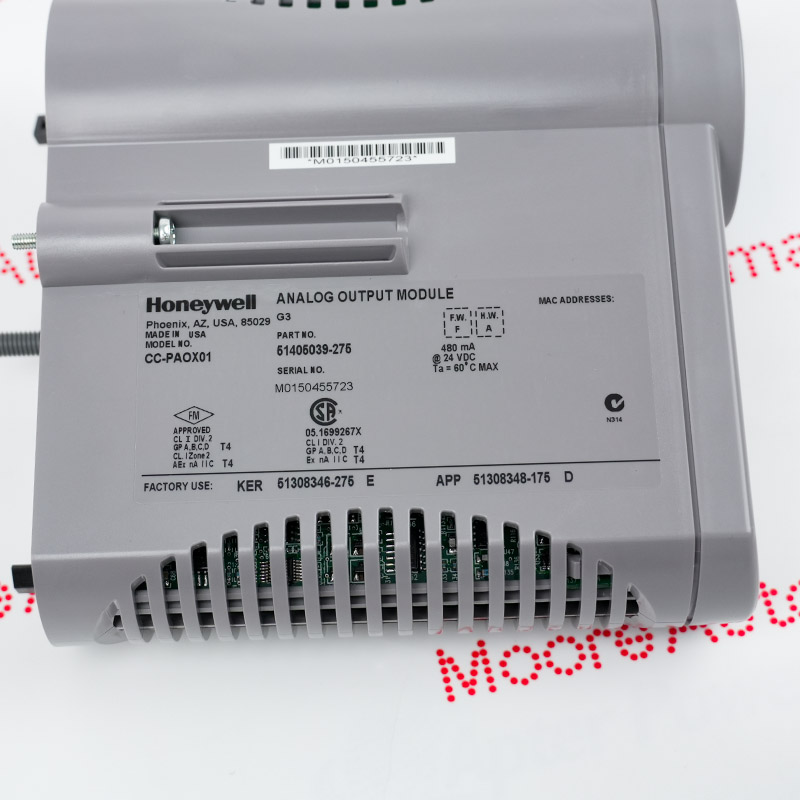
CC-PAOX01 51405039-275 is a Honeywell analog output module used with Experion Series C hardware. It delivers modulating demand signals to final-control devices through analog outputs without HART.
For replacement, match the complete catalog identity, I/O module, 16 channels, receiving hardware, configured database and every printed revision before commissioning.
CC-PAOX01 51405039-275 is the documented Honeywell analog output module for Experion Series C. As the installed I/O module, it delivers modulating demand signals to final-control devices through analog outputs without HART. Its execution is defined by 16 channels, so signal direction, receiving hardware and configured channel use must agree with the approved system design.
Before replacement, record the installed position, terminal or backplane assignments, connected devices and current configuration status. Match the complete catalog marking, I/O module, analog outputs without HART, 16 channels, receiving assembly and every printed revision. After installation, restore the approved configuration, check module and system diagnostics, and prove every affected measurement, command or communication path before return to service.
CC-PAOX01 51405039-275 is the documented analog output module. It delivers modulating demand signals to final-control devices.
Match analog outputs without HART, 16 channels, the receiving I/O module and every terminal, connector or network setting.
After installation, check power and diagnostics, prove the affected path, restore the approved configuration and record the final test result.
CC-PAOX01 51405039-275 is the documented I/O module for Experion Series C. It delivers modulating demand signals to final-control devices through analog outputs without HART.
Match 16 channels, the receiving hardware, terminal or backplane connection, configured database and printed revision. Prove every affected path after installation.
Availability for CC-PAOX01 51405039-275 is confirmed at quotation. The complete catalog marking, condition and included terminal or connector hardware are checked before shipment.
Any alternative is proposed only after the receiving system, analog outputs without HART, configuration and commissioning requirements have been reviewed.

Registered Address: 32D Floor Guomao Building, No.388, Hubin South Road, Siming District, Xiamen,Fujian, China
MooreAutomated.com is the official website and primary online platform operated by Moore Automation Limited. The website provides information about the company’s industrial automation parts sourcing services, product coverage and customer support. Moore Automation Limited operates as an independent supplier and is not an authorized distributor or representative of the manufacturers displayed on this website unless expressly stated.