





Registered Address: 32D Floor Guomao Building, No.388, Hubin South Road, Siming District, Xiamen,Fujian, China
ISO 9001:2015 Certified
Our quality management system covers sourcing,testing and dispatch

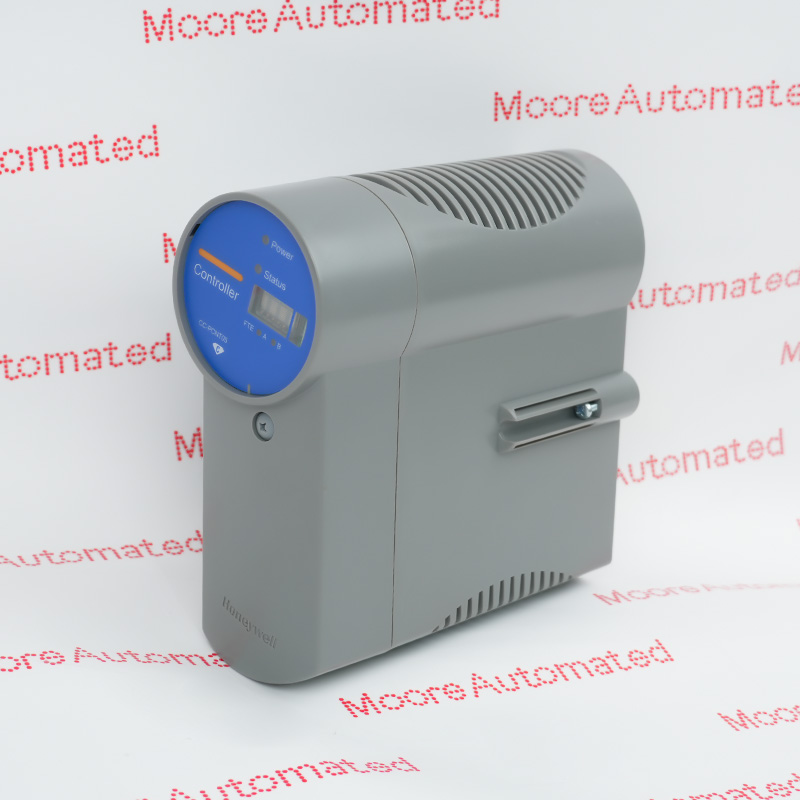
Honeywell identifies CC-PSP401 as a Series C Speed Protection Module for turbomachinery, not a cabinet power-supply module. It accepts up to four speed probes, computes speed and acceleration with two-out-of-three voting, and works with redundant CC-TSP411 IOTA. The OEM table also lists eight digital inputs, four digital outputs, eight analog inputs and one analog output. Confirm the additional 51454122-175 marking on the physical item.
Honeywell's Experion Series C Turbomachinery I/O specification section 8 expressly names CC-PSP401 as the Speed Protection Module. It takes as many as four speed-probe pulse inputs, performs signal conditioning and two-out-of-three voting, and computes speed and acceleration. Configurable limits can trigger overspeed protection through relays on its associated IOTA; the voted speed can also be used by a control loop in the C300. The specification lists four speed inputs, eight digital inputs, four digital outputs, eight analog inputs and one analog output. These are interface counts, not 26 identical inputs, and the connected instrument and protection design determine which functions are configured.
The Honeywell table identifies CC-TSP411 as the redundant eighteen-inch IOTA for CC-PSP401. It lists magnetic pickup range 150 Hz to 25 kHz, active pickup range 1 Hz to 10 kHz, 2.5 ms speed-input scanning, and an overall input-change-to-protection-device loop latency within 40 ms. The document also gives speed-probe diagnostics and configurable speed and acceleration trip limits. The current website mistakenly describes CC-PSP401 as a power-system component; those power-distribution claims should be removed. Do not promise a trip response without reviewing probe wiring, IOTA relays, redundancy, voting, configuration and the complete installed safety function. The PDF does not map the site's extra 51454122-175 number, which needs physical-label or manufacturer parts-record confirmation.
CC-PSP401 is the Honeywell Series C Speed Protection Module, not a cabinet power-supply module. The reviewed OEM specification describes speed-probe conditioning, speed and acceleration calculation, two-out-of-three voting and configurable protection limits. A voted speed can feed a C300 control loop, but any trip function depends on the full engineered sensor, IOTA relay and final-element chain. Confirm the actual unit marking and approved protection architecture.
The OEM section lists four active or passive speed inputs, eight digital inputs, four digital outputs, eight analog inputs and one analog output. These distinct interface groups should not be collapsed into a generic channel count or treated as interchangeable. Magnetic pickups and active pickups have different documented frequency ranges and connection conditions. Match each configured probe, trip input, output contact and analog path to the installation drawings before a replacement is released.
The manufacturer pairs CC-PSP401 with the CC-TSP411 redundant eighteen-inch IOTA. Its table lists 2.5 ms speed input scanning and states overall input-change-to-protection-device latency within 40 ms for the specified design. Those figures do not by themselves certify the site protection loop; wiring, relay response, voting configuration and final device must be evaluated. The additional 51454122-175 number is not mapped by the cited OEM PDF.
Confirm CC-PSP401 on the physical electronics and verify additional 51454122-175 through a Honeywell parts record. Match the CC-TSP411 redundant IOTA, four speed-probe interface positions, active or magnetic pickup type, voting arrangement, trip limits, digital and analog channel assignments, C300 release and system drawings. Do not use the existing website's power-system description or assume an arbitrary twenty-six-channel module; the OEM enumerates separate signal groups with different electrical behavior.
Before authorized change, record baseline speed signals, configured two-out-of-three voting, acceleration limits, diagnostics, IOTA relay wiring, redundancy and the plant's protection bypass procedure. Follow approved site safety controls and Honeywell instructions. After replacement, prove each permitted probe and auxiliary path, configured speed and acceleration trips, output contacts, diagnostics and redundancy under a controlled test plan. The cited forty-millisecond overall trip-loop figure must be interpreted in the complete engineered loop, not as an unconditional field guarantee.

Registered Address: 32D Floor Guomao Building, No.388, Hubin South Road, Siming District, Xiamen,Fujian, China
MooreAutomated.com is the official website and primary online platform operated by Moore Automation Limited. The website provides information about the company’s industrial automation parts sourcing services, product coverage and customer support. Moore Automation Limited operates as an independent supplier and is not an authorized distributor or representative of the manufacturers displayed on this website unless expressly stated.