Overview
Manuals
Precautions note
Application Details
Features:
- 330750 and 330752 High Temperature Velomitor System
- Parameters are specified from +20°C to +30°C (+68°F to +86°F) and 100 Hz
- To 100% non-submerged; case is hermetically sealed
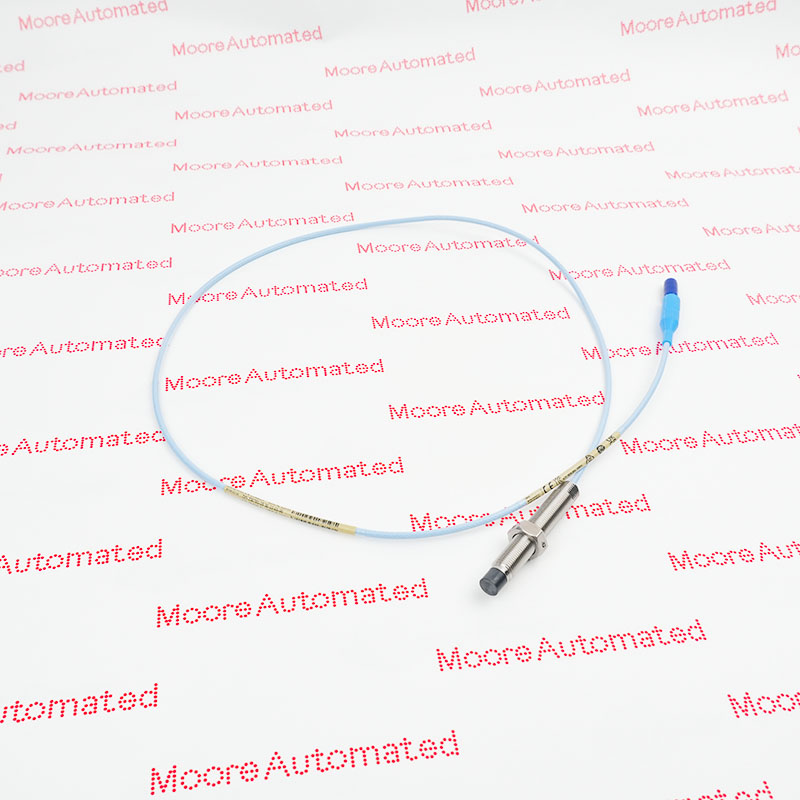
To accomplish this, the transducer design segregates the sensing element from the signal conditioning electronics. The two are permanently connected using an integrated cable. The integrated cable eliminates connectors which are a significant source of transducer failures.
The cable enables you to position the signal conditioning electronics in a cooler location. The internal electronics withstands temperatures of 55°C to +121°C (-67°F to +250°F). The integrated design makes it possible to capture machinery performance data comparable to other Bently Nevada Velomitor transducers, but at significantly higher temperatures.
The 330752-25-CN Bently Nevada High Temperature Velomitor System may still be available for purchase and support from Moore Automated Company beyond End-Of-Life (EOL) by the manufacturer (OEM).
Bently Nevada 330752-25-CN High Temperature Velomitor System Manuals(Datasheets), Link
Important Notice: Other accessories, manuals, cables, calibration data, software, etc. are not included with this equipment unless listed in the above stock item description. All prices are shown in USD.
Earlier versions of the 330750 and 330752 High Temperature Velomitor System were limited to environments with a maximum temperature of +300°C (+572°F). The serial number of current versions that measure up to +400°C (+752°F) are preceded by the letter "G".
- Gas turbines and steam turbines: Directly mounted on the hot-end casing and exhaust hood of the power generation turbine.
- Industrial furnaces and ovens: Mounted on external bearing housings, exposed to radiant heat from production kilns, boilers, or glass processing lines.
- Large petrochemical compressors: Monitoring critical high-speed axial and centrifugal compressors handling high-temperature process gases.
- High-load fans and pumps: Connected to induced draft fans and hot oil pumps, heat is directly transferred to the sensor housing.