Siemens Moore Process Control Components
Siemens Moore systems are recognized globally for their robust design and high reliability, delivering exceptional long-term operational stability within demanding process control applications. Although underlying industrial control technologies continually iterate, these proven legacy systems remain critical to core infrastructure, ensuring the deviation-free execution of critical processing sequences. Plant managers and control engineers prioritize hardware that sustains uninterrupted data acquisition and physical output.
Replacing a functional distributed control architecture necessitates massive capital expenditure and prolonged plant downtime. For many manufacturing facilities, early component deployments continue to operate smoothly today. This sustained performance demonstrates the durability of the hardware architecture under extreme physical conditions and validates a maintenance strategy focused on targeted component replacement rather than total system overhauls.
Extensive Deployment Across Key Process Industries
Engineered specifically to manage complex continuous variables, this high-reliability process control hardware is deployed across heavy-asset sectors requiring extreme fault tolerance. Verified industrial applications include:
- Power Generation: Coordinating complex boiler control loops, burner management systems, and continuous regulation of water treatment networks to guarantee stable energy output.
- Oil and Gas: Monitoring crucial pressure, flow, and temperature metrics during refining processes and pipeline transport within high-risk, hazardous locations.
- Chemicals: Executing precise material blending ratios and high-accuracy PID loop control under corrosive or volatile operating parameters.
- Manufacturing: Sustaining the baseline automation logic of large-scale assembly lines and robotic interfaces to prevent systemic interruptions caused by equipment failure.
Core Control Hardware and System Interface Modules
Sustaining the continuous operation of these established industrial installations relies heavily on securing replacement parts that meet original factory specifications. The Siemens Moore product line encompasses everything from standalone digital loop controllers to intricate system bus communication cards. Accurately procuring these exact-match hardware components protects facilities from time-consuming code rewrites or the high-risk physical rewiring of field terminations.
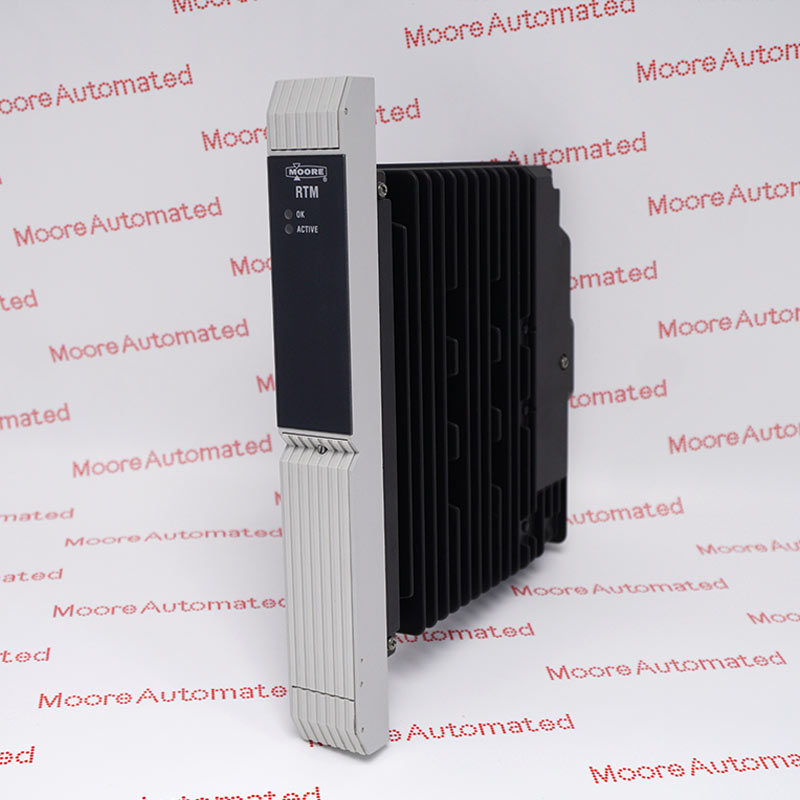
For instance, the Moore 353R process automation controller series, represented by the TGX:353RCMNENNBN, provides advanced digital PID control capabilities. This specific rack-mount or retrofit hardware configuration allows floor operators to directly manage complex single-loop or multi-loop logic with high independence. Concurrently, MBI/MNI communication interface boards such as the 16413-1-05 and 16413-16-01 act as critical data bridges between the MODULBUS control rack and plant-level networks. These interfaces manage high-speed data packets, ensuring that real-time process parameters transmit bi-directionally without accuracy degradation. Maintaining exact protocol matching across these communication nodes prevents network latency in time-sensitive manufacturing sequences.
Operating within the global industrial parts supply chain, Moore Automated supplies these critical automation components to manufacturing enterprises. By providing rigorously tested hardware, we assist clients in executing rapid technical replacements, minimizing capacity losses caused by sudden downtime and supporting a proactive asset management approach.
Available Legacy System Replacement Components
Based on the specific technical maintenance requirements of various industrial sites, we stock a range of direct-replacement legacy components. These units cover core controller modules, network communication interfaces, and associated power or I/O units:
- TGX:353RCMNENNBN
- 16413-1-05
- 16413-16-01
- 16207-61/13
- EDC1400A
- A9530-C50-04-85
- A5E00818292-03
FAQs about Siemens Moore System Components
Q1: What are the primary industrial applications for the Siemens Moore 353R series control modules?
Modules like the TGX series 353R operate as rack-mounted digital process controllers engineered for single or multi-loop automation. They deliver high-accuracy PID regulation logic and are widely deployed in chemical, petroleum, and power generation field nodes that require strict monitoring of continuous variables like pressure, temperature, and fluid levels.
Q2: Why do manufacturing facilities choose to maintain existing legacy Moore systems?
These legacy systems possess industry-verified long-term stability and high reliability. By directly procuring original hardware components for targeted replacements, facilities maintain the continuous, safe operation of their existing architecture. This strategy circumvents the massive capital expenditure and prolonged logic reprogramming risks associated with full DCS upgrades.
Q3: How do replacement communication boards remain compatible with existing control networks?
Utilizing the exact part number (such as the 16413-16-01 MNI board) for physical replacement preserves the inherent network protocols and backplane wiring of the original system. This precise substitution eliminates the risk of data loss caused by protocol translation errors, allowing the new hardware module to integrate directly into the established industrial control architecture.